Introduction
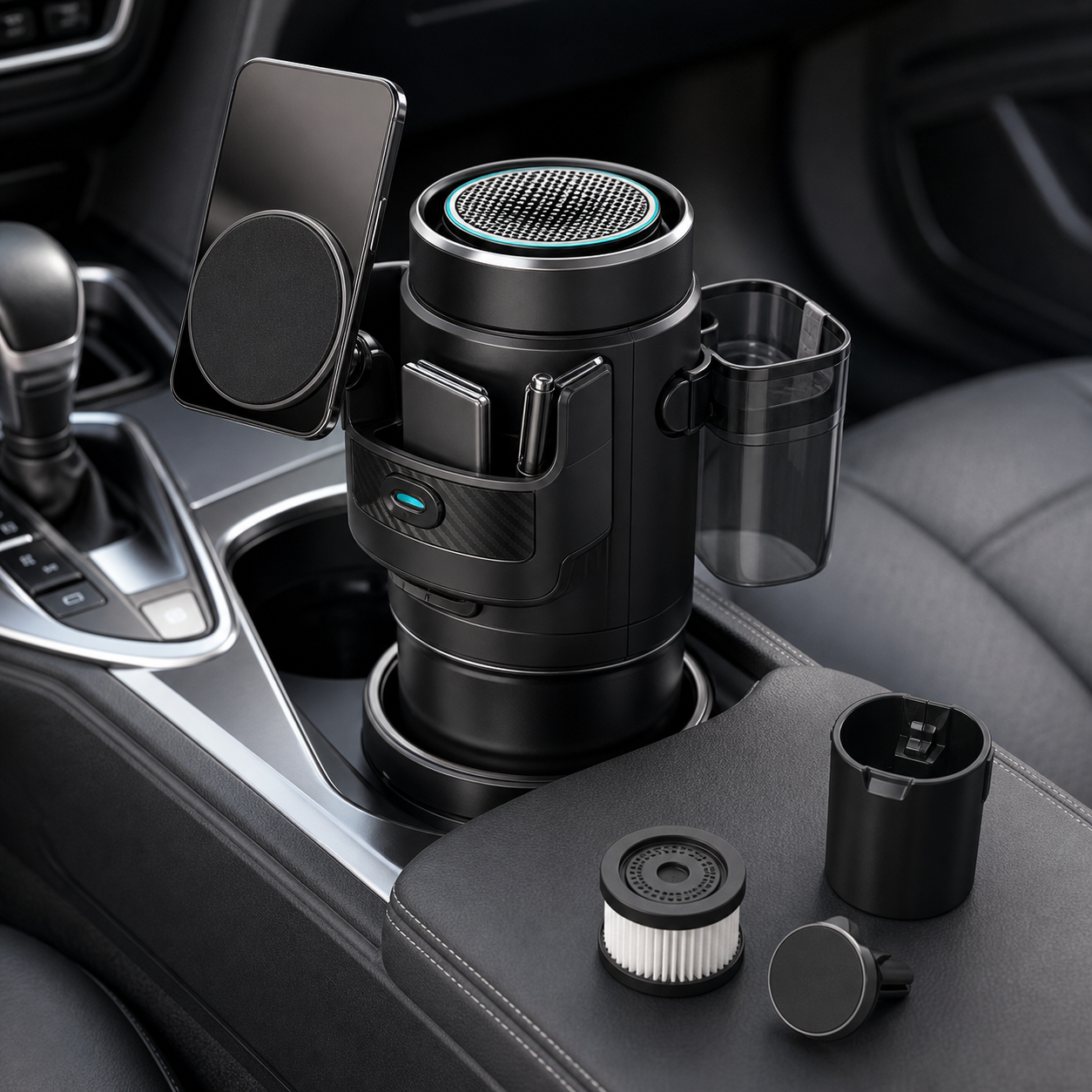
Sourcing auto accessories is not mainly a search for the lowest factory quotation. Retail buyers need a repeatable way to decide whether a candidate will work as a finished item in automotive retailers, gas-station stores, online auto-accessory sellers and gift programs. The right decision considers product function, target user, construction, visible quality, packaging, delivery timing, documentation and the way the item will be presented to the final customer.
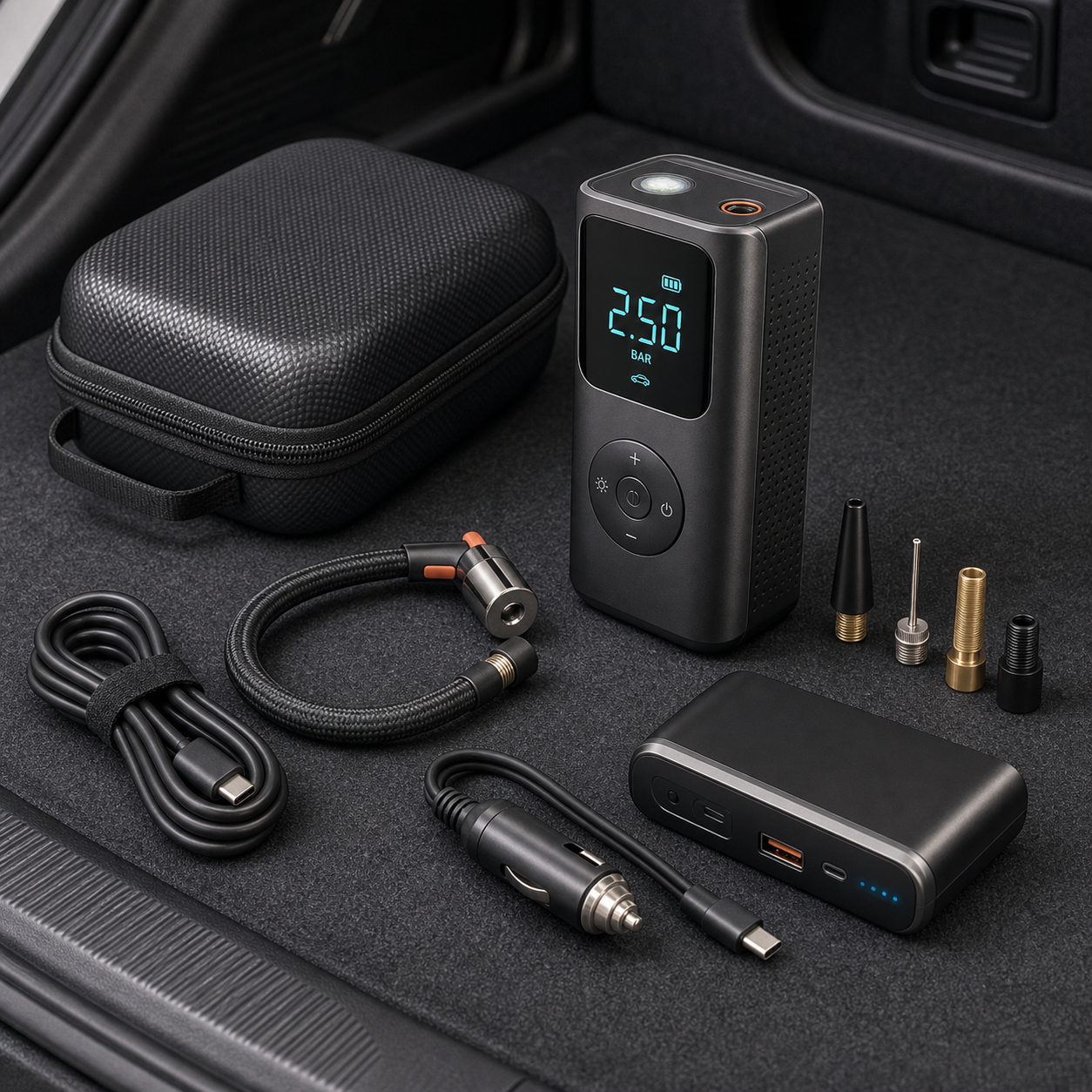
This guide is written for importers, private-label teams and retail buyers. It is operational sourcing guidance, not legal, laboratory or customs advice. The examples focus on car organizers, seat-gap storage modules, cordless tire inflators, cable organizers and compact cleaning products. A buyer should still confirm requirements for the exact product, destination market, channel and claims with the right qualified adviser.
Quick Answer: What Should Buyers Check First?
Before requesting prices, define the exact customer use case, target retail price, destination market, quantity range and preferred delivery window. Then request a product-specific response from each supplier. The first review should cover injection-molded parts, textiles, straps, charging components, air hoses, metal fittings, displays and retail cartons. A broad catalogue photo or a generic declaration cannot replace evidence for the exact model and revision a buyer expects to sell.
For a new supplier, the quickest meaningful test is a controlled sample review. Compare the physical product to the quoted specification, then ask what would change at the production quantity. This exposes the usual commercial gaps: different materials, an omitted accessory, a smaller battery, a different zipper, an alternative cable, a different package or a condition hidden behind the phrase “same quality.”
Define a Retail Brief Before Sending an RFQ
An RFQ works best when it describes the product as a retail decision rather than a loose idea. Include the market, target customer, intended use, required functions, approximate retail price, desired order quantity, preferred colors, packaging format and expected launch date. For auto accessories, also state whether the item will be sold alone, in a bundle, online, on a shelf, as a gift or through a specialist channel.
Describe the application in plain language. A product meant for automotive retailers, gas-station stores, online auto-accessory sellers and gift programs may face different handling and presentation requirements than the same object sold as a low-cost impulse item. The supplier needs enough context to identify a suitable construction; the buyer needs enough detail to compare quotations on a like-for-like basis.
Use a specification table from the first sample onward. Give every critical feature a defined requirement, tolerance or decision owner. Avoid asking only for “premium quality.” For example, record dimensions, unit weight, material callouts, colors, component list, package dimensions, barcode position, warnings, instructions and the acceptable appearance standard. A good specification turns later inspection from an argument into a comparison.
Questions to Put in the RFQ
- What is the exact product model and revision quoted?
- Which injection-molded parts, textiles, straps, charging components, air hoses, metal fittings, displays and retail cartons are used in the production version?
- What is included in the retail unit, and what is optional?
- Which features have been functionally checked, by whom and against which acceptance criteria?
- What are the sample, pilot-run and mass-production lead times?
- What changes require written buyer approval before production?
- Can the factory provide packing dimensions, unit weight, master-carton data and barcode-ready artwork requirements?
Build a Production-Equivalent Sample Plan
The most useful sample is not necessarily the first one that photographs well. It is the sample that represents the intended construction, materials, components, finish and package. Ask the supplier to identify what is provisional. A transparent list is valuable: it tells the buyer whether a sample uses temporary tooling, substitute components, hand-applied artwork or pre-production packaging.
For auto accessories, review vehicle-fit assumptions, vibration handling, hose connection, displayed-unit accuracy, charge cycle, accessory completeness, label control and carton drop resistance. Keep a short record of the test conditions and outcome. The aim is not to claim certification or laboratory compliance from a desk review. It is to catch practical defects and make sure that any outside test or specialist review is scoped around the real product rather than an earlier concept.
During sample approval, photograph the product from enough angles to identify construction details. Record model, color, revision, date, dimensions, included accessories and package. Keep the approved sample, or a controlled photographic reference set, available for factory testing and shipment inspection. This protects both buyer and supplier when a product line has similar versions.
Turn Buyer Feedback Into Controlled Changes
Feedback should say what changes, why it changes and whether the change affects cost, lead time, packaging, test scope or instructions. “Make it stronger” is not an actionable instruction. “Increase webbing width from the approved sample and submit a pull-test plan before pilot production” is actionable. Keep each change in a log with a status: proposed, approved, rejected, in verification or released.
The practical risks are often small but expensive: a universal-fit statement with no defined vehicle range, an inflator gauge that is not checked against a reference, or a organizer that interferes with normal seat movement. When these findings appear at sample stage, the buyer can redesign or decline the SKU. When they appear after cartons are printed or goods are booked, options become narrower and more costly.
Evaluate the Supplier Beyond the Quotation
Compare supplier responses in four columns: product capability, evidence quality, communication discipline and commercial fit. Product capability includes whether the supplier makes or controls the critical process. Evidence quality means that drawings, material declarations, photographs and test records can be linked to the proposed model. Communication discipline means that a supplier identifies uncertainty instead of filling gaps with promises. Commercial fit includes MOQ, tooling, payment terms, lead time, packaging flexibility and order-management capacity.
Ask who makes each critical component, where the product is assembled, how incoming materials are checked and how a production lot is identified. A factory may be fully suitable even when it subcontracts a process, provided the process is controlled and visible. A supplier that cannot explain its supply chain, however, makes changes and corrective actions harder to manage.
Request one structured data sheet, not a folder of unrelated files. The sheet should link the final SKU to material sources, component names, approved sample, production location, known evidence, packaging revision and open questions. This is much more reliable than trying to reconstruct the product history from old chats after a buyer receives a complaint or needs a replenishment order.
Factory Testing and Shipment Inspection
Factory testing should be agreed before mass production. Define what is checked, the test method, conditions, sample quantity, pass criteria, equipment used and record format. Do not invent test results and do not describe factory testing as independent third-party testing. The point is to make production checks repeatable and traceable.
At shipment inspection, compare selected units and cartons against the approved reference. Confirm visible construction, colors, critical dimensions where appropriate, accessories, instructions, markings, quantity, package version and carton condition. Document sampling limitations. An inspection cannot prove every legal or functional issue, but it can identify observable variance before goods leave the factory.
If an issue appears, contain the affected lot before deciding the remedy. Identify whether it is isolated, lot-wide, cosmetic, functional, safety-related or documentation-related. Rework may correct a visible packaging issue but not an unsupported product claim or a material substitution. Release should be made by a named buyer representative using the current specification and evidence index.
Packaging, Claims and Product Application
Packaging should clarify the item rather than make it appear more capable than it is. Confirm the final product name, model, color, quantity, included items, instructions, warnings, origin details where applicable, customer-service details and barcode. For online channels, align listing copy with the approved packaging; conflicting claims create both buyer confusion and traceability problems.
Product application matters. Record how the item will be installed, carried, charged, cleaned, stored, assembled, connected or used. This is where the intended customer environment becomes a practical control. A product that behaves well on a supplier bench may not perform the same way in a vehicle, damp campsite, office desk, school environment, kitchen or checked luggage.
Products marketed for vehicle use may have product-specific safety or equipment implications. Confirm market, intended use and claims with the appropriate specialist before launch. Review primary guidance during product development and keep dated source links in the project record. Current requirements are fact-specific and can change; a sourcing file should separate confirmed requirements from questions awaiting specialist review.
Cost, MOQ and Lead-Time Decisions
Compare landed-cost inputs, not only ex-factory price. Ask for unit price at defined quantities, tooling or setup, packaging, testing or inspection support, sample charges, carton information, order lead time and payment milestones. A lower price may depend on a thinner material, smaller component, simpler package or a higher MOQ. Make those tradeoffs visible before the purchase order.
Use a three-scenario comparison: launch quantity, repeat quantity and best-case annual quantity. This avoids approving a product that only works at a volume the buyer cannot realistically sell. Where a mixed-SKU order is planned, confirm production grouping, carton allocation, label control and the supplier's ability to keep components and artwork separated.
The lead-time plan should include sample revision, artwork approval, production booking, pilot check, factory testing, shipment inspection, rework contingency and freight booking. Installation preparation, marketplace listing or retailer onboarding may need a finished sample and validated carton dimensions earlier than the production release date.
Buyer Decision Matrix
| Decision area | Evidence to request | Release question |
|---|---|---|
| Product construction | Controlled sample, specification, component list | Does the production version match the approved reference? |
| Supplier control | Factory profile, process map, change process | Who approves and records a material or process change? |
| Application | Intended-use note, instructions, product photos | Has the actual user environment been considered? |
| Quality | Test plan, sample review record, inspection checklist | Are acceptance criteria observable and documented? |
| Packaging | Artwork proof, pack-out sample, carton data | Does the retail pack match the listing and shipping plan? |
| Release | Purchase order, evidence index, shipment report | Are open critical gaps closed by the responsible owner? |
Mid-Article CTA
Send Your Requirements. Browse the KudBo product catalog and email info@kudbo.com with your auto accessories target, market, quantity, packaging needs and launch date. KudBo can help shortlist product options, prepare samples, coordinate factory communication and organize shipment inspection.
A Practical 30-Day Sourcing Plan
Days 1-5: Freeze the Buying Brief
Choose a candidate SKU, define its customer, market and application, and make a preliminary requirements list. Identify any issue that needs laboratory, legal, electrical, food-contact, children’s-product or claims advice before artwork or tooling is approved.
Days 6-12: Compare Suppliers and Samples
Request structured quotations, samples and factory data. Score the same criteria across suppliers. Review the sample physically, document construction and identify what is not yet production-equivalent. Consolidate feedback into one controlled list.
Days 13-20: Validate the Production Route
Approve a revised sample conditionally on closed critical gaps. Confirm the bill of materials, packaging direction, product application and factory testing plan. For a new supplier, ask for a pilot-run or pre-production confirmation before committing to final artwork.
Days 21-30: Prepare Release Controls
Lock the purchase-order specification, approved artwork, carton data and inspection checklist. Name the release owner. Schedule shipment inspection with enough time for correction. Keep the evidence index and decision log with the final sample so the next order begins with a reliable baseline.
Frequently Asked Questions
What is the best MOQ for a new auto accessories line?
The best MOQ is the quantity that supports a production-equivalent build, packaging control and a credible sales plan. Compare launch and repeat order economics, then avoid committing to a quantity based only on a lower unit price.
Should buyers approve a sample before receiving packaging artwork?
Approve product construction first, but review a pack-out sample before final release. Packaging can change dimensions, included items, warnings, handling and the way a customer understands the product.
Can a supplier's existing test report cover a private-label product?
Sometimes it may be relevant, but it must be assessed against the exact finished model, materials, revision, intended use and target market. Do not assume a report transfers because products look alike.
What should a pre-shipment inspection include?
Use the approved specification and pack-out sample to check observable product identity, workmanship, accessories, labeling, packaging, quantities and carton condition. Record sampling scope and any limitations.
When should a buyer stop production or shipment?
Stop or hold release when there is a critical mismatch in product construction, safety information, claims, identity, required evidence or packaging. The responsible decision owner should assess the scope before goods move.
Related Buyer Questions
Buyers building a wider range can also review multi-category product sourcing, AQL pre-shipment inspection, retail-ready packaging and how to choose innovative private-label products. These articles are complementary: the exact product still needs its own specification, market review and release record.
Related KudBo Resources
Browse the KudBo product catalog, explore the buyer guide library, read more Automotive Accessories sourcing guides, or send your product requirements for a focused sourcing discussion.
Conclusion
A successful auto accessories order begins with a specific customer use case and ends with a shipment that can be compared to an approved record. Define the product before comparing quotes, request production-relevant samples, control changes, test practical functions, inspect the final pack-out and keep decisions connected to the exact model. This does not eliminate sourcing risk, but it makes risk visible early enough to manage.
Final CTA
Ask for a Product Sourcing Plan. Visit the KudBo catalog, use the contact form, or email info@kudbo.com with your target category, market, quantity, expected retail channel and requirements. KudBo can help prepare product options, sample comparisons, private-label packaging inputs and shipment-inspection coordination.