
Introduction
AQL inspection is a statistical lot-acceptance tool, not a promise that every unit is defect-free. For a useful pre-shipment inspection, the buyer must define the lot, sampling standard and edition, inspection level, defect categories, AQL values, product specification, test methods and action after rejection before production is complete. ISO published ISO 2859-1:2026 in January 2026, replacing the 1999 edition.
What Changed in the 2026 Edition
The ISO overview of ISO 2859-1:2026 describes AQL-indexed single, double and multiple sampling schemes, updated guidance and skip-lot procedures. ISO separately lists the 1999 edition as withdrawn. Buyers should state the edition in purchase and inspection documents instead of writing only “standard AQL.” Transition details should be agreed with the inspection provider because contracts, software and tables may still reference an older edition.
AQL represents a process-oriented acceptance quality limit used to index a sampling plan. It is not the observed defect percentage in the shipment and not a tolerance allowing a factory to intentionally ship that percentage of defects.
Build the Inspection Brief Before the PO
Define product SKU and revision, ordered quantity, finished quantity available, lot boundaries, carton list, sampling location and who may open cartons. Attach the approved sample, specifications, artwork, bill of materials, functional checklist and packaging standard.
Classify defects by business consequence. A critical defect may create an unreasonable safety or regulatory risk. A major defect can make the product unusable, materially reduce saleability or violate an agreed requirement. A minor defect is a smaller departure that does not materially affect intended use. These definitions must be product-specific; a loose small part on a children’s item is not equivalent to a light cosmetic mark on an outer carton.
Choose Sampling and Checks
The lot size and inspection level lead to a sample-size code and plan. Do not copy a sample size from another order. Random selection should cover the lot rather than the easiest cartons near a door. Record carton identifiers and quantities available.
Separate visual workmanship checks from measurements and functional tests. Some tests can be performed on the full sample; destructive, time-consuming or laboratory tests often use a smaller, explicitly defined subset. For products such as cordless tire inflators, packing cubes or desk accessories, the checklist must reflect different functions and risks.
Acceptance, Rejection and Corrective Action
Apply the selected plan’s acceptance and rejection numbers independently to each agreed defect class. Do not average critical, major and minor findings together. A rejected lot should trigger containment, root-cause review, rework or sorting evidence, and a defined reinspection approach. Reinspection is not simply looking again at the same convenient pieces.
A passed sampled inspection still permits undiscovered defects. Buyers can manage residual risk through supplier process controls, approved materials, in-process checks, traceability and after-sales planning. For high-consequence characteristics, consider 100% checks or qualified laboratory work rather than relying on routine sampling.
Factory Evidence Buyers Should Request
Request an available-quantity statement, carton packing list, inspection photos, serial or batch references where relevant, measured results, defect photographs, count summary and signed conclusion. Keep the report with the PO revision and approval record. Avoid asking inspectors to certify compliance outside their scope.
Mid-Article CTA
Sourcing a pre-shipment inspection? Browse the KudBo product catalog and email info@kudbo.com with your destination, SKU list, quantity, packaging format and review requirements. KudBo can coordinate product data, samples, artwork and factory-side inspection evidence for your importer, laboratory or adviser to evaluate.
Turn the Requirement Into a Controlled Specification
A useful specification is more than a product name and photograph. Give every requirement an owner, method, tolerance, evidence type and approval status. Separate legal requirements, retailer rules, performance targets and preferences so a supplier does not treat every note as interchangeable. Identify the governing revision and attach dated drawings rather than circulating files with similar names.
For a pre-shipment inspection, create a matrix with columns for requirement, source, applicable SKU, component, verification stage, responsible party and record location. Mark unanswered points openly. An unanswered question is manageable before artwork or tooling release; an assumption hidden in email becomes expensive after packaging is printed.
Use precise language. Strong, premium, compliant and export quality are not measurable. State material evidence, dimensions and tolerances, functional sequence, color reference, label file, package structure and verification method. Where a specialist must decide applicability, make that decision a hold point.
Sample Stages and Approval
Use different samples for different decisions. A concept sample confirms size and function while temporary color or packaging may remain. A customization sample checks logo method. A pre-production sample should represent approved materials, construction, labels and packaging closely enough to release production. A shipment sample documents what was packed.
Label retained samples with SKU, revision, date and approval scope. Photograph them under consistent lighting and record accepted deviations. Sample approved is unsafe when one team approved appearance but another assumed it approved materials, labeling and performance. State what remains open.
Supplier Document Review Without Paper Compliance
Request documents by exact product and component, not as a generic certificate folder. Record issuer, report number, applicant, manufacturer, model, sample description, dates, methods and conclusion. Compare photographs, ratings and bill-of-material details with the item purchased. A genuine report can still be irrelevant when it covers another model or earlier construction.
Check whether each file is a laboratory report, certificate, declaration, data sheet, invoice or internal test record. They serve different purposes. Confirm the issuer through an official database where one exists, and ask the responsible professional to review scope. Do not edit supplier PDFs or treat a logo as proof every requirement is covered.
Create a change-review calendar even if a document has no printed expiry. Regulations, standards, components and production locations change. The practical question is not only whether the document is valid, but whether it still describes the product to be shipped.
Factory Testing and Production Readiness
Before mass production, convert critical requirements into work instructions operators and inspectors can follow. Define incoming-material checks, first-piece approval, in-process checks, line-clearance controls, final function checks and packaging verification. Ask for representative records, but never claim a test occurred without dated evidence for the order.
Installation preparation also matters. Confirm included parts, compatible power or interface assumptions, assembly sequence, warning placement, manual language and protective packaging. A product may pass a bench check yet create returns because an accessory is missing or setup is unclear.
When a requirement depends on an instrument, record equipment identity, range and calibration status appropriate to the measurement. For appearance checks, use boundary samples or photographs showing acceptable and unacceptable conditions. Factory teams need a repeatable rule, not only a buyer expectation.
Change Control During Production
Require written notice before changing material, component supplier, formulation, radio module, battery, antenna, coating, factory, mold, firmware, label, instruction or package. The notice should describe reason, affected lots, comparison with the approved version and proposed verification. Silence is not permission.
Not every change requires the same response. A typo correction may need artwork approval; a safety-related component change can require technical evaluation and new testing. The buyer, laboratory and responsible party should decide before changed goods are made. Keep obsolete artwork away from the line while preserving it in records.
Shipment Inspection as the Final Evidence Check
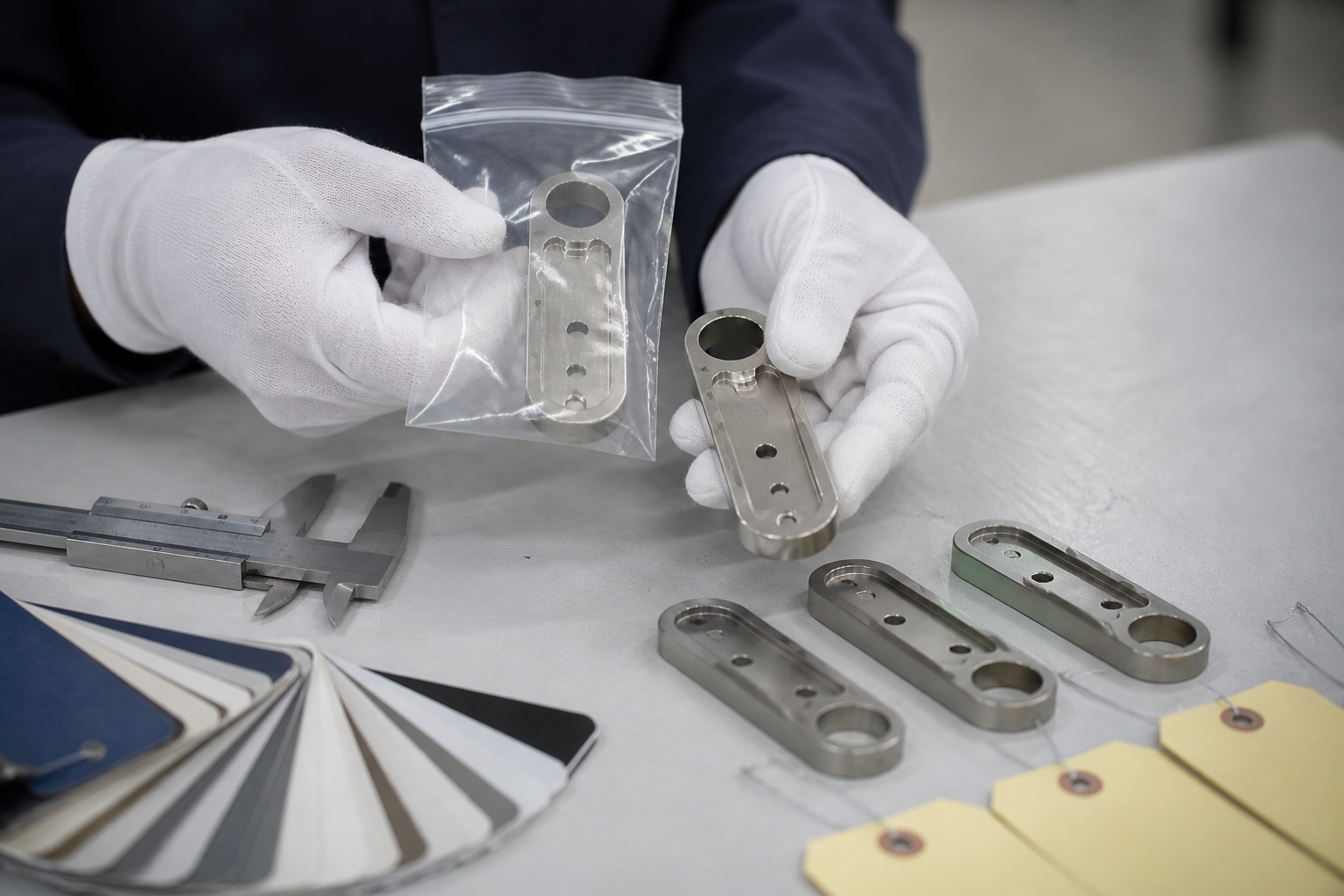
Inspection preparation begins with a complete packing list and confirmation that enough finished, packed goods are available. The inspector should sample across cartons and pallet positions, identify the lot and record quantities. If production is incomplete, report the limitation rather than treating a partial lot as the ordered shipment.
The checklist should cover identity, workmanship, dimensions, function, accessories, labels, retail packaging, barcodes, inner packs, cartons and loading condition as applicable. Link each item to a specification or sample. Photograph failures with scale and context, and record measured results rather than only pass.
Inspection cannot validate facts requiring laboratory equipment, legal interpretation or long-duration testing. It can confirm production appears consistent with approved evidence and detect obvious substitutions. Escalate discrepancies before shipment; do not rewrite requirements after seeing results.
Commercial Comparison and Landed-Risk Thinking
Compare suppliers on the same scope. Include samples, tooling, customization, packaging, third-party review, inspection, corrective work, export packing, freight assumptions and replacement support. A low unit price can be offset by missing evidence, an unstable component, oversized packaging or a schedule without correction time.
Assign cost and schedule contingencies to unresolved items. Confirm who pays for retesting after an unauthorized change, reinspection after rejection, reprinted packaging and disposal or return of nonconforming goods. These terms belong in the purchase agreement with appropriate advice.
Work backward from the required arrival date: requirement closure, sample dispatch, approval, document review, artwork lock, material booking, first-piece review, production completion, inspection, correction, booking and loading. Protect the correction window; shipping immediately after inspection removes the buyer's ability to respond.
Records to Retain
Maintain the RFQ, quotation assumptions, purchase order, specifications, bill of materials, approval samples, artwork proofs, declarations, relevant reports, change notices, production evidence, inspection report, packing list and shipping documents. Use consistent SKU and revision identifiers.
Retention periods depend on market and product obligations. Set the schedule with qualified advice. Records must remain retrievable for complaints, recalls, customs questions, retailer audits and repeat orders. A structured evidence pack reduces work when the same unchanged model is reordered.
A Practical RFQ Checklist
Send suppliers the exact product model and revision, destination markets, annual and first-order quantities, sales channels, packaging hierarchy, required documents, artwork ownership, sample schedule, change-notification rule and shipment-inspection plan. Ask for facts and evidence, not a one-word promise of compliance.
Compare quotations on the same scope. Separate product price, customization, packaging, testing coordination, inspection support and logistics assumptions. Confirm which work is included, which is performed by independent specialists and which remains the importer’s responsibility.
Frequently Asked Questions
Does AQL mean the supplier may ship defects?
No. AQL indexes a sampling plan; it is not permission to manufacture defects.
Which ISO 2859-1 edition is current?
ISO lists the 2026 third edition as current and the 1999 edition as withdrawn.
Should every test use the full sample?
Not necessarily. Define full-sample checks and smaller test subsets according to risk and method.
What happens after a rejected inspection?
Contain the lot, investigate, correct, document the work and agree a valid reinspection.
Can AQL replace product compliance testing?
No. Acceptance sampling and regulatory or laboratory testing serve different purposes.
Related KudBo Resources
Browse the KudBo product catalog, explore the buyer guide library, read more Wholesale Buying sourcing guides, or send your product requirements for a focused sourcing discussion.
Conclusion
Reliable sourcing turns a broad requirement into controlled product, document, artwork and shipment checkpoints. The buyer remains responsible for market access and acceptance decisions; the supplier should provide accurate, model-specific evidence and reproduce approved specifications consistently.
Final CTA
Review KudBo products, read our private-label sourcing guide, or email info@kudbo.com with your a pre-shipment inspection brief. We will help organize a practical shortlist and sample-review plan.