Introduction
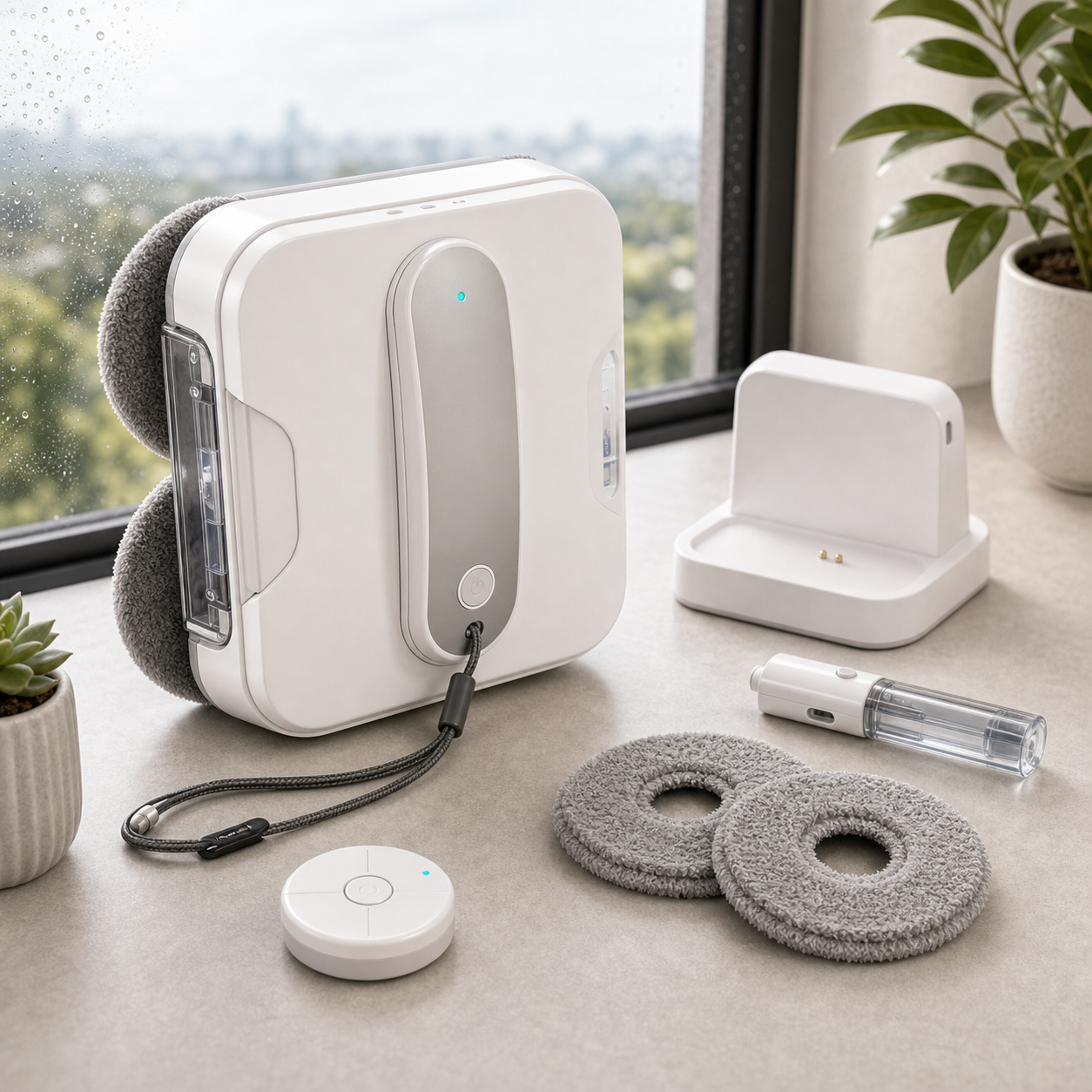
The cleaning pad is a consumable component of a window robot, not a decorative accessory. A unit may run its route correctly while leaving streaks because the pad is dirty, fitted badly or incompatible with the cleaning liquid. Buyers who compare only navigation videos may overlook the part that determines everyday ownership cost and much of the customer's visible experience.
The KudBo window cleaning robot requires model-specific review of glass suitability, tethering and electrical safety. Earlier KudBo guides cover framed versus frameless glass and the buyer decision checklist. This article focuses on pads, cleaning routine and spare supply. It does not assert a measured cleaning score for any KudBo model.
An overseas retailer may discover the support burden only after launch: owners ask whether they can wash the pad in a machine, replace it with a generic cloth, use their preferred cleaner or keep cleaning after the pad's edge lifts. Those answers depend on the exact system. The quotation should include them before the first carton is printed.
Identify the Pad System Supplied
Count the pads included with the retail unit and identify each version by model and part number. Is the textile permanently attached to a carrier plate, fastened with hooks or clips, or a separate washable fabric? What orientation does the robot require? Ask the supplier to show a pad replacement using the final production design rather than a prototype with different fasteners.
ECOVACS's WINBOT pad support guidance illustrates that even within one manufacturer's family, pad and plate construction can be specific. It is an example of why a distributor needs its own model-specific instructions; it is not a recommendation to use ECOVACS parts in a KudBo robot. Never promise compatibility based on shape alone.
Ask whether pad material or pile height changes between available modes. A “deep clean” option may require a different cloth or solution. If so, the retail pack and app should make that distinction clear. Photograph each pad type and mark the approved revision so an inspector can spot substitutions in a later shipment.
Test the Cleaning Sequence, Not a Single Pane
Define a representative glass surface and a safe test position. Record its size, whether it is framed, initial soil, cleaning solution, pad condition and the route selected. Keep the safety tether and supplier instructions in place. Compare the result under ordinary light, including edges and streaks, but do not claim a quantified cleaning percentage unless an appropriate method supports it.
Run a second cycle after the pad becomes damp or soiled. Does the robot ask for a change, or does the owner have to inspect visually? What happens when the pad is too wet or fitted unevenly? A brand should not promise effortless cleaning on heavily soiled glass if the recommended procedure requires a preliminary wipe or multiple pad changes.
Keep pad performance separate from navigation. A robot can complete a route and still leave haze, or clean a pane while occasionally pausing for an edge-sensor reason. Customer support needs to know which symptom points to pad care, glass preparation, fluid amount or a device fault. A troubleshooting table grounded in observed behavior will be more useful than a generic “try again” message.
Verify the Approved Wash and Dry Method
Remove the pad according to the draft manual. If the supplier allows rinsing, washing or machine cleaning, test that method on the complete pad assembly. Check dimensional change, fraying, adhesion, clip fit and lint after repeated cycles. A fabric swatch surviving a wash does not prove that the pad carrier or fastener survives the same cycle.
Ask how dry the pad should be before it is fitted and how it should be stored. An overly wet pad may change traction or leave water near sensitive parts; an unwashed pad stored damp may smell or transfer dirt. Do not prescribe a liquid or laundering temperature from intuition. Use the exact model's approved instructions and qualified safety review.
The manufacturer's broader WINBOT support page is another reminder that maintenance steps, station functions and accessory design are product-specific. The buyer's own manual should avoid borrowing a wash or replacement sequence from a different robot simply because the housing looks similar.
Calculate the Refill Cost Honestly
Ask for wholesale and end-user pricing for replacement pads, solution if required, edge strips and any serviceable drive parts. Establish which items are standard, optional or proprietary. A robot priced attractively at launch may be hard to sustain if replacement cloths cannot be reordered or require excessive freight minimums.
Estimate use frequency by the target customer and model the number of pads likely needed for that use, but label the estimate as a planning assumption. Do not publish a guaranteed pad lifespan from a short trial. Define a stocked spare-parts kit for the distributor and a part-ordering route for owners. If a pad changes shape with a hardware revision, maintain compatibility records instead of silently substituting an apparently close part.
Packaging should protect pads from compression and contamination. Count them at factory pack-out, and make the quantity visible on the outside of the box. A lifestyle photograph with three cloths can mislead if the quoted SKU includes only one. The first-use card should tell customers how to inspect and fit the supplied pad before starting the robot.
Mid-Article CTA
Send Your Requirements with glass types, expected use frequency, refill plan and destination market. Email info@kudbo.com to request model-specific pad and spare-part details. Include your preferred customer-support language and packaging configuration.
Keep Safety Instructions Visible
Maintenance never replaces correct setup. The owner still needs to use the robot only on supported glass, attach the safety system as instructed and keep hands away from unsafe locations. A maintenance video filmed at ground level must not imply safe use on every elevated pane. Ask qualified safety reviewers to evaluate the exact unit and the market-specific instructions.
If the device uses a liquid reservoir, separate pad cleaning from reservoir filling and storage. What cleaning solution is permitted? Can a consumer use plain water? What must be emptied before long storage or shipment? The wrong liquid can affect materials or leave residue, so avoid approving broad compatibility copy without product evidence.
Use icons only when they are unambiguous. A droplet symbol may mean “dampen pad” on one model and “fill tank” on another. Test the instructions with someone who has not seen the trade-show demonstration. Note whether they can locate the correct replacement pad and secure it before pressing start.
Inspect Production Against a Reference
Factory testing can verify suction start, pad presence detection if fitted, basic route behavior and a defined shutdown sequence. Shipment inspection can sample pad count, material appearance, fit, labels and safe pack-out. Neither proves a universal streak-free result across every pane and contaminant. Keep the method, glass and solution with any actual performance report.
Retain a signed reference set containing robot, pad, carrier, solution if included, tether, manual and package. Review any change to pad material or fastening method against navigation, suction, cleaning and service instructions. A cheaper pad may change the user experience even when the electronics remain untouched.
| Buyer question | What to inspect | What to disclose |
|---|---|---|
| Pad identity | Carrier, fabric and model revision | Exact included quantity |
| Cleaning | Approved wash, dry and refit sequence | Limits and replacement signs |
| Performance | Defined glass and soil condition | No universal streak-free promise |
| Support | Price and stock of refills | How owners order the right part |
Calculate the Pad Program Before Launch
Ask how many pads are included, how often the maker expects them to be replaced, what a replacement pack costs and whether the material specification is stable across production lots. Those inputs let a retailer estimate first-year ownership cost for a defined cleaning frequency. Do not publish one universal number: window area, dirt level, washing method and user behavior change replacement needs. Instead, show the assumptions and tell buyers which parts of the estimate are provisional.
Test the replacement workflow on the sample. Can a customer recognize the correct pad orientation, remove a dirty pad without touching the cleaning face and attach a washed one securely? If pads have a wash limit, mark how it was established. A generic microfiber label does not tell the buyer whether the backing, attachment or edge binding will survive repeated laundering. Keep a physical approved pad with the inspection reference set.
Bundle the right instruction with the robot: safe power and tether setup, pad attachment, permitted cleaning liquid and after-use drying. If a demonstration uses a proprietary fluid, identify whether it is included or sold separately. Product photography should not imply that a robot can clean any glass shape or operate unattended. The accessory program and the safety instructions must travel with the same model revision.
Build a Service Plan for Routine Wear
For each proposed retail market, identify the replacement pad SKU, its pack quantity, reorder lead time and compatibility with the installed robot base. A retailer may stock the machine for a holiday season but keep selling pads afterward. If the pad attachment changes, update the compatibility chart before replenishment. Otherwise, a customer may buy a visually similar refill that slips during operation.
Ask the supplier to separate normal pad wear from appliance fault in the support script. Streaks may come from a saturated pad, incorrect fluid, dirty glass or a navigation issue. The remedy and warranty classification differ. A few model-specific example photos can reduce unnecessary robot returns, provided they accurately show the approved pad and cleaning solution.
For shipping, protect pads from dust and humidity and keep spare packs clearly labeled. At final inspection, count included pads and check that the correct wash and replacement guidance is in the box. A premium robot with no predictable refill route is not a complete program for a wholesale buyer.
Compare Cleaning Methods Under Fair Conditions
A buyer evaluating pads should agree on a reference window type, soil level, fluid and number of passes. Photograph the glass before and after from the same angle and light. Avoid judging one pad on a heavily soiled surface and another on a recently cleaned pane. Note edge areas, streaks and whether the robot requires a manual finish. The point is to determine a credible consumer instruction, not to publish an unrepeatable “spotless” percentage.
Keep the pad-care procedure in the test. A clean new pad may perform differently after several washes. The review should include the approved detergent or water-only method, drying and reattachment. If one pad can be reversed, specify which side is meant for which step. A customer should not need a specialist cleaner to make the product work as shown unless that fluid is supplied and disclosed.
Consider the surface context too. Outdoor windows, bathroom mirrors and interior partitions have different deposits and safety conditions. A pad recommendation for one should not be applied blindly to another. The retail page can show examples while directing users to the model's glass and tether requirements. That combination is more credible than a single universal cleaning claim.
Frequently Asked Questions
Can a generic cloth replace a window robot's pad?
Do not assume so. Pad dimensions, fastening, thickness and friction can affect movement or sensing. Ask the manufacturer to identify approved parts for the exact model and record any alternative as a tested configuration. An apparently similar shape is not evidence of compatibility.
Does a completed cleaning route prove a clear window?
No. Route completion, pad condition and final glass appearance are separate observations. A dirty or overly wet pad can leave streaks even when navigation works. Review a defined glass, solution and pad state before writing performance copy.
Should pads be washed in a machine?
Only if the exact pad assembly's instructions permit it. A textile piece attached to a plate may have different care limits from a detachable cloth. Test the approved method and make the instruction visible. Do not extrapolate from another brand's manual.
What should the distributor stock?
At minimum, ask about approved pads and any model-specific cleaner, edge or attachment parts. The quantity to hold depends on sell-through and expected use; forecast it explicitly rather than claiming a universal service interval. Keep part revisions tied to the robot model.
Is a pad inspection enough for a safe window-cleaning product?
No. Glass suitability, attachment, tethering, power and electrical safety require separate assessment. A maintenance guide addresses one part of ownership. Do not treat an accessory check as approval for elevated or unusual glass use.
Conclusion
Window-robot sourcing should include the cost and care of the wiping system from day one. Verify the pad on the actual robot, review repeat cleaning and supply replacement parts by revision. Honest claims and a clear maintenance card turn a good demonstration into a supportable retail offer.
Final CTA
For related sourcing questions, browse all buyer guides or the Product Sourcing collection.
Explore the current KudBo product catalog when comparing this guide with available SKUs.
Contact KudBo or email info@kudbo.com with target glass use, quantity and refill expectations. KudBo can coordinate a sample and a model-specific consumables brief for your buying team.