Introduction
A passive trunk cooler needs a defined temperature profile, not an unsupported number of cold hours. Ambient exposure, payload, gel-pack preparation and opening frequency all affect the result. Insulation slows heat transfer; it does not actively refrigerate contents or establish food safety by itself.
For automotive and grocery-accessory buyers, the useful question is whether the quoted configuration supports a realistic journey with stated conditions. A large cold-hours badge can conceal an empty-box test, an unusually mild environment or more gel packs than the retail unit contains. These differences belong in the buying decision.
This trunk cooler temperature profile guide helps evaluate a trunk cold-chain organizer. It proposes a controlled review, not completed KudBo testing or a food-safety guarantee. Food handling must follow authoritative guidance and the actual application. An accessory should not be presented as a validated medical or commercial cold-chain system without appropriate evidence.
Define the Journey and Payload
Describe the intended trip, duration, vehicle setting and opening routine. A short grocery journey and a full-day outdoor event are different applications. Do not choose a single time claim before deciding which task the product is meant to support.
Record payload type, quantity and starting condition. For a technical screening, use an appropriate reference load and method rather than leaving food safety to guesswork. Thermal mass, arrangement and empty space can change the profile. A mostly empty demonstration does not automatically represent a full grocery load.
The USDA FSIS camping food-safety guidance explains the importance of suitable cold sources and safe handling. It is not certification of a particular cooler. Keep general food guidance separate from model-specific retention evidence.
Establish a Gel Pack Organizer Test Method
Identify the gel-pack model, count, mass and preparation procedure. State whether packs are supplied with the retail product or used only for the trial. A result achieved with extra cooling material should not be advertised as the performance of the unmodified retail unit.
Record preparation conditions without inventing a universal freezing time. The pack supplier’s instructions and the agreed method should control that step. Starting temperatures and placement need to be documented. Two apparently identical packs may enter the test in different states if preparation was inconsistent.
Ask whether gel packs or other cold sources are approved for the organizer and how they should be arranged. Do not place unreviewed materials against contents or rely on a photograph to establish compatibility. Any food-contact or leakage question should be assessed separately from temperature retention.
Measure a Profile, Not One Attractive Point
Cooler payload temperature logging should show values over the agreed period. A single initial and final reading can miss intervening conditions. Define measurement locations, sampling interval and instrument suitability with competent personnel. Sensor placement influences what the record represents.
Keep ambient conditions in the same record. A cooler tested in a stable room is not automatically validated for a warm stationary car or a variable journey. If the application requires those conditions, use an appropriately designed assessment rather than assuming the room result transfers.
Do not report false precision. State instrument limitations, relevant uncertainty and the method’s scope. A surface reading and an internal reference-load reading are not interchangeable. Label the quantity clearly so a buyer can understand whether the curve represents air, packaging surface or payload.
Review Passive Cooler Opening Frequency
Customers may open the organizer during the trip. Define when and how long that happens in the proposed evaluation. A sealed test can be informative, but it should not silently support a claim for frequent access. Opening changes the condition being evaluated.
Record the lid or closure procedure, fill level and any removable insulated insert. A user may leave a flap partially open or remove a module to reach other contents. Instruction comprehension can help reduce such confusion, but the product must still be described within its tested scope.
Compare a sealed profile and an agreed access profile only when the application justifies both. Keep their results separate. Do not average them into one cold-hours number that conceals the difference. The objective is a usable buying boundary, not the most favorable combined statistic.
Build a Car Grocery Insulation Validation Record
| Variable | Required detail | Why it matters |
|---|---|---|
| Organizer | Model, insert and closure | Defines the actual configuration |
| Payload | Reference material and starting state | Influences thermal behavior |
| Cold source | Identity, count and preparation | Prevents hidden extra cooling |
| Ambient | Exposure and duration | Limits application transfer |
| Access | Opening schedule and handling | Represents the journey routine |
| Measurement | Locations, interval and instruments | Explains what the curve means |
A useful report includes unsuccessful and incomplete trials with reasons. Do not select only the coolest measurement location. If the method changes, identify the change and avoid treating the new curve as directly comparable without review.
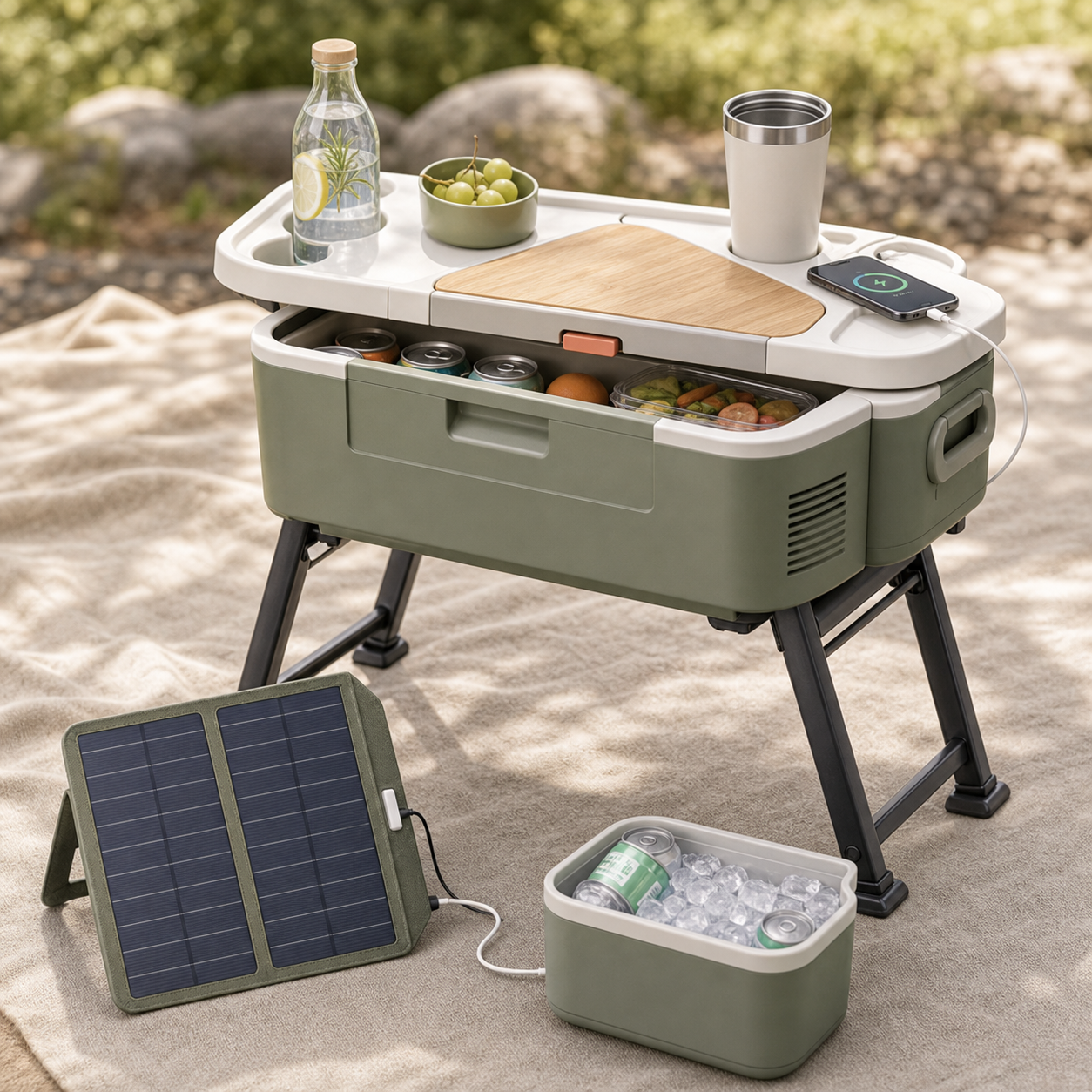
For a solar cooler table, establish whether the offered model actively cools, passively insulates or supplies another solar function. A solar panel does not prove refrigeration. Keep its system architecture and energy requirements separate from a passive organizer comparison.
Mid-Article CTA
Send Your Requirements with the journey, reference payload, expected access and quantity. Email info@kudbo.com to discuss a model-specific configuration and evidence request before approving a retention claim.
Define the Insulated Trunk Cold Retention Claim
A claim should state the conditions necessary to interpret it. Identify the load, cold source, ambient exposure, closure and relevant stopping rule. Do not suggest that the measured interval represents safe storage for every food or a maximum permitted transport time.
The USDA FSIS refrigeration guidance provides food-safety context. A buyer should not replace that context with an accessory’s promotional duration. Appropriate temperatures, handling and application requirements remain separate responsibilities.
Avoid absolute language such as keeps groceries safe all day or provides guaranteed cold-chain protection. A product can offer useful insulation without claiming active control, temperature monitoring or a validated logistics system. Use a realistic application description and preserve the evidence limits.
Check Installation and Vehicle Organization
Review the organizer’s permitted placement, restraints and access using the vehicle and product instructions. An insulated module can still interfere with cargo organization or movement if placed incorrectly. Do not assume that the trunk’s available space makes every mounting arrangement suitable.
Evaluate the complete filled shape and relevant straps or dividers. A unit that fits when empty may change shape with the intended load. Record the configuration and photographs with surrounding context. A close crop can conceal support or securing equipment not included in the retail pack.
Do not imply crash protection or safe transport of every heavy object without appropriate assessment. Thermal performance and vehicle installation are different questions. Keep the accepted load and positioning requirements explicit rather than treating insulation evidence as approval of the entire application.
Review Moisture, Cleaning and Storage
Cold sources can create condensation and require a practical drying routine. Ask which liners and inserts are removable and what cleaning method is approved. Do not recommend a chemical or dishwasher process based only on the outer fabric or plastic name.
Observe access to corners, seams and the closure. Record whether the unit can be emptied and dried after the approved task. These observations affect customer support but do not quantify antimicrobial performance or establish sanitation. Any hygiene claim requires its own appropriate evidence.
For reusable gel packs, obtain care and damage instructions from the relevant supplier. A leaking or damaged pack should not be reused merely because it still feels cold. Keep cold-source replacement information clear and do not assume that any pack of similar dimensions is equivalent to the tested configuration.
Compare Quotations on the Tested Retail Unit
List the organizer, insulated modules, dividers, straps and cold sources where included. Identify optional items and separate requirements. An attractive lifestyle image with multiple gel packs can mislead if the quotation contains none. The product description should match the actual pack-out.
Request carton dimensions and gross weight for that complete configuration. Bulky insulation and presentation packaging can materially affect transport planning. Mark estimates and obtain confirmation before booking. Do not claim a freight-saving percentage from product dimensions alone.
Require notification of changes to insulation, liner, closure, insert geometry or supplied cold sources. Such changes can affect the approved profile even when the exterior color remains unchanged. Retain the sample identification and method so the affected evidence can be reviewed for repeat orders.
Use Factory Testing and Inspection Within Scope
Factory testing may address component fit, closure, seams and agreed operation, but the supplier should state the actual methods. A basic check is not equivalent to a full thermal characterization. Ask which records relate to the promised retention claim and which relate only to assembly.
Shipment inspection can verify identifiers, unit completeness, visible condition and approved screening. It does not recreate every customer journey or prove food safety. Keep thermal validation, market requirements and lot conformity as separate records. The KudBo catalog is a selection resource rather than a substitute for those files.
Imagine a hypothetical buyer whose journey includes repeated access. A sealed laboratory-style profile may look favorable but fail to answer that requirement. The buyer should request a relevant access assessment or narrow the claim. This is an illustrative decision, not a KudBo project or an actual measured cooler result.
Ask for the Conditions Behind the Curve
When a supplier sends a temperature chart, request the configuration and method before accepting the conclusion. Identify organizer revision, reference load, cold-source preparation, sensor locations and ambient exposure. A curve without those details is difficult to reproduce or compare.
Check for missing readings, changed positions or interruptions. Those facts should remain visible. A smooth presentation does not prove the original record was continuous. If values were averaged or processed, identify that step and retain original data where available.
Review what the stopping point means. The end can represent planned duration, equipment interruption or a defined condition. It should not automatically be marketed as maximum useful time. A finished chart also does not establish food safety.
Ask whether the tested pack-out is quoted. Extra gel packs, another liner or a special closure can produce a configuration customers will not receive. Quote that arrangement or state the difference and request evidence for the retail unit. Do not hide an accessory dependence behind the chart.
Explain preparation and access in supported terms. The customer should follow food-handling and vehicle guidance rather than relying on one cold-hours number. The technical report is not a universal customer guarantee.
If methods differ between suppliers, qualify the comparison or request a common evaluation. Ranking unmatched charts by the most favorable point is not reliable procurement. Retain the chart with accepted wording so later reviewers know which conditions supported the statement and which responsibilities remained outside its scope.
Keep the Approval Evidence Retrievable
Record the model, revision, method, conditions, observations and reviewer in the purchase file. A later reader should distinguish a supplier statement, a buyer observation and an unresolved requirement. Do not describe an illustrative photograph as a completed factory test or a real customer project. If a revised sample is proposed, identify what changed and review the affected requirement before carrying the earlier conclusion forward. This record should support the decision, not create certainty that the evaluation never established. Keep the final claim within the observed or appropriately documented scope, and make remaining limitations visible to the person approving artwork and the order.
Preserve the Reference Load Description
Keep the load description with the temperature file rather than storing only the chart. A later evaluator needs to know what was inside, its starting condition and how it was arranged. If that information is unavailable, qualify the conclusion and request clarification. Repeating the chart's headline on the website does not resolve the missing context or establish that customers will reproduce the same thermal conditions.
Related Buyer Resources
Continue with Tire Inflators: Top-Up vs Flat-Tire Duty for a complementary purchasing question. Compare the full product catalog, or browse the KudBo sourcing blog or the product sourcing topic collection for additional buyer guides. These resources provide decision context; each product still needs its own model-specific approval.
Frequently Asked Questions
Does insulation guarantee safe food temperatures?
No. Passive insulation slows heat transfer but does not actively refrigerate contents or establish food safety. Starting conditions, cold sources, ambient exposure and access matter. Follow authoritative food-handling guidance and review the model-specific application rather than treating a promotional cold-hours figure as a universal safe-storage period.
What should a cold-retention report include?
Identify the organizer, payload, cold-source preparation, ambient conditions, opening routine, measurement locations and instruments. Show the relevant profile and limitations. A single favorable reading or an empty-box trial cannot automatically support a general claim for every grocery journey and load.
Can extra gel packs be used for a demonstration?
Only when their use is clearly documented and appropriate to the method. Do not attribute that result to a retail configuration lacking those packs. State count, identity and preparation, and distinguish supplied contents from optional cooling material. Hidden accessories make quotations and claims difficult to compare.
Does a solar panel mean a cooler actively refrigerates?
No. Confirm the system’s actual architecture and energy function. A product may passively insulate or use solar input for another purpose. Active cooling, temperature control and useful solar operation require their own model-specific evidence rather than inference from the product name or panel photograph.
Which changes need a profile review?
Changes to insulation, liner, closure, inserts or supplied cold sources can affect thermal behavior. Require notification and reassess the affected claim. Retain the approved sample and test method so a matching exterior is not mistaken for unchanged retention performance in another shipment.
Conclusion
A trunk cooler temperature profile should describe a real, bounded task. Define the payload, cold source, exposure and opening schedule, then preserve the measurement meaning. This gives buyers a credible comparison while keeping passive insulation separate from active refrigeration and food-safety guarantees.
Final CTA
Get a Quote or email info@kudbo.com with your destination, quantity and journey requirements. KudBo can discuss available automotive options and sample arrangements. Confirm the final configuration and thermal evidence before approving retail claims or production.