Introduction
A travel steamer solves a garment-care task; a travel kettle solves a hot-water task. Neither is an interchangeable hospitality gift, and neither should be presented as suitable for every hotel or destination. Start with the recipient’s routine, then verify the exact appliance, instructions and operational restrictions before comparing prices.
Corporate buyers often encounter both products in the same travel-accessory range. That makes it tempting to select whichever has the more compact package or attractive finish. Yet a gift that requires an unsuitable outlet, conflicts with accommodation rules or duplicates equipment already provided may create more friction than value. The first decision is usefulness, not branding area.
This travel steamer vs travel kettle guide is for hotel procurement teams, incentive agencies and distributors planning portable-appliance programs. It references travel garment steamers and collapsible travel kettles. The evaluation steps are proposed workflows, not KudBo test results. Destination compliance and electrical assessment require model-specific review by competent specialists.
Match the Appliance to a Defined Guest Task
Garment preparation before a meeting
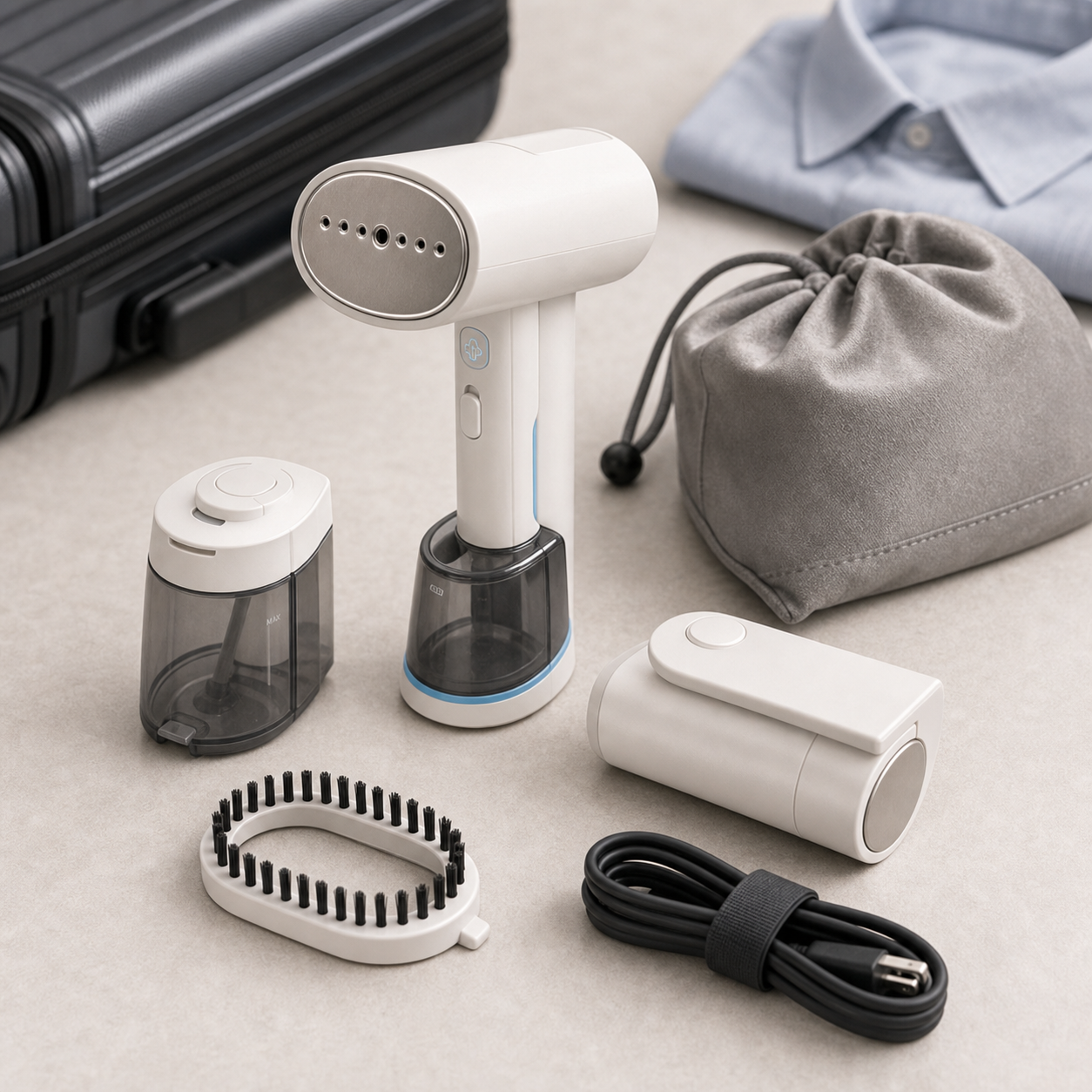
A steamer can be relevant when recipients carry clothing and want a convenient touch-up routine. Define the garments and setting rather than saying it works on everything. The supplier’s permitted fabrics, operating orientation and water guidance matter. A product intended for upright use should not be depicted working horizontally because a photograph looks more convenient.
Plan the entire task: unpacking, filling, preparing the garment, using the appliance, cooling it and storing it afterward. Decide where the user can put it down safely and how the cord reaches an appropriate outlet. A short heat-up statement cannot replace these practical questions. Do not imply that steaming sanitizes garments or provides a medical benefit without suitable evidence.
Hot water for a personal beverage routine
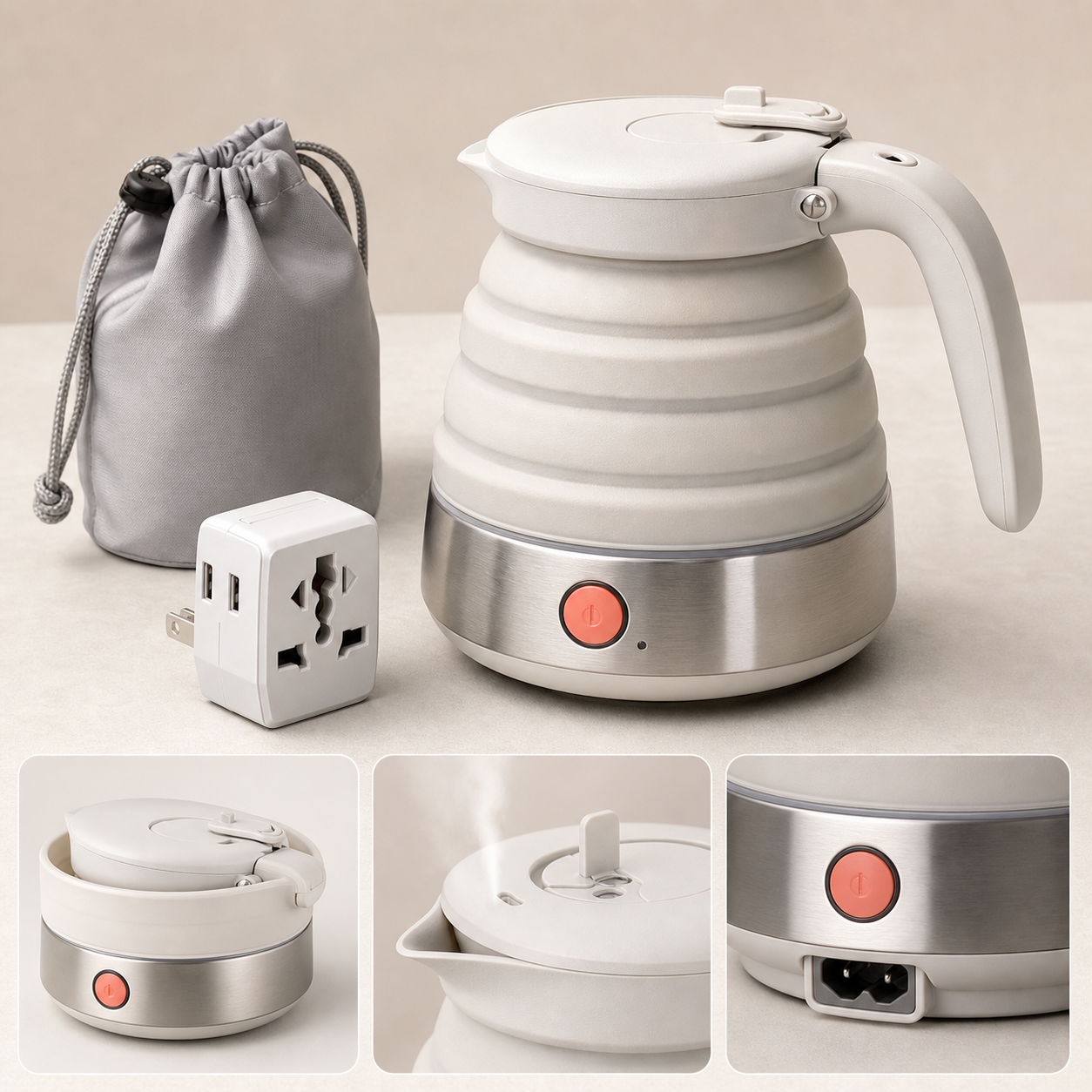
A kettle may be useful for travelers with a specific beverage preference, but many hotel rooms already provide one. For a corporate travel gift specification, establish whether portability, collapsibility or a small personal capacity provides a genuine additional benefit. If recipients mainly stay in rooms with suitable appliances, another travel accessory may be a better use of the budget.
Describe approved contents precisely. A kettle intended to heat water should not be shown boiling milk, soup or food unless its instructions and supporting evidence expressly permit that application. Separate water-contact suitability from ease of cleaning and from electrical safety. One favorable statement does not establish all three.
Compare Practical Value Before Unit Cost
| Program requirement | Steamer question | Kettle question |
|---|---|---|
| Recipient task | Which approved garments need touch-ups? | Is a personal hot-water appliance actually needed? |
| Work surface | Where can the hot unit rest? | Is there a stable permitted heating surface? |
| Water handling | How is the tank filled and emptied? | How are fill level, pouring and drying explained? |
| Travel support | Can users identify permitted orientation? | Can users identify permitted voltage and contents? |
| Repacking | Is the unit cool and dry before storage? | Is the vessel cool, dry and safely collapsed? |
| Brand impression | Does the first-use task feel straightforward? | Does the benefit exceed equipment already available? |
Hospitality appliance gift selection should also account for the person responsible for problems. A hotel-owned appliance can have a room-service support process. A take-home gift may be used in several countries with no local assistance. Identify who handles instructions, spare parts and returns before selecting a model with complicated setup.
For a hotel travel accessory bundle, consider nonpowered alternatives such as compression packing cubes. A bundle does not need an electrical product to feel substantial. Compare customer effort and probable use, not only the number of pieces in the box.
Verify Electrical Suitability Without Assuming Universal Use
Request the nameplate, rated input, plug configuration, operating instructions and destination documentation for the exact quotation. A plug that fits physically does not demonstrate that the appliance accepts the local supply. A simple travel adapter is not automatically a voltage converter, and a switchable appliance is not automatically self-adjusting.
Keep the product’s input rating separate from the intended sales-market label. If the supplier offers different regional versions, assign separate identifiers and control their pack-out. A mixed shipment with similar-looking plugs or labels can become difficult to distinguish in a warehouse. Retail artwork should match the actual unit, not a generic photograph from another market.
For US workplace settings, OSHA’s electrical safety guidance provides background on electrical hazards; it is not a consumer-appliance certification for a specific model. Accommodation policies also vary. Obtain approval from the relevant operator rather than adding an unsupported “hotel approved” badge to packaging.
Ask a qualified reviewer to identify the applicable assessment for the destination and product configuration. Do not select a test standard solely because a competitor lists it. Heating appliances, plugs, insulation, materials and instructions can require different evidence. An attractive certificate image without a traceable model and report scope is not a satisfactory basis for a buying decision.
Make Guest Room Appliance Instructions Usable
Explain the sequence where mistakes happen
Guest room appliance instructions should show the correct fill limit, setup, permitted operating position, hot surfaces and cooling process. Put essential warnings near the relevant step. A separate booklet that stays inside the gift packaging may not reach the user when the product is handed over without its box.
Check whether the water opening can be confused with another opening or whether an indicator is mistaken for an on/off control. For collapsible designs, confirm how the user knows the vessel is fully extended and stable before filling. For steamers, explain whether the appliance must be disconnected before filling according to its manual. Never improvise a sequence that contradicts the supplier’s reviewed instructions.
Test comprehension without coaching
Provide a draft insert and a cool, unpowered sample to someone unfamiliar with the product. Ask them to describe the intended steps and restrictions. This observation can reveal ambiguous diagrams without exposing the person to a live heating test. Any powered evaluation should follow an approved method with appropriate supervision and safeguards.
Record the specific misunderstanding rather than labeling the participant careless. Revise the instruction, review its technical accuracy and repeat the comprehension task. The purpose is to reduce avoidable confusion. It does not establish that every customer will read the insert or that the product is safe in every circumstance.
Mid-Article CTA
Send Your Requirements with the recipient profile, destination, hospitality setting and expected order quantity. Email info@kudbo.com to discuss a task-based shortlist and the documents to request before approving samples.
Plan a Portable Appliance First Use Test
Agree a portable appliance first use test that mirrors the intended task while remaining within the approved operating instructions. Identify the sample revision, water condition, starting state and acceptance criteria. Keep performance observations separate from safety compliance. A buyer demonstration can reveal inconvenience, but it does not replace a laboratory assessment.
For a steamer, relevant observations may include access to the tank, clarity of readiness indication, handling with an approved garment and the practicality of cooling and storage. Assess the garment outcome with a defined reference rather than a vague “professional finish” description. Different fabrics and crease conditions may produce different results.
For a kettle, examine stable setup, access to the fill mark, lid operation, pouring control and drying. If a boil-time claim is proposed, its water volume, starting temperature, input supply and stop condition must be stated. Do not carry a measured time from one regional version to another without review.
After the intended task, inspect the product when cool. Check residual water, accessible cleaning areas and the fit of the storage pouch. Repeat the unpack-to-storage sequence enough to reveal practical issues, using a count agreed for screening. Record that count honestly; a short trial cannot establish years of durability.
Control Branding and Bundle Pack-Out
Choose a marking method that does not obscure essential labels or alter a safety-critical surface. Ask the supplier which areas are available and whether the proposed marking needs additional review. Printing on a flexible kettle section can behave differently from printing on a rigid shell. Approve a decorated sample, not just an artwork mockup.
Freeze the retail-unit contents: appliance, regional cord or plug where applicable, manual, permitted accessories and storage pouch. Do not add an adapter merely to make the bundle look complete. Its electrical suitability and instructions need separate confirmation. A missing accessory that is essential for use is a different defect from a cosmetic packaging scuff.
Test whether recipients can identify the model and find support after discarding the gift sleeve. Brand visibility should not come at the expense of traceability. Keep the product identifier, relevant warnings and contact route readable. A QR link can supplement instructions, but core first-use information should not depend entirely on connectivity.
Consider Maintenance and Support Before Handover
Water-related care should reflect the actual materials and mechanism. Ask for approved cleaning or descaling instructions and exclusions. Do not recommend a household chemical because it works on an unrelated appliance. Clarify whether any removable component can be washed separately and which parts must remain dry.
Plan a support response for the most likely questions: permitted supply, fill limit, readiness indication, cooling, storage and replacement components. Distinguish a use question from a suspected defect. Staff should not advise continued operation when a customer reports damage, abnormal heating or a problem outside the manual.
For repeat orders, retain the approved instruction revision and sample identity. A changed heating assembly, lid, seal or control can invalidate earlier observations. Establish a notification requirement for substitutions and ask which changes trigger renewed assessment. A logo and color match are not enough to show that the second shipment is technically identical.
Release the Order Against Evidence, Not Appearance
Before production approval, reconcile the quotation, sample, regional label and instruction insert. Each should identify the same appliance and accessory configuration. Resolve open questions in writing, particularly permitted applications and destination versions. A supplier’s general brochure cannot replace a configuration-specific agreement.
Shipment inspection should verify identifiers, package contents, visible condition and agreed functional screening. Hazardous or destructive electrical tests belong with qualified personnel under the appropriate method. The inspection report should show what was examined, the sample selection and any limitations. Avoid interpreting a clean visual report as full electrical approval.
For advertised benefits, request support proportionate to the claim. The FTC’s guidance on advertising and marketing emphasizes truthful, evidence-based claims. Clear task descriptions are more credible than promises such as “works anywhere,” “perfect for all hotels” or “instant professional results.” Those phrases can imply capabilities the model has never demonstrated.
Check the Handover Boundary
Decide whether the appliance remains hotel property or becomes a personal gift. That boundary changes inventory control, access to instructions and the support route after departure. For a hotel-owned unit, staff need a documented process for identifying damage and withdrawing it from use. For a take-home gift, the recipient needs durable model identification and a contact route independent of the event organizer.
Also confirm whether the gift will be handed over sealed or demonstrated. A demonstration should not bypass the final insert or suggest applications absent from the manual. Keep display samples separate from saleable stock and replace any missing accessory before handover. These practical details help prevent a complete approved retail unit becoming an incomplete gift during event preparation.
Choose a Handover Message That Preserves Limits
An event organizer may describe the gift verbally or include a short welcome card. Review that message alongside the appliance manual. A friendly promise such as ready for every trip can unintentionally contradict the regional rating or accommodation restriction. The welcome card should identify the useful task without replacing the operating instructions.
Keep a contact route available after the recipient leaves the event. If the organizer and supplier handle different questions, explain the boundary internally so customers are not passed between them. Also retain the actual gift pack and regional version as a reference. This helps resolve a support question about missing contents without guessing from a photograph of another version.
Related Buyer Resources
Continue with Portable Espresso Pressure vs Extraction: What Buyers Should Test for a complementary purchasing question. Compare the full product catalog, or browse the KudBo sourcing blog or the product sourcing topic collection for additional buyer guides. These resources provide decision context; each product still needs its own model-specific approval.
Frequently Asked Questions
Which appliance is better for a hospitality gift?
Choose the appliance that fills a defined gap in the recipient’s routine. A steamer may support garment preparation; a kettle may support a personal hot-water routine. Confirm local suitability, accommodation restrictions and support needs. Neither category is automatically the better gift for all travelers.
Does a travel plug adapter make either product universal?
No. Physical plug compatibility and electrical input suitability are separate questions. Check the exact appliance rating, destination supply and adapter specification with competent reviewers. Do not assume a plug adapter converts voltage, or that a regional version can be used worldwide because the package describes it as portable.
Can a travel kettle heat food or milk?
Only if the exact model’s approved instructions permit that use and the relevant evidence supports it. A water-heating kettle should not be marketed as a general cooking appliance. Food residues, cleaning requirements and material exposure differ, so a promotional image is not permission for additional applications.
What should a sample handover record contain?
Record the model, regional configuration, input rating, package contents, instruction revision, evaluation method and open questions. Add photographs of labels and the decorated sample. This record links the commercial brief to the appliance actually reviewed and helps prevent mismatched versions or forgotten limitations during production.
Should both appliances be included in one travel bundle?
Only when recipients have a realistic need for both and the bundle’s weight, packaging and support burden are acceptable. Evaluate the combined journey, not just each item separately. A simpler bundle with a nonpowered organizer may provide clearer value when accommodation already supplies hot-water equipment.
Conclusion
The travel steamer vs travel kettle choice is a task and support decision before it is a sourcing decision. Define the guest routine, verify the regional appliance and test the clarity of first-use instructions. A credible hospitality program delivers a useful product with understandable limits, traceable documentation and a practical support route.
Final CTA
Contact Us or email info@kudbo.com with your destination market, quantity, recipient use case and packaging budget. KudBo can discuss suitable catalog options and sample arrangements. Confirm model-specific claims, safety evidence and operator permission before committing to a hospitality appliance program.