Introduction
Maximum pump pressure is not a complete measure of portable espresso quality. A manual brewer must also deliver a workable combination of coffee dose, grind, water preparation, flow and hand effort. For wholesale buyers, a repeatable brewing task and clear instructions are more useful than choosing the largest number printed in bars.
This distinction matters because travel coffee products serve different users. An experienced coffee enthusiast may accept a precise grind requirement and a careful preparation routine. A corporate-gift recipient may expect a quick result using readily available ground coffee. Those expectations can lead to different product choices even when two units advertise similar maximum pressure.
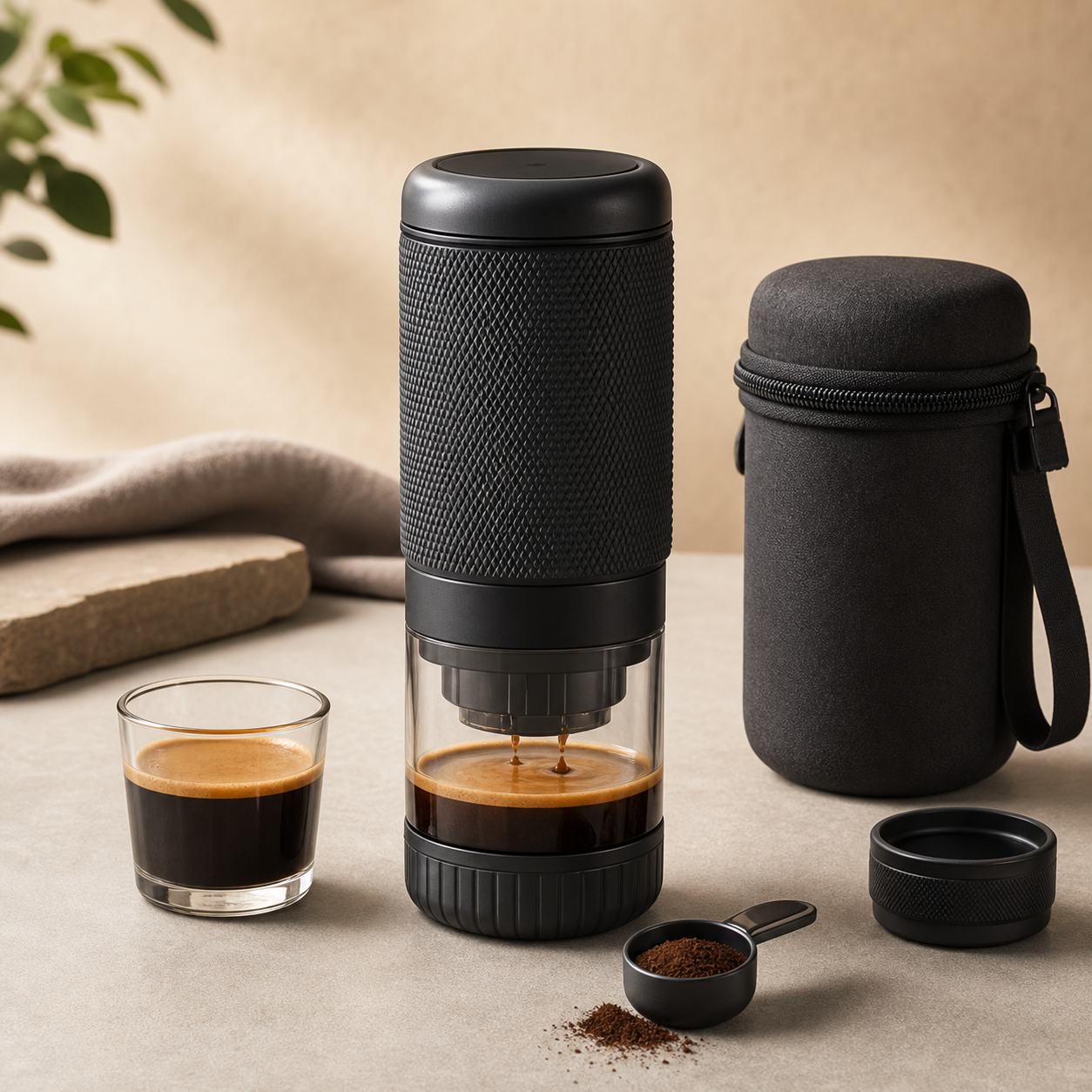
This guide explains how to evaluate portable espresso pressure vs extraction for a procurement decision. The portable espresso press is a catalog starting point, not a claim that every specification discussed below is available on that model. All trial conditions are suggestions. No brewing results, laboratory measurements or customer projects are attributed to KudBo.
Separate Four Different Claims
Maximum pressure is a mechanism statement
Ask where pressure was measured, under which operating condition and with what equipment. A peak reached with a restricted outlet is not necessarily the pressure profile during a normal coffee extraction. Likewise, a pump’s capability does not describe how consistently an unfamiliar user can operate the brewer.
Do not transfer specifications between brands. Wacaco’s Nanopresso product page, for example, provides model-specific information on maximum pressure, grind recommendation and the need for externally heated water. It illustrates why several parameters belong in a specification. It does not establish performance, compatibility or design equivalence for a KudBo catalog item.
Extraction is a complete process
The coffee bed provides resistance while water passes through it. Dose, particle size, distribution and the brewer’s design influence the result. A pressurized outlet can also affect appearance, so visible crema alone should not be treated as proof that extraction was ideal. Buyers need a defined preparation recipe and repeatable observations.
For a screening trial, describe observable outcomes rather than claiming laboratory extraction analysis. Record dose, water input, beverage output and time, then assess usability and taste with a consistent procedure. If dissolved-solids measurements are required, obtain suitable equipment and expertise. An ordinary tasting exercise cannot produce an authoritative extraction percentage.
Hand force is a user requirement
Manual espresso pump force matters when recipients have different strength or grip capability. Observe the operating posture, number of strokes and whether the press can be held securely. Do not create a force rating by guessing from the demonstrator’s facial expression. A quantitative claim requires an agreed measurement method and appropriate instruments.
Ask whether the instructions specify a pumping rhythm, support position or limit. If users repeatedly encounter unusually high resistance, stop and investigate within the manual’s guidance. Never recommend extra force, bypassing a valve or opening a pressurized chamber as a shortcut. Usability should not be improved by suggesting unsafe workarounds.
Heating is a separate capability
A manual brewer may require hot water from another source. An electric portable unit may heat water, pump it, or do only one of those tasks. Establish exactly what the quoted model does. Battery capacity, charging connection and water heating must be documented separately if an electrical version is considered.
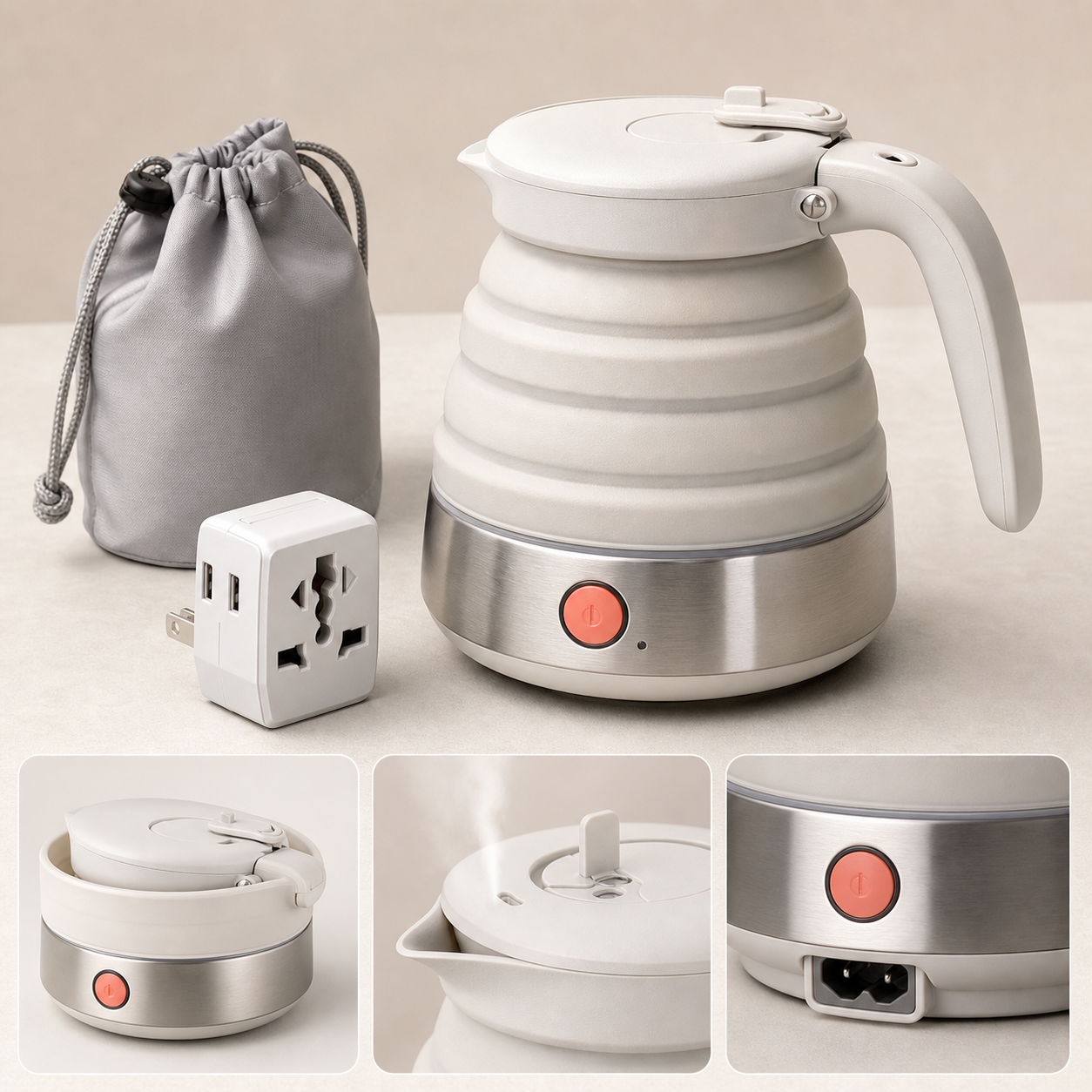
For a travel bundle, collapsible kettles can illustrate the separate preparation stage, but regional supply, permitted use and actual compatibility still need review. Do not describe the combination as self-contained until the complete workflow and destination restrictions have been checked.
Define the Customer’s Coffee Supply
Portable coffee maker grind compatibility is an important commercial boundary. Customers may use supermarket ground coffee, a home grinder or a dedicated espresso grinder. A brewer demonstrated with one carefully adjusted grind cannot automatically be advertised as working equally well with every preground product.
Ask the supplier to define the intended grind in practical terms and provide a preparation example for the exact basket. Descriptions such as fine or extra-fine can be interpreted differently. A reference coffee and grinder setting can make a trial reproducible, but that setting is not transferable across all grinders, beans or roast levels.
Distinguish ground-coffee and capsule versions. An adapter that looks similar may not accept the same capsule geometry. Avoid brand-compatibility claims without a verified scope and suitable review. If several baskets or adapters are offered, identify each in the quotation and sample file rather than treating them as interchangeable accessories.
Use a Controlled Brewing Comparison
| Trial variable | What to record | Why it matters |
|---|---|---|
| Coffee | Reference product, lot and preparation | Avoids comparing different materials unknowingly |
| Dose | Mass placed in the basket | Helps explain resistance and beverage differences |
| Water | Input amount and starting condition | Separates preparation from mechanism performance |
| Operation | Sequence, strokes and observed effort | Captures the user task, not only the cup |
| Beverage | Output mass and elapsed time | Makes repeated trials comparable |
| Recovery | Emptying, cleaning and reassembly | Reveals the cost of the next use |
Hold the agreed variables steady while evaluating a sample. When investigating a problem, change one relevant variable at a time rather than simultaneously adjusting grind, dose and pumping rhythm. Otherwise, an improved cup does not show which change solved the issue. Keep unsuccessful observations in the trial record.
Travel espresso brew repeatability should include more than consecutive shots by the supplier’s expert. Give the reviewed instructions to another suitable participant and observe the preparation sequence. A difference in results can reveal that the instructions omit a critical step. It may also show that the product is better suited to enthusiasts than first-time gift recipients.
Mid-Article CTA
Send Your Requirements with your sales channel, expected user experience, preferred coffee format and order quantity. Email info@kudbo.com to discuss a model-specific sample brief and the evidence behind proposed brewing claims.
Evaluate the Entire Handheld Espresso Task
Start with a cool, unpowered or unpressurized sample as appropriate. Review the component sequence and identify the basket, seals, water chamber and outlet. Confirm that each part can be assembled correctly using the draft insert. Any live brewing evaluation should follow the manufacturer’s approved instructions, including pressure-release and cooling guidance.
Observe whether a user can fill the basket without obstructing its seal, recognize the correct assembly position and place the beverage cup securely. These are practical requirements, not minor cosmetic details. A product can have an impressive pump while remaining frustrating to load or difficult to clean in a travel setting.
For handheld espresso sample evaluation, include a second-use preparation after cleaning and drying according to the manual. A misplaced seal or retained coffee residue may change the next result. Record the parts removed, their orientation and any tools needed. If a cleaning brush is essential, confirm that it is included and fits the relevant passages.
Distinguish a Brew Problem From a Product Defect
Inconsistent flow
When flow changes between trials, review preparation records before attributing the difference to the pump. Dose variation, coffee distribution or a different grind can alter resistance. At the same time, do not dismiss every problem as user error. A damaged seal, blocked outlet or inconsistent component fit may require supplier investigation.
Keep a clear stop condition for unexpected leakage, abnormal resistance or damaged parts. Return the sample to qualified personnel rather than repeatedly forcing the mechanism. The report should describe the symptom, configuration and operating stage. “Makes bad coffee” is not a useful defect description; a documented flow interruption is.
Difficult disassembly
Cleaning access should be assessed only when the unit is depressurized and cool according to its instructions. Ask the supplier how the user knows that condition has been reached. A threaded connection that is difficult to open during a safe maintenance task can become a support issue, even if the brewed beverage is acceptable.
Do not approve a cleaning claim that relies on undocumented tools or chemicals. Identify which components are washable, which require wiping and whether any seal needs periodic inspection. If dishwasher use is claimed, request evidence and component-specific instructions rather than extrapolating from the material name.
Review Water-Contact Materials and Spare Parts
The material list should identify relevant water- and coffee-contact components, not merely the outer shell. A broad statement such as food grade does not explain the intended temperature, contact duration or regulatory basis. FDA’s food-contact conditions of use demonstrate why application conditions belong in the assessment. Destination requirements should be reviewed separately.
Ask which seals, baskets and valves are replaceable and whether changes in these parts require notification. A spare that fits physically can still differ in material or performance. Keep replacement identifiers linked to the approved model revision. Do not promise long-term spare availability unless the supplier has agreed the scope and period in writing.
Consider the customer’s likely storage practice. Coffee residue and retained water complicate travel packing. The pouch or case should fit a clean, dry unit without forcing the components out of alignment. If the accessory is sold separately, show that clearly in the retail description and quotation.
Build Claims From the Verified Workflow
An espresso maximum bar claim should identify what the number represents and avoid implying that more pressure automatically means a better cup. Product copy can instead explain the supported coffee format, preparation steps and portability benefit. Qualified, concrete statements help customers decide whether the device suits their routine.
Avoid “barista quality anywhere” as a substitute for evidence. Outdoor use still requires suitable water preparation, a stable working location and cleaning arrangements. A realistic application photograph should show those constraints rather than a cup appearing magically beside an unpacked brewer. Do not show accessories that are absent from the retail unit without labeling them.
Before approving artwork, ask whether a customer can understand three facts from the package: what coffee to use, how water becomes hot and which parts are included. These facts are often more consequential than a large pressure badge. The KudBo travel catalog provides options for assortment planning, but all combined applications require model-specific confirmation.
Plan Production and Shipment Controls
Agree which characteristics production must preserve: basket geometry, valve configuration, seal identity, threaded fit and approved instructions. A cosmetic match does not prove that internal parts are unchanged. Keep the decorated sample and technical specification connected through a revision identifier.
Factory testing should identify its methods and records rather than offering a generic “100 percent tested” statement. Ask what each screening check can detect and what it cannot. Shipment inspection can verify retail-unit completeness, visible condition and agreed functional observations, while specialist pressure or materials assessments need their own evidence.
Set a process for customer feedback after launch. Record preparation context, model and symptom before making a diagnosis. Separating coffee mismatch, assembly confusion and mechanical failure makes corrective action more useful. Do not publish a broad improvement claim simply because one support case was resolved.
Ask for an Unedited Preparation Record
A useful supplier demonstration shows loading, water preparation, assembly, brewing and cleaning in sequence. Ask which steps were omitted from an edited video. An attractive final cup cannot show whether the operator changed the grind several times or used an accessory absent from the quotation.
Identify the exact basket and coffee format in that record. If a capsule adapter is optional, compare the ground-coffee retail unit separately. The demonstration should not imply that one package supports both formats unless the necessary parts are actually supplied and approved.
For buyer evaluation, retain the preparation notes beside the original photos rather than only a promotional clip. A reviewer who was not present should be able to understand what the sample did and what remains unconfirmed. This also helps distinguish a revised seal or basket from a change in recipe when another trial is requested. The goal is not to create a claim from the video; it is to make the observed workflow traceable enough to guide the next purchasing decision.
Related Buyer Resources
Continue with Vacuum Pouches vs Compression Cubes for Cabin Luggage for a complementary purchasing question. Compare the full product catalog, or browse the KudBo sourcing blog or the product sourcing topic collection for additional buyer guides. These resources provide decision context; each product still needs its own model-specific approval.
Frequently Asked Questions
Is a higher maximum-bar rating always better?
No. Maximum pressure describes only part of the mechanism. The brewing result also depends on dose, grind, water preparation, flow and operation. Compare models with a defined recipe and repeatable user task. Ask where and how the pressure figure was measured before using it in retail copy.
Can every portable espresso press heat water?
No. Some manual devices require externally heated water, while electrical models have different capabilities. Confirm heating and pumping separately on the quoted configuration. Do not infer a heating function from portability, a charging socket or a photograph showing a finished beverage next to the brewer.
How should buyers compare grind compatibility?
Define the intended customer’s coffee supply, then trial representative coffee within the manufacturer’s instructions. Record the reference coffee, dose and preparation. If a particular grind is necessary, explain that limitation. A single successful demonstration does not establish compatibility with every supermarket coffee or home grinder.
What makes a repeatability test useful?
Keep important preparation variables controlled, document each result and include a second suitable user following the reviewed instructions. Record failed attempts rather than selecting only attractive cups. A buyer screening trial can expose workflow problems, but it should not be described as laboratory extraction analysis without suitable measurement.
Which spares deserve attention before ordering?
Ask about the basket, relevant seals and any serviceable valve or adapter. Confirm identifiers, materials, compatibility and supply terms for the exact revision. Replacement availability can influence customer support and ownership cost. Never promise that a generic seal or adapter is suitable solely because it appears to fit.
Conclusion
Portable espresso pressure vs extraction is a useful distinction for buyers who need a product customers can actually use. Evaluate the complete brew, cleaning and repacking routine with a defined coffee format. A clear specification and honest preparation instructions provide a stronger foundation than a pressure number without context.
Final CTA
Get a Quote or email info@kudbo.com with your destination, quantity, coffee format, intended user and packaging needs. KudBo can discuss available catalog options and a comparable sample request. Confirm the final model, accessories and claim evidence before artwork or production approval.