Introduction
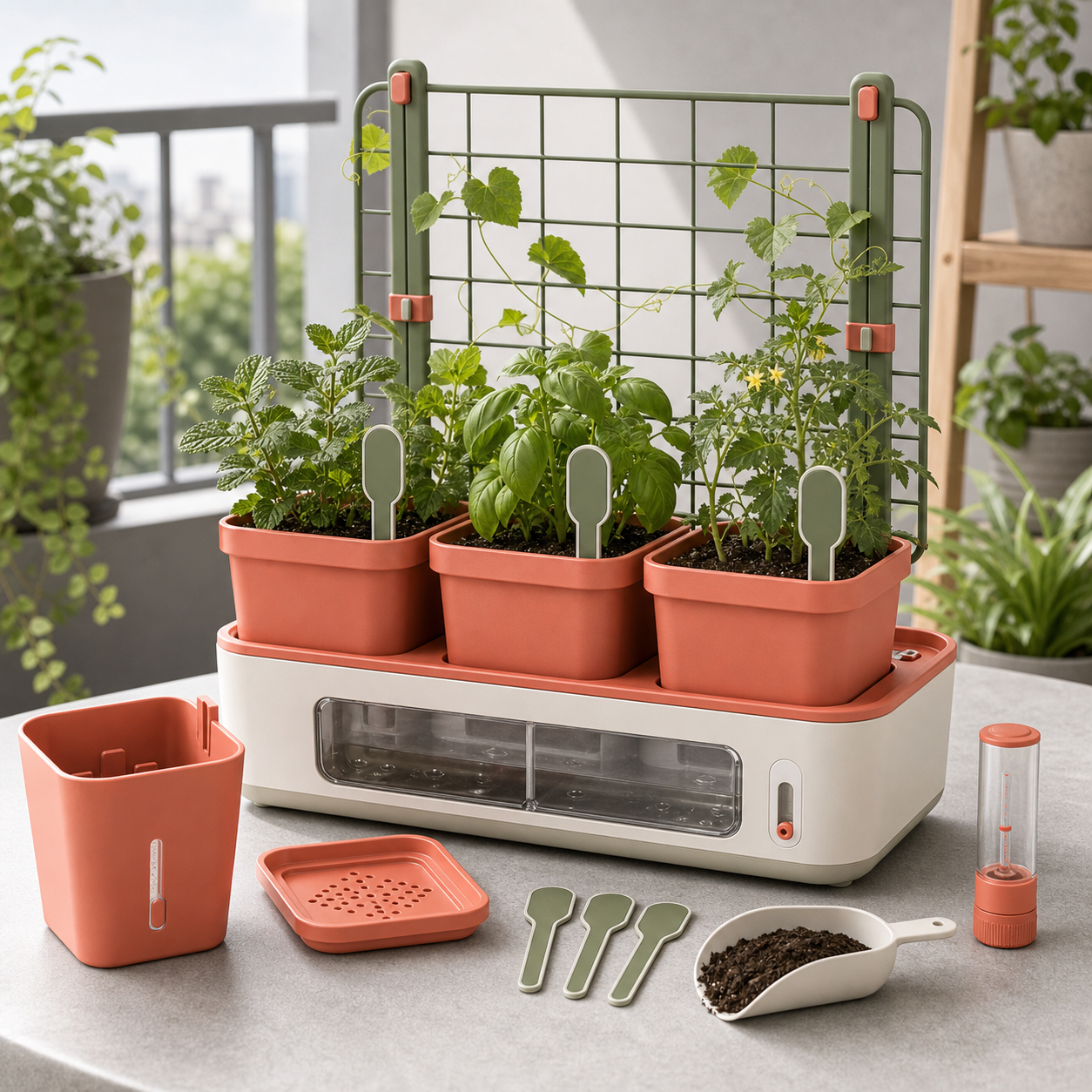
A soil-based self-watering planter and a hydroponic herb garden solve different growing tasks. The first generally supplies water to an approved growing medium through a reservoir arrangement; the second may grow plants using a water-based nutrient system and dedicated lighting. Confirm the actual design before assigning either label to a catalog product.
Both can appeal to indoor-garden customers, but neither guarantees successful growth in every room or with every plant. Water supply, light, growing medium, nutrition and maintenance remain important. Buyers should compare the customer routine instead of treating a green product photograph as evidence of effortless growing.
This self watering planter vs hydroponic garden guide helps home and garden retailers evaluate self-watering planter kits alongside countertop herb gardens. The proposed setup checks are not completed KudBo growing trials. Final system architecture, supplied materials and supported plants require confirmation on the quoted configuration.
Establish the Growing System Before Comparing It
Ask whether the unit uses soil, another substrate, a wick, a passive reservoir or an active water circulation arrangement. A compact unit with a lamp is not automatically hydroponic. Marketing names can combine several ideas while omitting the actual watering mechanism. The bill of materials and instructions should explain the same system.
For soil reservoir planter selection, identify the approved medium and how it contacts the watering mechanism. Different materials retain and move water differently. University of Minnesota Extension’s container-watering guidance explains that container needs vary with conditions and growing media. A reservoir does not remove that variability.
For a water-based growing unit, identify the starter material, nutrient requirements and maintenance procedure. Do not infer that ordinary garden soil or any liquid fertilizer can be used. Ask what is supplied and what customers must obtain separately. That distinction influences both the first-use experience and ongoing ownership cost.
Compare Maintenance, Not Just Initial Setup
| Customer task | Soil-based reservoir kit | Water-based growing system |
|---|---|---|
| Planting | Approved medium and plant arrangement | Approved starter and planting method |
| Watering | Reservoir and medium condition | Water level and system procedure |
| Nutrition | Plant and medium requirements | Defined nutrient instructions where needed |
| Light | Suitable location or approved lamp | Lamp settings and clearance where supplied |
| Cleaning | Reservoir access and removable parts | Water-contact parts and active components |
| Support | Watering and placement questions | System setup, replenishment and maintenance |
An indoor herb garden maintenance comparison should include the next month’s tasks, not only the first attractive planting. Ask how customers check water, clean accessible components and replace consumables. A kit that is simple to assemble may still require careful routine care. Describe that responsibility before promising convenience.
Retail audiences also differ. A gardening customer may already understand growing media and plant selection. A gift recipient may need more explicit instructions and a complete starter set. Do not assume that both can interpret an unexplained symbol or source compatible supplies without assistance.
Check Wick Watering Media Compatibility
If the design uses a wick, ask which medium, wick arrangement and fill procedure are supported. Inspect the relevant component identity and replacement method. A decorative cord should not be substituted for an approved wick merely because it fits the opening. The system’s behavior depends on more than visible dimensions.
Avoid a universal watering-duration promise. Plant size, conditions and reservoir use can change demand. A result from one small plant under a defined trial does not establish that every customer can leave the system unattended for the same number of days. Any duration claim needs a stated application and appropriate evidence.
During a proposed screening trial, document the approved medium, plant type, initial condition, reservoir fill and placement. Observe rather than inventing a laboratory water-transfer rate. If the buyer needs quantitative characterization, agree a method with suitable expertise and retain the full conditions and results.
Review Light as an Application Requirement
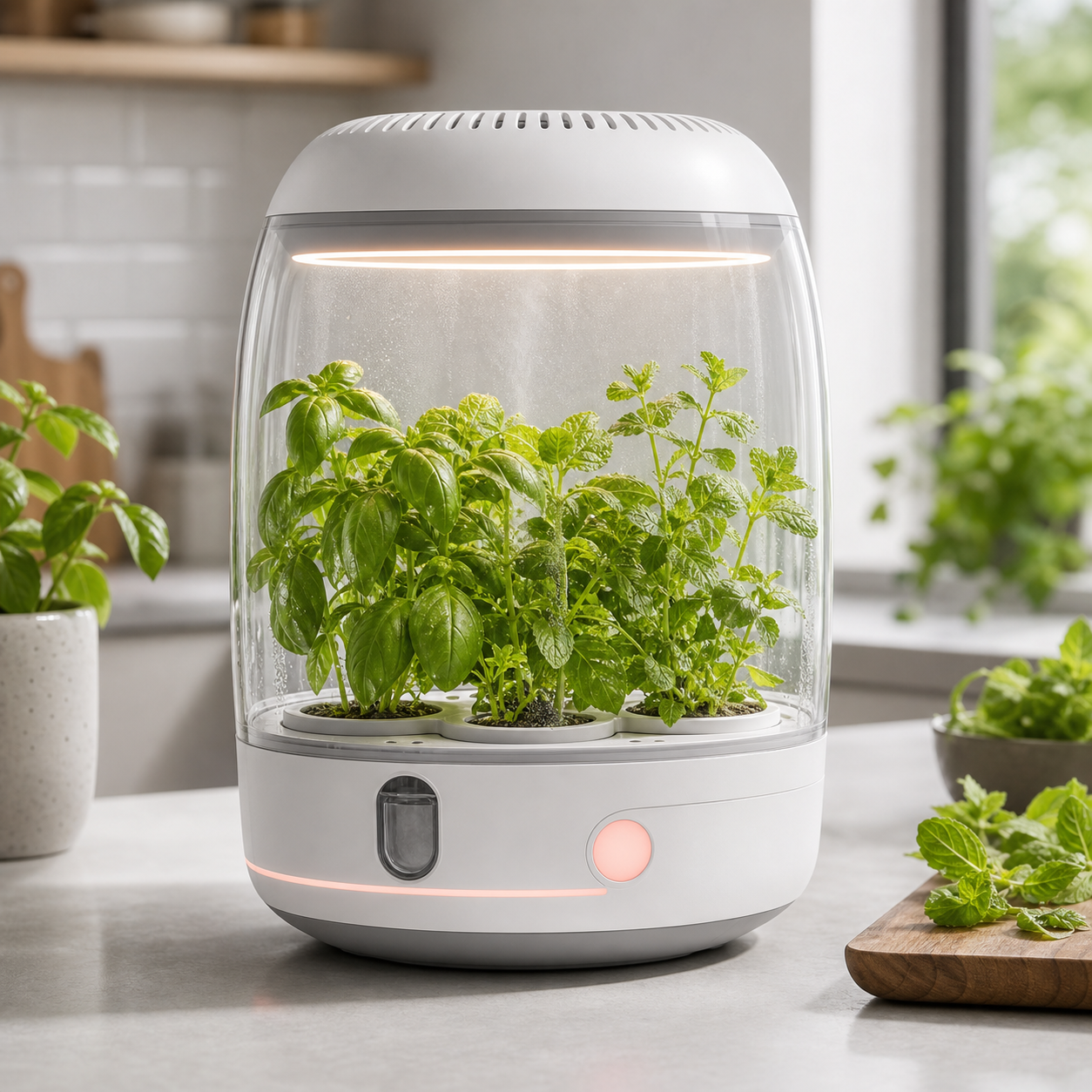
An indoor location can look bright to a person while providing a different growing environment from the photograph. Ask which light arrangement the system assumes. If a lamp is supplied, identify its power, control schedule, placement and instructions. Do not claim suitability for all plants from a single lamp wattage.
The University of Minnesota Extension guide to lighting indoor plants provides plant-care context; it is not a performance report for a particular kit. The buyer should obtain model-specific light and placement guidance and avoid converting general gardening advice into a guaranteed growth claim.
If the unit uses electrical components, assess the regional supply, cable arrangement and water-related precautions separately. Do not improvise electrical-water tests in a buyer demonstration. A neat kitchen photograph cannot establish electrical safety or permission for every countertop location.
Plan a Countertop Growing System Setup Trial
Use the retail pack and draft instructions. Confirm that all essential parts are present, the plant support fits and the reservoir can be accessed as intended. If seeds or consumables are absent, make that clear in the quotation and package. A photo of mature herbs should not imply they are supplied with the kit.
Ask a suitable new user to explain the steps before live setup. Record ambiguous fill indicators, unclear component orientation and difficult access. Review proposed changes with the supplier so clearer instructions remain technically correct. Do not reduce maintenance steps merely to make the product appear more convenient.
Keep any growing evaluation long enough for its stated purpose and label its limits. A short setup trial can assess assembly and leakage observations; it cannot prove long-term plant success. Plant health and environmental variation require a more carefully designed review if they are central to the commercial promise.
Mid-Article CTA
Send Your Requirements with the intended plants, customer experience, indoor setting and quantity. Email info@kudbo.com to discuss an appropriate catalog shortlist and the supplies needed for a comparable sample trial.
Evaluate Reservoir Access and Cleaning
Identify how users reach the reservoir without damaging plants or dismantling unsupported parts. Ask which components are removable and what cleaning method is approved. Do not prescribe chemicals or dishwasher use based only on the material name. Cleaning instructions should account for the actual assembly.
Observe whether remaining water can be removed and whether the unit can dry before storage. Record awkward steps and inaccessible areas. A sealed-looking product may still need maintenance that the initial display does not reveal. The supplier should explain those steps before the buyer commits to an easy-care claim.
Replacement consumables need clear identifiers. Ask about wicks, starter supports, approved nutrients and any serviceable active parts. A generic refill can differ from the approved item even when it appears to fit. Confirm supply terms and do not promise unlimited spare availability without a written agreement.
Avoid Unsupported Plant and Environmental Claims
Claims such as grows anything, never needs watering or produces food in a fixed number of days are broader than an ordinary setup demonstration. Define the supported plants and conditions, then request evidence for any result-based promise. Do not use a stock image of unusually lush plants as a substitute for that evidence.
Similarly, an indoor planter is not automatically an effective room-air purification device. Keep decorative, growing and environmental benefits separate. A useful product can offer an organized growing routine without asserting quantified air cleaning or health outcomes. Review any additional claim with appropriate specialists.
Planting kit customer support should state what users can control and where results vary. Troubleshooting can ask about plant identity, light, medium and watering procedure without diagnosing every plant problem from one photograph. Avoid assigning blame or guaranteeing recovery when the underlying condition is unknown.
Compare Quotations on the Complete Starter Experience
List the vessel, reservoir, watering components, lamp where offered, power supply, starter materials and instructions. Note every separately required item. Two offers with similar photographs may represent a complete starter set and an empty housing. They are not directly comparable unit prices.
Check pack-out for fragile growing components and movable parts. Record carton data for the actual configuration, especially where a bulky presentation sleeve is proposed. Seeds or live plants can introduce destination-specific requirements; obtain competent review before including them in a cross-border retail unit. Do not infer import permission from availability in another market.
Keep artwork aligned with supplied contents. A lifestyle image may show herbs for context, but the description should identify whether plants are included. Full-product photographs and a clear component list help overseas buyers evaluate the actual product rather than a finished garden scene.
Preserve the Approved System in Repeat Orders
Changes to reservoir geometry, wick material, substrate support, lamp or control schedule can alter the customer routine. Require notification and define which changes need renewed review. A matching color does not prove that the next shipment preserves the approved growing system.
Factory testing can address assembly, reservoir condition and agreed operating functions, but its method should be documented. Shipment inspection should verify component identity, pack completeness and relevant screening against the approved sample. Neither is proof that every buyer will grow the same plant successfully.
The KudBo catalog can help compare home-product categories. The final approval should remain a dated system specification with instructions, consumables and claim limits. This makes future support more useful than a general label such as smart garden.
An Example Assortment Decision
Consider a hypothetical retailer serving customers who want a decorative indoor planter with little electrical setup. A soil-based reservoir kit might fit that brief better than a lamp-equipped growing system with nutrient replenishment. Another retailer targeting hobby growers might prefer the more involved system because its customers value control.
Neither decision establishes that one technology is universally superior. Record the audience, maintenance burden and separately required supplies, then select the model that fits. This scenario is not a KudBo project or sales result. It illustrates how customer effort can matter more than the product’s appearance in a catalog.
Prepare a Replenishment and Support Sheet
A growing kit’s first refill can reveal gaps absent from the initial setup. Write down which supplies the customer will need, how they identify them and which supplier guidance controls substitution. For a reservoir planter, that may involve an approved wick or medium arrangement. For a water-based system, it may involve starter supports or nutrients. Confirm the actual architecture before naming the items.
Separate essential supplies from optional accessories. A decorative cover can be optional; a component needed for the watering path may not be. The quotation and retail description should make that distinction. If the first-use kit includes a limited amount of a consumable, explain the replenishment requirement rather than implying a complete permanent supply.
Ask the support team to collect the plant, placement, medium, water procedure and system revision when a user reports poor results. Those details are more useful than a generic question about whether the device is switched on. At the same time, staff should avoid diagnosing every plant problem or promising a recovery from one photograph.
Use the sheet to review the assortment audience. A customer buying an attractive gift may not expect recurring nutrient purchases or technical maintenance. A hobby grower may welcome those controls. Clear expectations can make either product suitable for its market without suggesting that one system eliminates all gardening effort.
Before printing, give the replenishment explanation to someone unfamiliar with the kit and ask them to identify the next required action. If they cannot tell which item to buy or when to consult the manual, revise the wording and obtain technical review. This does not validate plant growth, but it improves the repeat-use routine that the customer will actually encounter after the initial display has faded.
Related Buyer Resources
Continue with Fold-Flat Crates: Hinge and Latch Durability for a complementary purchasing question. Compare the full product catalog, or browse the KudBo sourcing blog or the product sourcing topic collection for additional buyer guides. These resources provide decision context; each product still needs its own model-specific approval.
Frequently Asked Questions
Is every planter with a lamp hydroponic?
No. A lamp describes the lighting arrangement, not the growing medium or water system. Confirm whether the model uses soil, another substrate or a water-based nutrient method. The quotation, component list and instructions should identify the same architecture before the retailer assigns a category or claims compatibility.
Can a self-watering planter support every plant?
Do not assume so. Plant needs, medium and environmental conditions differ. Request the model’s supported applications and guidance. A reservoir can assist a defined watering routine, but it does not guarantee that any plant will thrive or remove the need to check water, light and maintenance.
What should an indoor growing sample trial measure?
Match the trial to the claim. A short screening can review assembly, access, instructions and reservoir observations. Long-term growth claims need a more appropriate plant and environmental evaluation. Record the medium, plant, light, water procedure and duration rather than treating one attractive display as general proof.
Are generic wicks and nutrients interchangeable?
Not automatically. Confirm compatibility and the supplier’s approved identifiers for the exact system. A part fitting physically does not show equivalent watering or growing behavior. Keep replacements traceable and explain separately required supplies so customers do not unknowingly substitute an unsupported component or formulation.
What is the most useful comparison for retailers?
Compare the complete customer routine: setup, separately required supplies, placement, replenishment, cleaning and support. Then review evidence for the proposed benefits. The better choice depends on the audience and maintenance expectations, not simply on whether one product uses soil or appears more technologically advanced.
Conclusion
The self watering planter vs hydroponic garden comparison should focus on the growing system and customer routine. Verify media, light, supplies and maintenance before promising convenience. A clearly described kit with realistic plant-care expectations is easier to sell and support than an undefined smart-growing claim.
Final CTA
Ask for Product Catalog or email info@kudbo.com with your destination, quantity, plant application and starter-set requirements. KudBo can discuss available options and sample arrangements. Confirm the actual system, consumables and claim evidence before approving production.