Introduction
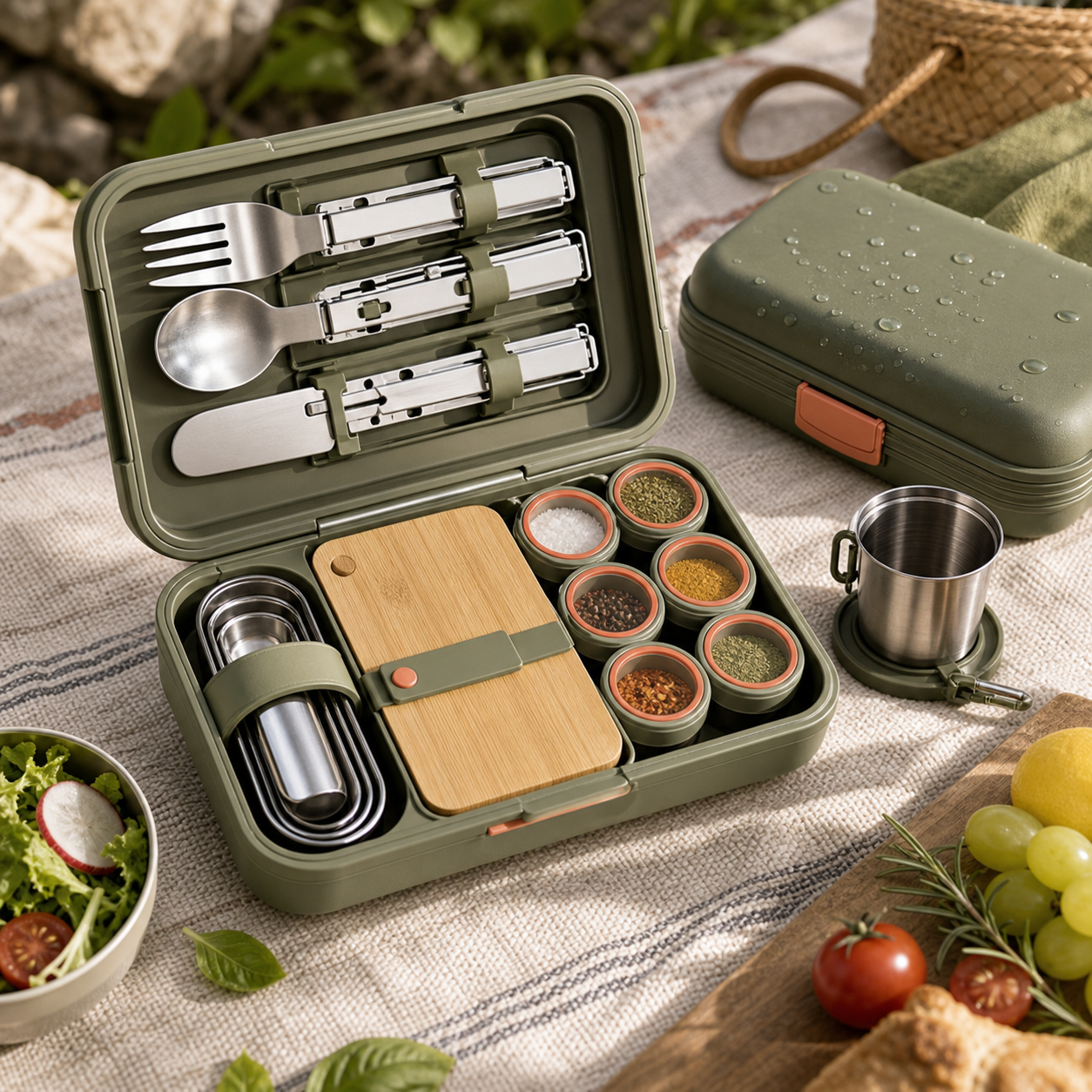
A picnic kit should be evaluated after lunch, not only before it. The KudBo picnic cutlery kit is described with utensils, spice pods, a board and a waterproof case. A buyer should verify the exact pack-out and the supported meaning of “waterproof.” The repeated-use question is whether customers can separate clean and used items, wash food-contact parts, dry them and pack the kit for the next trip without trapping moisture.
An earlier component pack-out guide focuses on counting parts. This article moves through a complete use cycle. The procedures are suggested sample checks, not a report of a completed KudBo field trial or confirmation that the quoted materials have already passed a particular market requirement.
Build a Complete Serving Scenario
Lay out a sample meal for the number of people the kit is supposed to serve. Count actual forks, spoons, knives, cups or plates only if included; do not let the hero photograph silently define the bundle. If a board is provided, check whether it has enough usable area for the intended prep task and whether the edge is easy to clean. If spice pods are included, open, refill and close them with dry hands and slightly damp hands to see whether their lids are manageable.
Check the carry case on a table rather than only while hanging from a backpack. Does it keep utensils off the ground during setup? Can a person remove one utensil without emptying the whole kit? A carefully packed display may be slow in real use. Ask a reviewer who did not watch the supplier demonstration to unpack and serve. Record missing instructions and confusing slots.
Food-contact materials should be specified by component and intended use. A metal fork, plastic pod seal and cutting board do not share one universal test. The FDA overview of food-contact substances is a US starting point, not a certificate for this kit. Ask for applicable declarations and testing for the destination market and the actual food types and conditions of use. Do not claim microwave or dishwasher suitability unless verified for each component.
Observe Washing and Drying
After the meal, follow the maker's approved cleaning instructions on every food-contact part. Note crevices around pod lids, utensil joints and board corners. If the case is labeled waterproof, determine whether that means rain protection for clean gear or that damp utensils can safely be sealed inside; those are not equivalent. A moisture-tight case can also keep moisture trapped after washing.
Separate wet from dry items until they can be properly dried. If the kit offers no removable liner or drainage, the instruction card should tell users to dry parts before final storage. The USDA tailgating food-safety guidance is general outdoor food-handling context. It does not validate a particular utensil material or cleaning method, but it reinforces why clean tools and temperature control matter when food is served outdoors.
Repeat the clean-pack-unpack sequence to look for odor, corrosion, loose fasteners and case staining. A buyer may discover that the board should be stored in a separate sleeve or that spice pods need a fixed upright position. Such observations are more useful for improving the pack than a generic “durable for camping” claim.

Mid-Article CTA
Send Your Requirements with serving count, destination market, desired utensils and case format. Email info@kudbo.com for a component and material-documentation discussion.
Plan Shared-Use Hygiene and Replacement
A shared picnic kit needs a clear way to distinguish washed from unwashed utensils during a meal. Color-coded sleeves or separate compartments may help if actually included, but a buyer should not invent that feature in copy. Consider whether a user can rinse tools at the campsite; if not, the instructions should advise transporting used pieces separately and cleaning them properly afterward. Do not imply that a quick wipe provides sanitization under all conditions.
Ask whether individual utensils, spice pod lids, boards and case inserts can be purchased separately. A missing fork should not necessarily make the whole kit unsalable or unusable. If the supplier plans a refill program, secure dimensions and part identifiers so a later revision does not create a near-fit. A repair or refill claim needs an available supply chain, not just a theoretical detachable part.
At shipment inspection, count the parts in random cartons, check sharp edges, surface finish, lid fit, printed cleaning instructions and case stitching or seals. The reference sample should include all food-contact material variants. If a new coating or seal is introduced, obtain updated documentation before applying old claims. Photograph the complete actual kit for the product page and mark food or tableware props clearly.
Packaging and Travel Boundary
Different destinations have different rules for carrying sharp utensils. Do not claim that a kit with knives is universally permitted in cabin baggage. The product page can identify the exact knife type and direct travelers to current carrier and security rules. An outdoor picnic use case is distinct from an airline-carry-on claim. If a retailer chooses a no-knife travel variant, photograph that actual variant and adjust the bill of materials accordingly.
The case should restrain components during normal transport. Shake a packed sample gently in the orientation likely in a backpack and check whether hard utensils abrade the board or puncture the lining. This is a packaging test, not a substitute for food-contact or durability documentation. If wet components are temporarily packed after a meal, a separate dirty-item sleeve may reduce contamination, but the instructions must still require proper cleaning and drying. A waterproof exterior cannot solve everything that happens inside the case.
At handover, provide the retailer with a component map, approved cleaning instructions, material evidence and spare-part list. These four pieces of information answer the questions customers ask after the first trip. A kit that looks complete only in a display photograph but cannot be repacked or replenished will struggle as a repeat wholesale product.
A Two-Day Trip Review
Test the kit over a simple two-day itinerary rather than one staged table setting. On day one, pack the exact supplied components and prepare an ordinary cold meal. Count how many utensils are actually needed for the stated serving count and whether spice pods leak during transport. After the meal, follow the maker's wash and dry instructions with the water and facilities realistically available. If a sink is unavailable, place used parts in a clearly separate temporary container and clean them properly later; do not present a quick wipe as universal sanitation.
On day two, open the kit again. Inspect the case for moisture, odor and staining. Check whether a board stored beside metal utensils has been scratched or whether condiment residue has reached clean items. A “waterproof” outer case might protect contents from rain but can also prevent wet pieces from drying. Buyers should ask which direction the claim applies and under what conditions. If the case contains a removable washable liner, confirm it is included and document its care. If it does not, write a realistic drying instruction.
Ask one reviewer who did not pack the kit to locate every utensil. A nested case may be compact but hide a small spoon or spice pod. Retail customers are likely to complain about missing items if the layout makes them hard to see. A printed component map inside the case or leaflet can help, but only if it matches the actual revision. At the end of the trip, repack the components in their intended positions. Note any part that only fits when arranged with unrealistic precision.
Food-Contact and Service Decisions
Create a component-level material table. A metal fork, polymer pod, board coating, elastomer seal and fabric case each have different use and cleaning exposure. Specify intended food type, temperature range and contact time for the items that touch food. Do not extend a statement about one food-contact material to the whole kit. Request the destination-market documentation and keep any supplier test report linked to the exact part revision. A new colored board or new pod seal may require a claim review even if the kit name stays the same.
The buyer should decide whether replacement is at the kit level or part level. A lost fork, cracked spice pod and damaged case need different responses. Individual spare parts are helpful only if the supplier can supply them with compatible dimensions and reasonable lead times. If a private-label kit is sold in multiple colors, establish whether replacement parts are color matched or neutral. A customer receiving a mismatched fork or pod may see it as a quality issue despite functional fit.
At shipment inspection, compare the complete component list, edge finish, pod lid fit, board finish and case closure with an approved reference. A counted pack is not enough if sharp edges or poor seals make it unpleasant to use. Inspect instruction language for washing, drying and safe food-contact scope. For online photography, show the complete kit on a table and one realistic packed state. Food and table props should not be mistaken for included items.
A Buyer Handover Package
Before a retailer lists the kit, assemble four documents. The first is a bill of materials with every utensil, pod, board, case insert and closure. The second is a component-specific food-contact and cleaning file for the destination market. The third is a real-use pack map that shows where each part goes after washing and drying. The fourth is a spare-part and return policy. Together, these documents answer more customer questions than a generic “all-in-one picnic kit” line.
Review the documents with the customer-service team. Can an agent tell whether a missing spoon was absent from the carton or merely nested behind the board? Can the agent advise a customer who packed damp utensils without telling them to continue unsafe storage? Can the agent identify which case pieces may be wiped and which should not be immersed? If not, the manual or pack design needs work. A product can be mechanically complete yet hard to support.
At the factory, verify the counted kit and inspect visible finishes, especially contact edges and pod seals. Keep food-contact certificates tied to the parts actually shipped. If a private-label buyer changes the color of a board or lid, determine whether the material declaration still covers the new pigment. Do not assume a declaration for an earlier version applies automatically to all later variants.
For the product page, show one laid-out kit and one repacked kit. That helps buyers judge both the serving experience and the travel footprint. Keep knives, foods and tableware props clearly differentiated from included components. A truthful picture after use, with instructions for cleaning and drying, is a better conversion tool than an exaggerated component-count badge.
Frequently Asked Questions
Is a picnic cutlery kit dishwasher safe?
Only if the maker supports that method for each component. Utensils, board, spice pods and case may need different care. Verify on the quoted pack.
Does a waterproof case allow wet utensils to be stored indefinitely?
No. Water resistance of the case does not eliminate moisture trapped inside. Dry parts as directed before long storage.
What documents matter for food-contact parts?
Material declarations and applicable test evidence for the destination market, food types and use conditions. A generic claim for one utensil material may not cover seals or coatings.
How should shared utensils be handled during a picnic?
Keep clean and used items separated and follow appropriate washing and drying instructions. Avoid promising sanitation from an unsupported wipe or case feature.
Are replacement utensils important for wholesale buyers?
Yes. Confirm spare SKUs, dimensions, pack size and revision compatibility before advertising a replenishable kit.
Conclusion
A useful picnic kit survives the ordinary sequence of serving, cleaning, drying and packing. Buyers should verify the actual component list, food-contact scope and moisture handling before using broad outdoor claims. That sequence turns a good-looking assortment into an operationally supportable product.
Final CTA
Get a Quote by emailing info@kudbo.com with serving count and material requirements. Explore KudBo products, the blog and product sourcing topics for adjacent outdoor buying decisions.