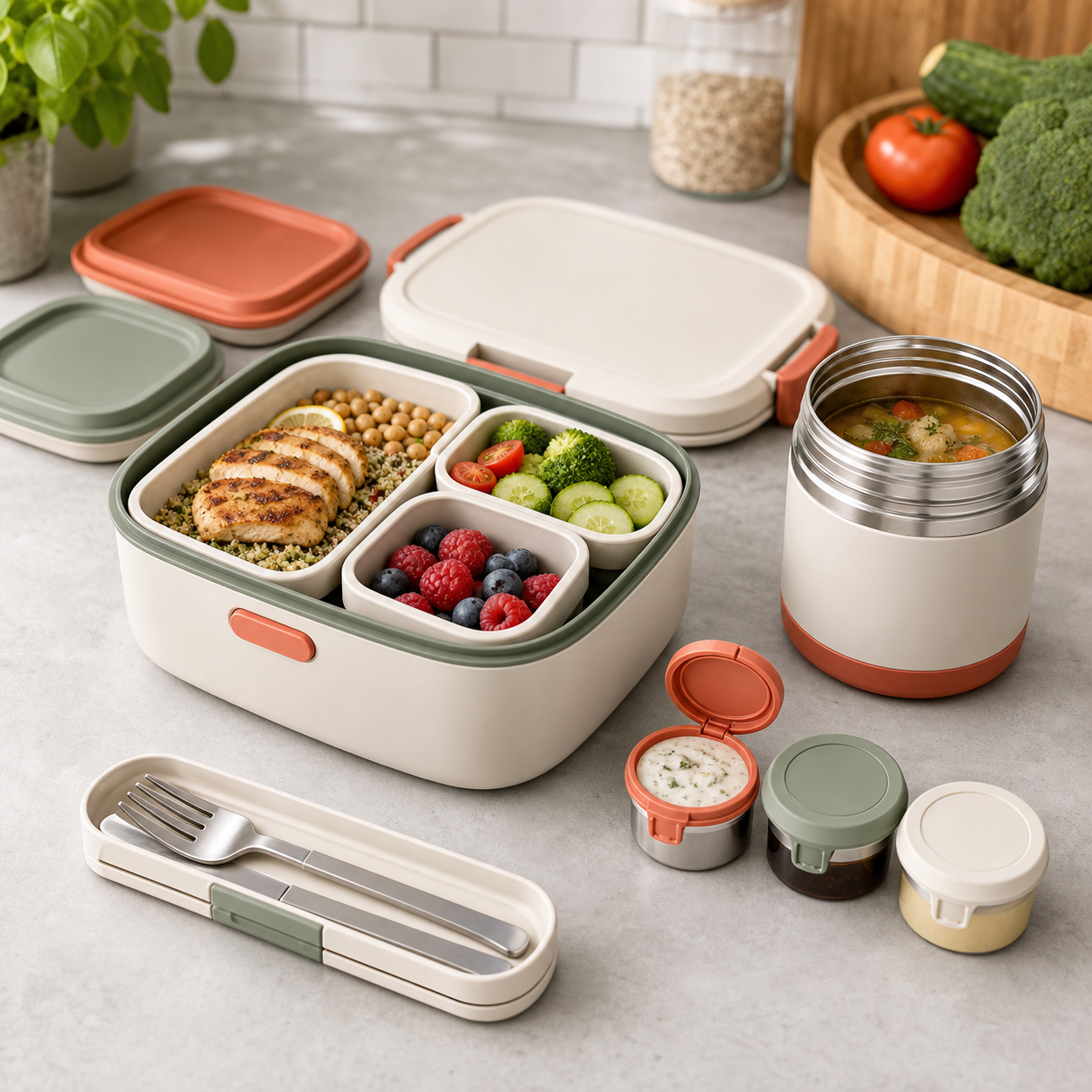
Introduction
A dishwasher-safe claim should identify the components and conditions it covers. A reusable lunch box’s body, lid, gasket and accessories may have different care requirements. Initial leak performance does not prove that the container reseals correctly after repeated cleaning and reassembly.
For kitchen-product buyers, easy-clean wording can influence purchase decisions as much as compartment layout. Customers need to know what to remove, how to wash it and how to put it back. A product that performs well when new may become frustrating if its gasket is difficult to identify or its drying routine is unclear.
This lunch box dishwasher claim validation guide supports evaluation of a modular lunch box set. It proposes review and screening steps, not completed KudBo testing. Food-contact, appliance compatibility and safety requirements need model-specific evidence and competent review. Do not infer microwave, oven or freezer suitability from a dishwasher statement.
Define Food Container Cleaning Compatibility by Part
List the body, lid, gasket, divider, inserts and included cutlery where applicable. Ask for approved care instructions for each. A material family name does not establish the behavior of every formulation or assembly. Printing, coatings, adhesives and seals can also affect the care claim.
FDA’s food-contact conditions of use show that application conditions belong in a materials assessment. Food-contact suitability and dishwasher performance remain different questions. A document supporting one should not be described as proving the other.
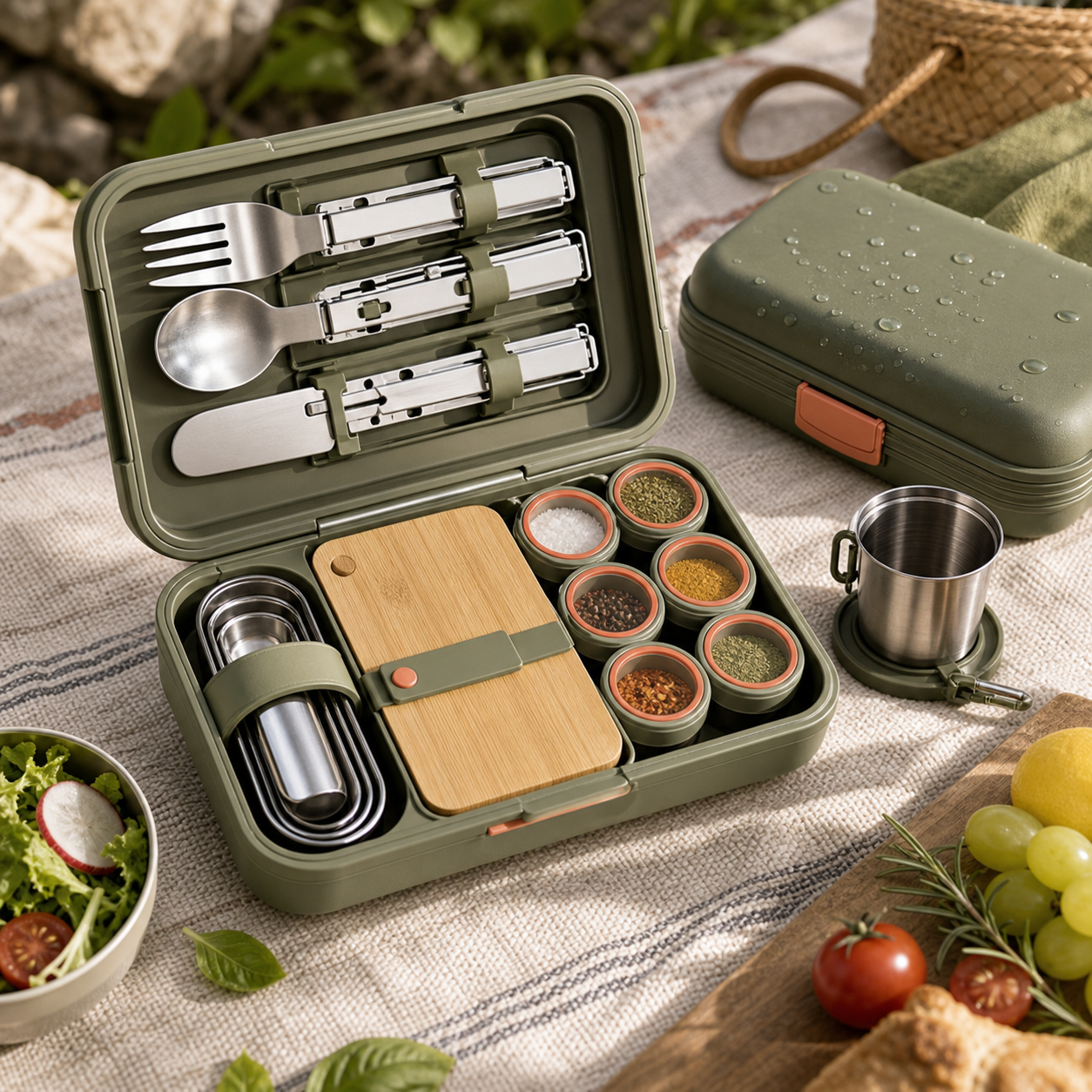
For a companion picnic cutlery kit, request its own care scope. Do not assume the lunch-box instructions cover every accessory added to a bundle. The retail-unit list and cleaning insert should agree on which items are supplied and how each is maintained.
Ask What Dishwasher Safe Means on This Model
Request permitted cycle, placement, detergent restrictions and component preparation where relevant. Do not invent a universal temperature or top-rack instruction. A supplier’s claim should have a method and conditions that can be reviewed for the actual configuration.
Distinguish a one-time wash observation from repeat-use assessment. One clean-looking result does not establish long-term retention of shape, printing, closure or seal performance. If repeated washing is central to the claim, agree a relevant method, sample selection and failure criteria rather than selecting an arbitrary impressive cycle count.
Keep cosmetic and functional outcomes separate. Faded printing, visible staining and a closure that no longer works have different consequences. Define acceptance limits according to the intended product promise. An all-or-nothing score can conceal which requirement actually failed.
Review Removable Lunch Box Gasket Care
Ask whether the gasket is user-removable and which procedure is approved. A seal that can be extracted with force is not necessarily intended for routine removal. Do not recommend sharp tools or stretching beyond the instructions to simplify cleaning.
Observe identification, removal where permitted, washing, drying and refitting with a safely prepared sample. Record whether orientation is obvious and whether the user can recognize correct seating. An interchangeable-looking seal can still have a specific position or revision. Approved replacement identifiers should be available where replacements are offered.
If the gasket is not removable, ask how accessible areas are cleaned and what limitations apply. Do not claim complete access merely because the lid opens. The sample review should assess the actual routine instead of borrowing instructions from another container.
Design a Reusable Container Stain Evaluation
Define representative permitted foods and the conditions of the observation. Contact duration, temperature and cleaning method can affect visible staining. A single mild-food demonstration does not establish stain resistance for every sauce or ingredient.
Use a reviewed method and document before-and-after appearance under consistent lighting. Keep retained discoloration separate from a food-safety conclusion. Visual cleanliness is not proof of sanitization, and a stain is not automatically evidence of material failure. Appropriate specialist review may be needed for a broader claim.
Avoid a universal odor-free promise based on an informal smell observation. Record what was observed and under which conditions. Do not recommend unapproved chemical soaking to obtain a favorable result. The care procedure should remain the one customers are permitted to use.
Plan a Lunch Lid Post Wash Seal Test
After the approved wash and drying sequence, reassemble the exact components and inspect the closure. If a leakage check is required, agree contents, orientation, duration and safe method. Do not transfer an initial seal result to the post-wash state without evidence.
Record gasket seating, lid alignment and any visible distortion. If leakage appears, investigate those observations rather than immediately blaming the wash cycle or user. Keep the unsuccessful result and identify whether a revised component or instruction is needed.
Separate leak-resistant and leakproof language. The claim should reflect the method and limits, including contents and handling. A decorative photo of a closed lunch box does not establish bag transport without leakage, and a water check does not automatically cover every food or thermal condition.
Build a Component Care Record
| Component | Questions to resolve | Check after care |
|---|---|---|
| Body | Approved washing and exposure | Shape and relevant surfaces |
| Lid | Placement and closure restrictions | Alignment and operation |
| Gasket | Removal, drying and refitting | Correct seating and identity |
| Divider | Permitted washing and fit | Position in the approved body |
| Decoration | Care scope and method | Readability and condition |
| Accessories | Their separate instructions | Completeness and appropriate fit |
Use this record to reconcile the quotation, insert and website. A broad dishwasher icon should not contradict component-specific restrictions. Make essential exclusions easy to find near the claim, not buried in support information after purchase.
Mid-Article CTA
Send Your Requirements with the intended foods, cleaning routine, retail claim and quantity. Email info@kudbo.com to discuss a component-specific sample and evidence request.
Evaluate the Modular Lunch Box Drying Routine
Observe whether parts can drain and dry according to the instructions before storage. Hidden recesses and seal grooves may require attention. A compact nested arrangement can retain moisture if the customer repacks immediately. Explain the approved sequence rather than promoting instant storage without support.
Check the retail insert with a suitable new user. Ask them to identify washable parts and describe reassembly using a cool sample. Record confusion and review proposed revisions technically. A more concise instruction is only better if it preserves necessary steps.
For meal transport, cleaning is only one part of food handling. USDA FSIS bag-lunch guidance addresses keeping packed food appropriately cold. A clean container or tight lid does not refrigerate contents. Do not turn a care claim into a safe-all-day food-storage promise.
Keep Heating and Storage Claims Separate
Microwave, freezer, oven and hot-fill applications need their own scope and evidence. Ask which parts must be removed and what conditions apply. A dishwasher result does not establish compatibility with another appliance or all temperature extremes.
Do not show a lunch box in a heating appliance unless the exact configuration supports that use. If the lid or gasket is excluded, the image and instructions should not imply otherwise. Context photography can accidentally broaden a claim beyond the written specification.
Avoid treating a material name as complete approval. The finished article includes geometry, seals and decoration. A component may be suitable under one condition while another part limits the complete system. Keep the buyer file precise enough to show which evidence applies to which application.
Compare Quotations on a Maintainable Retail Unit
Record the complete set, spare seals where supplied, decoration and care insert. A lower price may reflect fewer components or a different gasket construction. Normalize the configuration before comparison. Ask how customers obtain approved replacements if replacement is part of the program.
For private labeling, review decoration after the agreed care sequence. A logo that looks good on a new sample may behave differently after washing. Approve a decorated sample with its actual claim scope, not only a digital artwork rendering.
Request final carton dimensions and gross weight for the complete pack-out. Nested parts should remain identifiable and protected during transport. Packaging must not conceal or omit the care instructions. The first-use experience should match the tested retail unit rather than a hand-prepared display sample.
Preserve the Approved Care Scope Through Changes
Changes to formulation, gasket geometry, lid, decoration or relevant assembly can affect care and post-wash function. Require notification and review the affected evidence. A matching exterior and unchanged product name do not establish unchanged dishwasher performance.
Factory testing should explain checks for component identity, fit and agreed function. Shipment inspection can verify the retail set and representative screening. It does not reproduce years of washing or establish suitability for every customer dishwasher. Keep repeat-use validation and lot conformity separate.
FTC advertising guidance reinforces the need for supported claims. The KudBo catalog provides kitchen-product options, but the approved model and component care record should control the final description and order.
An Example Care-Claim Decision
Imagine a hypothetical buyer whose sample body washes acceptably, while the decorated lid has a narrower approved care method. The correct response is a component-specific claim or a reviewed design change, not a broad dishwasher-safe icon applied to the entire set.
If the supplier revises the lid, reassess the affected method and post-wash function. This is not a KudBo customer case or actual wash result. It illustrates why care language must follow the complete configuration rather than the strongest-performing component alone.
Match the Care Insert to the Components
Prepare a care map naming each part and its permitted method. Users should not infer whether an insert follows the body's instructions or the lid's restrictions. Keep names consistent across packaging, website and support.
Review the sequence after washing. Can the gasket be identified, dried and seated using the insert? An easy-clean claim is incomplete if reassembly is unexplained. Record the specific uncertain step rather than only saying the product was confusing.
If a spare gasket is included, identify its purpose. Customers should not confuse it with another seal or assume both must be fitted together. The quotation should show the actual count and the insert should explain what is installed initially.
Retain the decorated sample for care review and identify revised printing or lids. A changed process can affect appearance even with the same body. Old photographs should not be evidence that the new unit preserves performance.
Keep cleaning separate from safe meal transport. Instructions can explain washing without promising temperature control. Food handling and the actual application remain separate considerations.
Reconcile the map with package icons. A broad dishwasher symbol must not contradict an essential restriction. Simplify optional promotional copy rather than removing the limitation customers need. The map also reveals whether similar offers have the same parts, care burden and replacement arrangement, making the comparison more useful than compartment count alone.
Keep the Approval Evidence Retrievable
Record the model, revision, method, conditions, observations and reviewer in the purchase file. A later reader should distinguish a supplier statement, a buyer observation and an unresolved requirement. Do not describe an illustrative photograph as a completed factory test or a real customer project. If a revised sample is proposed, identify what changed and review the affected requirement before carrying the earlier conclusion forward. This record should support the decision, not create certainty that the evaluation never established. Keep the final claim within the observed or appropriately documented scope, and make remaining limitations visible to the person approving artwork and the order.
Keep a Reference for Replacement Seals
If replacement seals form part of the program, retain an approved reference and a model-specific identifier. A close match in color or outline is not enough to establish the correct material and fit. Support should be able to direct customers to the approved item without advising them to stretch or trim a generic seal.
Review how the replacement is explained on the insert. The customer needs to know which component it serves and how correct seating is recognized under the manual. This makes repeat-use support clearer while preserving the boundary between user maintenance and an unreviewed repair.
Related Buyer Resources
Continue with Collapsible Kettle Odor and Conditioning Checks for a complementary purchasing question. Compare the full product catalog, or browse the KudBo sourcing blog or the product sourcing topic collection for additional buyer guides. These resources provide decision context; each product still needs its own model-specific approval.
Frequently Asked Questions
Does dishwasher safe cover every component?
Only if the model-specific evidence and instructions say so. Bodies, lids, gaskets, decoration and accessories can have different requirements. Request a component care record and make essential exclusions visible. Do not infer whole-set compatibility from the material name or one successful wash observation.
Can every lunch-box gasket be removed for washing?
No. Follow the exact model’s approved procedure. A seal that can be extracted by force is not necessarily intended for routine removal. Avoid sharp tools or unsupported stretching, and verify correct orientation, drying and refitting where removal is permitted.
Does initial leak performance prove post-wash sealing?
No. Cleaning and reassembly can change the condition being evaluated. Review the closure after the approved care sequence with an agreed method. Keep gasket seating, lid shape and leakage observations separate, and do not extend one initial result to repeated washing without evidence.
Does a visible stain mean the container is unsafe?
Not by itself. Appearance, hygiene and material suitability are different questions. Document foods, conditions and approved cleaning, then obtain appropriate review where needed. Neither a clean-looking surface nor discoloration alone provides a complete safety conclusion or supports an unqualified sanitization claim.
Can dishwasher evidence support microwave use?
No. Heating and other storage applications need their own scope and evidence. Identify component restrictions and operating conditions separately. A washing result does not establish that the complete set, including lid, gasket and decoration, can be used in every appliance or temperature condition.
Conclusion
Lunch box dishwasher claim validation should follow the components through cleaning, drying and resealing. Separate food-contact evidence, appearance and functional results, then write the claim within its supported scope. This gives customers usable care guidance and buyers a traceable basis for repeat orders.
Final CTA
Get a Quote or email info@kudbo.com with your destination, quantity and cleaning requirements. KudBo can discuss available kitchen options and documentation requests. Confirm component care, post-wash function and final retail claims before production approval.