Introduction
The best buying decision starts by converting whether the contact surface heats evenly, controls behave predictably and the battery supports the intended session without creating a misleading therapy story into a written acceptance plan. The KudBo Heated Fascia Kit is a product format that can be configured for different buyers. A photograph, supplier presentation or successful first demonstration does not establish the performance of every production unit. The buyer should define the exact configuration, intended application, destination market and evidence required before price comparison.
This guide is for wellness retailers, fitness accessory brands and premium gift suppliers. It addresses heated fascia tool temperature uniformity, sample review, factory testing, shipment inspection and private-label documentation. It does not claim that a current KudBo model has passed a particular test or complies with every destination requirement. Any measurement described below is a proposed purchasing control that must be adapted to the final SKU, instructions and customer requirements.
What Should a Buyer Decide Before Requesting a Quote?
First define the product application. For this item, likely uses include post-exercise routines, desk-relaxation kits, travel wellness and corporate gifting. These settings may look similar in an online listing but create different expectations for setup, durability, instructions and accessories. A buyer serving several channels should not assume one manual, pack-out or claim set will work equally well for every channel.
The core commercial question is whether the contact surface heats evenly, controls behave predictably and the battery supports the intended session without creating a misleading therapy story. Write the answer as an observable requirement rather than an adjective. Words such as smart, premium, safe, durable or professional are not acceptance criteria. A measurable brief should name the sample configuration, test conditions, number of cycles or repetitions, acceptable variation and the action to take when a unit falls outside the limit.
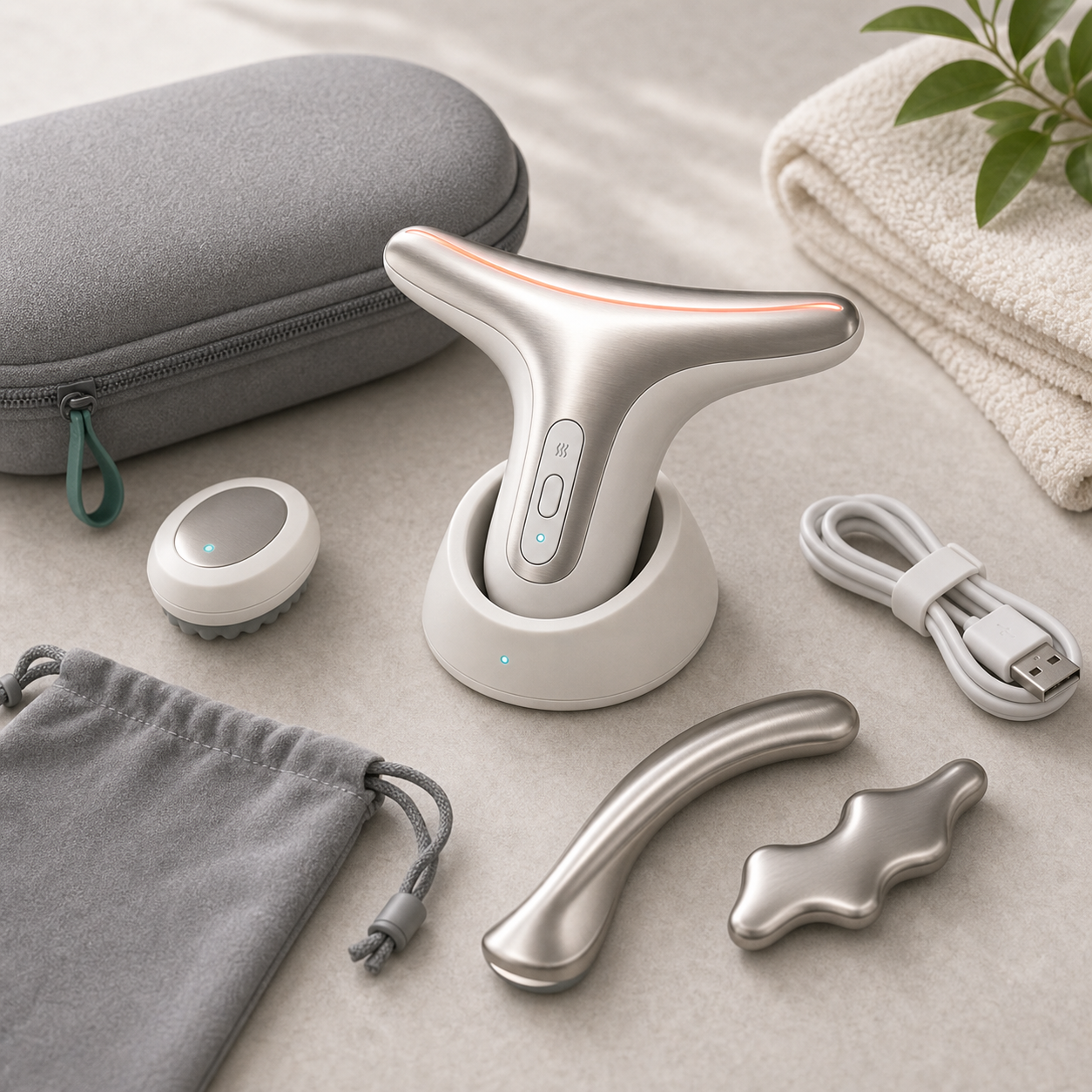
Define the complete quoted system: metal contact tool, heater, vibration module, indicator ring, battery, charging stand, pouch, cleaning instructions and packaging. Ask the supplier to mark optional parts separately. Otherwise, a buyer may approve a sample with accessories that disappear from the production quotation, or receive an updated electronic or textile revision under the same product name. Version control matters whenever the function depends on a component, app, control board, material or instruction leaflet.
Build a Specification Around Variables, Not Marketing Adjectives
Important variables for this product include ambient temperature, starting charge, selected heat level, contact duration, surface location, charging state and consecutive sessions. These should appear in the test record because changing one may change the result. A performance number without its conditions is difficult to reproduce and easy to misuse in a listing. When a supplier provides a value, ask which sample revision produced it, how many units were measured, which instruments were used and whether the result is typical, minimum or maximum.
A useful specification separates four types of information. Product identity tells everyone which revision is being reviewed. Functional limits define what the product is designed to do. Acceptance limits define what the buyer will check. Marketing claims define what the public will read. The four records should agree, but they are not interchangeable. A laboratory report for one component does not automatically substantiate every finished-product claim.
Use a requirements table in the purchase file:
| Control | Buyer record | Supplier evidence | Release question |
|---|---|---|---|
| Configuration | model, revision, color and accessories | bill of materials and sample photos | Is production the approved version? |
| Application | post-exercise routines, desk-relaxation kits, travel wellness and corporate gifting | operating limits and instructions | Does the pack explain the intended use? |
| Function | documented warm-up time, bounded temperature spread across the contact face, working cutoff or timer, stable controls, intact finish and repeatable charging | sample data and test method | Can the result be repeated? |
| Claims | State observable heat and vibration functions. Avoid diagnosis, treatment, circulation or recovery promises unless substantiation and destination-market review support the exact wording. | claim-to-evidence matrix | Is every statement supportable? |
| Pack-out | retail contents and export carton | packing list and approved artwork | Is each sellable unit complete? |
Sample Review: Reproduce the Customer Workflow
Installation preparation should mirror the first ten minutes of ownership. For this product, that means fully charging the unit, reading contraindication and skin-contact instructions, selecting a low setting first and confirming that every accessory matches the approved sample. Ask a reviewer who did not help write the brief to follow the supplied instructions. Record where the person pauses, chooses the wrong orientation or needs an unlisted tool. Those observations reveal instruction and pack-out problems that an experienced engineer may skip automatically.
The sample review should use more than one unit when the risk justifies it. A single polished sample may be selected or adjusted by hand. Repeating the same check across an initial sample, a sealed reference sample and pre-production units helps reveal variation. Keep the accepted sample protected and identify it with model, date, supplier, component revision and buyer approval status.
Recommended review sequence:
- Approve a written sample brief that identifies metal contact tool, heater, vibration module, indicator ring, battery, charging stand, pouch, cleaning instructions and packaging.
- Record the variables that change the result: ambient temperature, starting charge, selected heat level, contact duration, surface location, charging state and consecutive sessions.
- Run the intended setup without coaching and photograph the accepted configuration.
- Repeat the critical function after packing, storage and ordinary handling.
- Freeze the approved artwork, instructions, component list and measurable limits before production.
For the key function, use a result such as documented warm-up time, bounded temperature spread across the contact face, working cutoff or timer, stable controls, intact finish and repeatable charging. Record both passes and unexpected behavior. Do not quietly adjust the product until it passes and then omit that adjustment from the instructions. If setup skill changes the result, the setup method is part of the product and should be documented.
Factory Testing and Production Controls
Factory testing should focus on repeatable controls that protect the approved experience. Incoming checks may confirm critical materials, electronics, seals, textile panels or molded parts. In-process checks can catch assembly orientation, cable routing, fastening, adhesive cure, stitching or firmware errors before the product reaches final packing. Final functional checks should use a short method that operators can perform consistently without creating a false claim about long-term performance.
For heated fascia kit, production controls should target documented warm-up time, bounded temperature spread across the contact face, working cutoff or timer, stable controls, intact finish and repeatable charging. The buyer and supplier should agree which controls apply to every unit, which apply to a sample from each lot and which require periodic or external evaluation. A one-minute factory function check cannot replace a duration, life-cycle, safety or claim-substantiation study. Conversely, an old third-party report cannot prove that the current production lot contains the same parts.
Shipment Inspection Checklist
Shipment inspection is the final opportunity to confirm that sellable cartons match the purchase record. It should not become an improvised engineering test after goods are packed. Select the sampling approach according to order size, product risk, buyer policy and applicable requirements. The purchase agreement should state the defect categories and remedies before the inspector arrives.
Inspect at least the following:
- identity and revision of the approved heated fascia kit
- surface finish, temperature response, vibration modes, timer behavior, charging stand fit, pouch contents, warning labels and carton protection
- visual finish, odor, sharp edges and contamination
- carton quantity, barcode, destination labels and accessory count
- records for nonconforming units, rework and final release
Open enough retail units to verify pack consistency, but agree how opened samples will be handled. If a wet, heat, food-contact or body-contact test makes a unit unsellable, use designated test samples rather than returning them to inventory. Photographs should show model and lot identification, measured conditions and the exact defect, not only a wide view of sealed cartons.
Carton checks matter because transport can undo a good product. Review internal movement, pressure on controls, protection for rigid corners, moisture sensitivity and master-carton gross weight. If the product includes a battery, powered accessory or liquid-contact component, confirm the required transport documents and packaging for the actual route. Do not copy transport statements from a visually similar model.
Product Application Scenarios
Scenario one is the primary intended use: post-exercise routines, desk-relaxation kits, travel wellness and corporate gifting. Build the sample test around a normal user, realistic environment and complete supplied kit. The test should answer whether setup is clear, controls are reachable, parts remain stable and the result matches the listing. A short demonstration under ideal conditions is useful for discovery, but acceptance should reflect the full ordinary workflow.
Scenario two is foreseeable variation. Change one important condition from ambient temperature, starting charge, selected heat level, contact duration, surface location, charging state and consecutive sessions. Check whether the instructions identify the boundary and whether the user receives a clear response when conditions are unsuitable. Then pack the item as a retailer or traveler would, store it for an agreed period and repeat setup. This reveals deformation, charge loss, retained moisture, reset behavior or missing instructions that an ideal demonstration may hide.

Mid-Article CTA
Send Your Requirements with the target market, quantity, intended application, required accessories and buyer test conditions. Email info@kudbo.com to request a configuration-specific discussion. The inquiry form requires Name and Email; phone details are not required.
Claims, Instructions and External Evidence
Marketing should follow the net impression created by text, pictures, icons and demonstrations. State observable heat and vibration functions. Avoid diagnosis, treatment, circulation or recovery promises unless substantiation and destination-market review support the exact wording. A cautious sentence in fine print does not repair a hero image or headline that communicates a broader unsupported benefit. Review the product page, package and marketplace content together.
For general business context, consult the FTC health products compliance guidance and the EPA guidance for used lithium-ion batteries. These external references do not certify KudBo or any supplier. They help buyers identify documentation and claim questions for the destination market. Product-specific legal, laboratory and compliance decisions should be made by qualified parties using the actual SKU and current requirements.
Instructions should explain normal setup, foreseeable mistakes, cleaning or maintenance, storage, replacement parts and stop-use conditions. Use diagrams only when they match the production geometry. A QR code can supplement printed instructions, but the buyer should define what happens if the linked page moves, the app changes or the customer has no connection.
Compare Suppliers on Evidence and Ownership Cost
Price comparisons become meaningful only after the configuration and evidence are aligned. One quotation may include a complete accessory set, documented controls and spare parts, while another offers only the visible main unit. Add tooling, artwork, testing, replacement parts, carton volume, inspection, complaint handling and software support where relevant.
| Buyer question | Strong response | Weak response |
|---|---|---|
| Which version is quoted? | Model, bill of materials and dated sample are identified | Product name only |
| How is function checked? | Method, conditions, limits and records are available | “100% tested” without a method |
| What can change? | Substitution approval and revision history are defined | Supplier may use equivalent parts without notice |
| What supports claims? | Each claim maps to relevant evidence and limits | Generic certificate images or competitor reports |
| What happens after sale? | Spare parts, cleaning, reset and complaint route are clear | No ownership or service plan |
Total cost also includes preventable returns. The risks here are hot spots, delayed indication, unclear skin-contact limits, unsupported injury-recovery claims, battery swelling, cleaning liquid entering controls and outdated instructions. Rank them by severity, probability and detectability for the intended channel. A defect that is cheap to find at the factory may be expensive after international freight, marketplace fees and customer support. Put the high-priority checks in the purchase specification rather than leaving them in meeting notes.
Maintain the Buyer Approval Record
Keep the quotation, specification, accepted sample photos, component schedule, artwork, instructions, test plan, claim matrix and shipment checklist together. If the supplier changes metal contact tool, heater, vibration module, indicator ring, battery, charging stand, pouch, cleaning instructions and packaging, decide whether fit, function, safety, claims, packaging or transport requires renewed approval. Give customer support the same setup steps and limits, and collect model, lot and use conditions before deciding whether a complaint concerns missing parts, setup, wear or a defect.
Frequently Asked Questions
What is the first document to request for a Heated Fascia Kit?
Request a dated specification for the quoted revision, including metal contact tool, heater, vibration module, indicator ring, battery, charging stand, pouch, cleaning instructions and packaging. It should identify optional parts, operating limits and the retail pack. Add a separate claim-to-evidence table instead of relying on a catalog headline.
How many samples should a buyer test?
The number depends on risk and order size. Review more than one unit when component variation affects the result, and retain a sealed approved reference. A golden sample is a comparison tool, not proof that the production lot will match automatically.
Which test conditions should appear in the purchase order?
Record ambient temperature, starting charge, selected heat level, contact duration, surface location, charging state and consecutive sessions. Include the method, repetitions, acceptable range and decision rule. If the product must be conditioned, charged, cleaned or assembled first, include those steps as well.
Can a supplier certificate support every marketing claim?
No. Confirm the document covers the exact model, component, revision, destination requirement and claim. State observable heat and vibration functions. Avoid diagnosis, treatment, circulation or recovery promises unless substantiation and destination-market review support the exact wording. A certificate title or logo alone is not enough to establish scope.
What should shipment inspection confirm?
Confirm surface finish, temperature response, vibration modes, timer behavior, charging stand fit, pouch contents, warning labels and carton protection. The inspector should also verify artwork, accessories, labels, carton quantity and traceability against the approved purchase record.
Conclusion
Heated Fascia Kit sourcing should begin with a real application and a reproducible acceptance method. The most useful buyer file explains whether the contact surface heats evenly, controls behave predictably and the battery supports the intended session without creating a misleading therapy story, records the variables and keeps claims within the available evidence. Sample review, factory testing and shipment inspection then become connected controls rather than three unrelated activities.
Final CTA
Get a Quote or email info@kudbo.com with your market, estimated quantity, target specification, packaging needs and acceptance questions. Review all KudBo products, the buyer guide library, heated fascia kit cleaning and shared-use review and product sourcing topics while preparing the brief.