Introduction
A wellness kit that touches skin needs a credible care routine before it needs a persuasive benefit headline. The KudBo heated fascia kit is described as combining warmth, scraping and vibration. Those are product functions to verify on the quoted version; they do not establish pain relief, medical treatment or a particular temperature at the skin. Buyers serving retail, fitness or gifting channels should determine who will use the tool, whether use is individual or shared, and how the contact surfaces are cleaned between sessions.
The related claims and instructions guide addresses broad merchandising language. This article focuses on shared-use hygiene, heat-control observation and the handover information needed before repeat orders. Any procedures below are proposed buyer checks, not a claim that a factory test or client deployment has occurred.
Define the Kit and Contact Surfaces
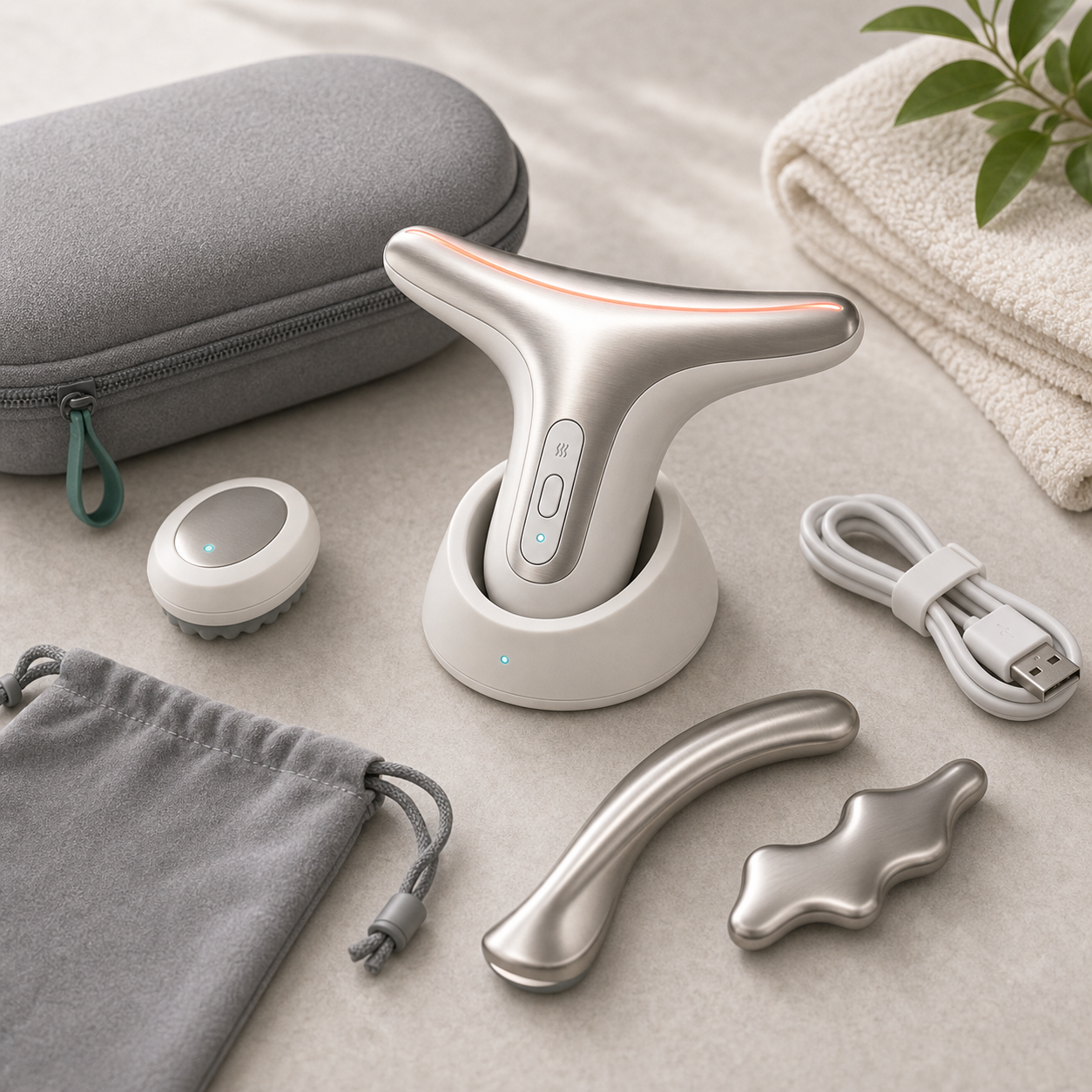
Lay out the complete retail pack: main unit, contact heads, charging accessories, case, cleaning cloth and instructions, as applicable. Distinguish included items from props. Identify which parts touch skin and whether any contact piece is detachable, replaceable or single-user only. A glossy finish may appear wipeable while a seam around a button traps residue. Ask for the maker's approved cleaning agents, dwell time and drying method for each material.
If the tool is intended for personal use, do not silently extend the marketing to clinics or gyms. Shared use introduces different handling and cleaning expectations, and an institution may require its own infection-control review. A buyer can ask the supplier about a replaceable contact head or one-tool-per-user policy, but should not invent a sterilization procedure for electronics. If a disinfectant is proposed, verify compatibility with the surface and instructions, then test the finish after repeated cycles.
Inspect storage: does the case keep a damp head enclosed, or can the parts dry as instructed? Does the charging cable lie against a recently cleaned contact surface? A kit can appear premium yet encourage a poor workflow. Ask a first-time user to use, clean, dry and repack the tool without verbal coaching. Where they pause is useful input for a pictorial manual.
Test Heat Controls Under Defined Conditions
Confirm the advertised heat settings and indications on the actual sample. Record warm-up behavior, whether heat is combined with vibration, and what the unit does after an idle period. A temperature claim requires a defined measurement point, ambient condition, contact pressure and timing; surface temperature at the tool may not equal skin temperature. Do not translate a measured device temperature into an implied therapeutic effect.
Check accidental activation during storage, tactile distinction between controls and whether a user can identify the selected mode without looking closely. Test the tool as the manufacturer instructs on an appropriate nonclinical surface first. The buyer should ask for safety documentation relevant to the electrical configuration and target market. Avoid improvised human efficacy testing or applying the tool to vulnerable users as part of a sourcing demo.
Keep the instruction boundaries visible: duration, pressure, body areas, charging, cleaning and when to stop use. A buyer should obtain qualified review of any contraindications or medical-facing language. For US marketing, the FTC Health Products Compliance Guidance explains that health-related advertising claims need appropriate substantiation. It does not establish that this product has any particular benefit.
Mid-Article CTA
Send Your Requirements with market, intended user, contact-head count, cleaning expectations and claim review questions. Email info@kudbo.com for a sample and component-level discussion.
Protect Against Overclaiming
Keep a claim matrix: what the packaging says, which function demonstrates it, which report supports it and which exact product revision was tested. “Heats” and “vibrates” can be observed under defined conditions. “Treats chronic pain,” “breaks adhesions” or “accelerates recovery” are materially different health claims and should not be published without suitable evidence and regulatory review. A casual use image should not imply professional treatment.
Ask for translations before printing. A phrase that sounds like simple comfort in one language may become a medical claim in another. The retail listing, carton, user guide and influencer brief should use consistent language. The FTC guidance on health claims is a US reference; destination rules must be assessed separately. Do not use a generic CE or FDA-looking icon as shorthand for efficacy.
At shipment inspection, check the exact heads, power marking, switch operation, surface finish and instructions. A functional sample check can reveal a non-heating unit or missing head; it cannot prove long-term comfort benefits. Retain approved samples and document any changed coating or head geometry before repeat orders, because those changes affect feel and cleaning.
Decide Which Channel the Instructions Support
A direct-to-consumer gift kit and a shared demonstration device may look identical but require different routines. The retail buyer can approve personal-use cleaning and storage based on the supplied manual. A gym or wellness studio needs a separate procedure for multiple users, trained operators and contact-surface care. Do not use a retail manual as proof that professional shared use is supported. If the supplier can provide replaceable heads, ask whether each head has a traceable part number and whether the cleaning method remains valid after repeated removal.
Consider how packaging influences expectations. An image of a practitioner treating an injury implies a stronger use than a photograph of the tool on a shelf. If the evidence file supports only warmth and vibration functions, keep the imagery within a comfort context. The CTA to business buyers can ask for intended setting and market before recommending a variant; it should not diagnose an individual condition. Marketing and customer service should share the same claim matrix so one channel does not promise what another carefully avoids.
When a complaint arrives, classify it as heat function, surface irritation, unclear instruction, charging or expected-outcome mismatch. A report of skin irritation should be escalated under the applicable product-safety process, not handled as a routine cosmetic return. Keep the production lot and contact-head material traceable. A buyer's ability to investigate such an issue is as important as the launch photograph.
A Shared-Use Trial Without Therapeutic Claims
For a proposed retail demonstration or institutional setting, draft a sequence for one user before involving multiple users. The operator removes the tool from its case, checks that the contact head is intact, selects a mode, uses it only as instructed, turns it off, cleans the approved surface, allows it to dry and repacks it. A second trained person then follows the same sequence from the printed instructions. Record any uncertainty about pressure, timing or cleaning. This is a usability trial, not a clinical study.
If the second person cannot tell whether the head is clean, the process needs work. The buyer can consider one contact head per user only when separate heads are supported and available. A damp wipe in a product photo is not proof of disinfection. Ask which cleaning agents the supplier approves for each component, whether those agents alter the finish after repeated use and whether electronic seams remain dry. For a commercial setting, the operator's own infection-control policy may be stricter than retail instructions. Do not claim suitability for shared professional use until that process is validated.
Create a heat-control observation sheet. Record the selected mode, approximate warm-up period, automatic shutoff behavior, feedback the user sees, and any unintended activation when placing the tool in its case. If a surface-temperature claim is needed, agree on sensor placement, test pressure, ambient conditions and tolerance. Do not report skin-temperature or relief results from a device-surface reading. A buyer should also ask how the unit behaves when charging is interrupted and whether it can operate while connected to power, if that scenario is marketed.
At shipment inspection, verify the head attachment, mode response, label and warning language, cable and case layout. Sampling can catch missing or nonfunctioning parts. It cannot substantiate a promise that the kit reduces inflammation or treats an injury. Keep a separate claim-evidence register with the exact text proposed for a website, the supporting report and the market in which it will appear. When evidence is absent, remove or narrow the claim instead of inventing a testimonial.
Buyer Decisions That Affect Long-Term Support
Ask whether the contact head is replaceable and if so whether the attachment mechanism remains compatible across production batches. A head sold six months later should not depend on a silent tooling change. List cleaning consumables or replacement parts in the quotation rather than assuming the user can find them locally. A premium case may protect the device during shipping but trap residual moisture after use; the care instructions should address that conflict.
The pilot should also test the complete gift experience. Can a user understand the controls without a promotional video? Are the warnings readable in the destination language? Is the charger appropriately specified for the target market? If the product is sold to an employer for staff gifts, the employer should not be expected to validate medical suitability for individual recipients. Keep the offer positioned as a comfort accessory within its documented functions and provide a straightforward return path for fit or sensitivity issues.
An Evidence File for a Wellness Listing
The FTC advertising FAQ for small businesses explains that objective and implied claims need support before publication. It is general advertising guidance, not a test result for this kit.
Create one row for each proposed product-page statement. “Has selectable heat” can be checked on the actual device under stated power conditions. “Operates quietly” needs an agreed sound test if it is a comparative claim. “Relieves chronic pain” is a medical or health outcome claim requiring a much more demanding review. The buyer should not allow a copywriter to infer the last statement from the first. Link each approved sentence to the evidence, product revision and destination market.
Photographs also make implied claims. A trained professional applying the tool to a patient in a treatment room implies a different setting from a person using a comfort accessory at home. If that professional application is not supported, avoid the image. A clean, realistic product detail or storage scene can still be compelling without the implied therapy. If staff appear, identify the image as staged when appropriate; do not present a generated scene as documentary proof of a specific inspection.
For private-label production, request change notice for contact-head material, coating, heating element, vibration motor and cleaning guidance. An externally identical housing can feel different and require a different care method. The importer should approve a retained sample and inspect the final carton text before shipment. A missing warning or untranslated cleaning instruction can be as consequential as a missing accessory.
When support receives a report of overheating or skin irritation, it needs the lot, mode, use duration and contact-head revision. Do not tell customers to continue use while the issue is reviewed. Escalate under the applicable safety process. That service readiness is a genuine trust signal and a stronger procurement criterion than an unverified list of wellness benefits.
Frequently Asked Questions
Can a heated fascia kit be shared between users?
Only under an appropriate documented cleaning and use protocol for the actual design and setting. Personal-use instructions should not be reinterpreted as institutional approval.
Does warmth prove a therapeutic benefit?
No. Heat output and health outcomes are separate claims. Require suitable substantiation and legal review before making treatment statements.
What should a buyer inspect on contact heads?
Material, edge finish, attachment strength, cleanability, replacement availability and compatibility with each production revision.
Should the tool be immersed for cleaning?
Not unless the manufacturer expressly instructs and supports immersion. Most electrical products require separation of washable and nonwashable parts; follow the exact device instructions.
Can temperature be advertised as a single number?
Only with an agreed measurement method, tolerance and product revision. Contact conditions and time affect readings, so an isolated number can mislead.
Conclusion
The purchasing question is whether an ordinary user can operate, clean and store the exact kit within honest instructions. Function checks and claim evidence should be kept distinct. That discipline protects customers, supports accurate product pages and gives importers a practical inspection plan.
Final CTA
Ask for Product Details at info@kudbo.com. Review the KudBo catalog, blog index and product sourcing collection while setting claim and hygiene requirements.