Introduction
A weight rating is not a complete description of how a folding camp chair will feel or behave outdoors. A frame may hold a defined vertical load on a flat test surface yet still frustrate customers when one foot sinks into grass, a joint does not lock cleanly or the fabric shifts after repeated folding. Buyers need a use-case and evidence file that go beyond the largest number printed on a hangtag.
A folding chair should be reviewed as a system of frame, seat textile, feet, hinges, carry bag and instructions. The KudBo outdoor catalog provides assortment context; this guide does not claim a particular chair is an active KudBo catalog SKU or has passed any load or safety standard. The earlier folding camp chair sourcing guide covers broad supplier selection; this article concentrates on stability, surfaces and the handover to the customer.
A buyer might sell through a campsite store, a stadium-tailgate assortment or a travel-gift range. These settings place different emphasis on packed size, setup time, comfort and ground contact. Resist the temptation to choose one universal chair from a photo. Describe where it will sit, who will carry it and which limitations customers need to know before approval.
Define the Ground the Chair Will Meet
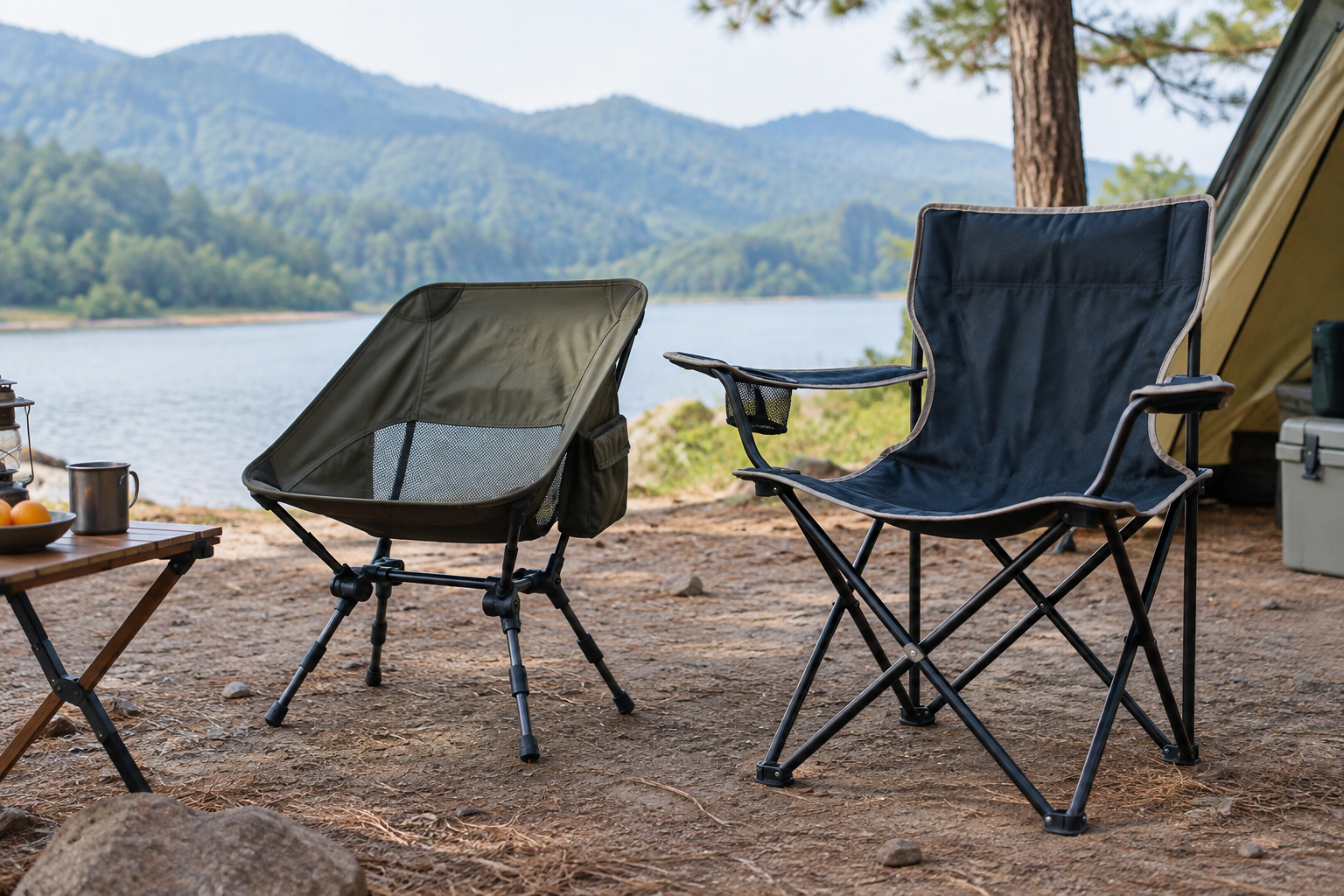
List intended surfaces: firm indoor floor for setup, closely cut grass, compacted dirt and any uneven surface the marketing image suggests. Do not use a rock edge or steep slope as a demo stage simply to show toughness; a chair should be used according to its final instructions. Examine foot shape and contact area. Narrow feet may sink on soft ground, while a broad pad may catch during folding or sit awkwardly inside the bag.
A practical review starts on a level, hard surface with the chair opened exactly as instructed. Check whether all feet touch, whether the frame opens symmetrically and whether a latch or fabric tension is responsible for keeping it open. Then repeat on one or two controlled representative surfaces, documenting the conditions. An uneven-ground observation is a buyer task test, not a substitute for a formal stability or strength test.
Ask how the supplier defines an acceptable wobble or leg splay. “Stable on any surface” is not a plausible retail claim. If surface adapters or wider feet are offered, confirm whether they are standard, optional or a separate SKU. A retailer should not photograph accessories that will not be packed in the quoted chair.
Separate Static Strength from Tip Resistance
Loading and tipping are different failure modes. A chair can bear a centrally applied load but tip as a user reaches sideways or sits on an arm. Do not invent a single load test as proof of every real-world action. Ask the supplier for the scope of its finished-chair tests and, where appropriate, independent test evidence for the destination market and intended use.
The CPSC recall database includes chair recalls for collapse, fall or injury hazards. Those recalls involve specific products and do not imply that a KudBo model shares the defect. They do show why a buyer's review should include frame joints, fabric anchors and foreseeable use. Use a qualified test plan rather than copying a recalled product's design or assuming a shared origin makes products equivalent.
If a numerical maximum load is proposed, request the method, sample count, conditioning, result and safety margin interpretation from the responsible technical party. An assembly video and a supplier sentence are not test records. Make sure marketing wording does not confuse a destructive ultimate load with a user weight limit, or a component strength with complete-chair performance.
Inspect Hinges, Locks and Pinch Zones
Open and close the sample slowly while watching where hands naturally hold the frame. Mark gaps that narrow near the pivot, springs or scissor action. A user should be able to follow the setup instructions without putting fingers in the danger path. Review the locking indication: a joint that looks open but is not fully seated may mislead a first-time customer.
Examine fasteners and rivets after repeated cycles under a defined procedure. Look for looseness, burrs, cracking or a fabric anchor that changes position. Do not turn an arbitrary cycle count into a warranty promise; agree on an acceptance method suitable for the model. Record which joints are serviceable and whether a repair would be safe or should instead trigger replacement.
If the design has a cup holder or side pocket, verify that it does not pull the chair sideways under ordinary use. A loaded pocket can change the center of mass. The effect may be minor on a wide, low chair and more important on a narrow elevated chair. Test the actual accessory arrangement rather than relying on a photo in which every pocket is empty.
Review Textile and Frame Together
Seat fabric carries user load into the frame through seams, sleeves or anchor points. Identify the fabric composition and the joining method, then inspect the high-stress corners. A thick fabric is not inherently strong if the stitch pattern, sleeve or edge finish is weak. Ask whether color or print changes affect the fabric specification, coating or seam design.
Sit testing, if conducted, should be done under appropriate controlled conditions by competent reviewers and within the supplier's intended-use boundaries. Record setup, load and observations without extrapolating to all body shapes. A buyer should separately assess comfort: seat height, leg clearance, back angle and arm position matter to the retail promise but are not proved by a strength result.
Check corrosion and finish details where the product may see damp camping conditions. Look at uncoated tube ends, metal-to-metal wear and drainage paths. Ask how the chair should be dried before packing. Do not describe a chair as weatherproof indefinitely simply because it tolerates a brief outdoor photo session.

Mid-Article CTA
Send Your Requirements with your target user, surface, packed-size limit and intended load wording. Email info@kudbo.com for a model-specific sample and inspection-plan discussion. Include any retailer requirement for a carry bag, spare feet or multilingual instructions.
Make the Carry Bag Part of the Product
The chair may be sound yet unpleasant to own if a user cannot repack it. Time the sequence from fully open to correctly closed and back into the bag, using only the supplied instructions. Does the frame need a particular orientation? Is the bag mouth wide enough after a realistic amount of use? Check zip or drawcord access and handles under the combined product weight.
Measure packed dimensions from an actual complete retail sample, not an unbagged engineering frame. If airline cabin suitability is implied, verify the relevant carrier and route instead of promising universal acceptance. If the gift channel needs a decorative sleeve, confirm that adding it does not crush the carry bag or hide safety instructions.
The shipping carton also matters. A long, narrow package may be efficient on a pallet but vulnerable to end impacts or bent frame tubes if restrained poorly. Request a pack-out drawing and discuss appropriate packaging tests with the logistics team. An undamaged frame at factory handover is not proof that it survives every parcel route.
Plan Claim and Instruction Review
The setup card should show the complete chair, orientation, full-open check, hand positions and close sequence. Warnings must match the actual model and target market; have qualified advisers review any legal text. Avoid putting a maximum load in a tiny icon while a hero image suggests a different use, such as standing on the seat or leaning far to one side.
Photograph the signed sample at the same angles a shipment inspector will use. Include feet, hinges, seams, fabric labels, bag and retail carton. A shipment check can verify appearance, accessory count and agreed routine function. It cannot replace finished-chair performance evidence if the importer wants to advertise a numerical capacity.
Create an exception log for changes to tube size, hinge pin, fabric supplier, foot cap or bag pattern. Some substitutions seem invisible in a marketing photograph but can change fit or stability. Require written buyer approval with affected checks before a change appears in production. The revision printed or coded on the chair should point back to the reference sample and evidence file.
| Review area | Observable buyer check | Separate evidence needed |
|---|---|---|
| Setup | Full-open indication and hand clearance | Qualified safety assessment if required |
| Ground contact | Feet on specified surfaces | Relevant stability method for claims |
| Seat and frame | Stitching, rivets, joint fit | Finished-chair strength evidence |
| Carry and shipping | Bag fit and carton protection | Transit testing for distribution route |
Build a Surface-Specific Sample Protocol
Use a measured loading fixture and a repeatable setup sequence if load or stability claims will appear in marketing. Prepare a firm flat surface as a control, then add the types of surfaces buyers expect: short grass, compacted earth and carefully controlled uneven ground. Note that outdoor surfaces vary. A pass on one lawn does not become a universal promise for loose sand, slopes or wet rock. Record leg or foot contact and whether the chair's center of gravity shifts when the occupant leans to reach an object.
Test assembly and collapse with a fresh operator. A chair can look stable once fully locked yet be awkward to open without pinching fingers. Ask the operator to identify each lock without verbal coaching and inspect whether labels remain visible after the first fold. Repeated cycles should include the fabric under tension and the actual carry bag, not just an unloaded bare frame. Document scratches, looseness and any bent parts without turning one sample into a lifetime claim.
Retail copy should state the supported use and maximum load only when the seller has model-specific evidence. Separate seat weight capacity from a claim about tipping resistance. For a multi-color order, test the same structural configuration across the proposed fabric and frame variants; color changes may come with different coating or textile suppliers. Include a clear caution about children climbing on an unoccupied chair if that behavior is foreseeable for the sales channel.
Plan a Claim-Safe Product Listing
Show the chair fully open, partly folded and packed, with the same production-intent frame and fabric in each photograph. A chair may be compact only when the seat is detached; the listing should show that step. Include seat height, packed length and actual net weight with a stated measurement method. If a cup holder or side pocket appears in the scene, confirm it belongs to the quoted SKU. A clear three-state image set answers more buyer questions than a lifestyle view alone.
Avoid importing a load rating from another chair that shares the outer design. Hinge pins, textile grade and tube wall can differ. Ask for the configuration-specific test report and agree on how the maximum load will be communicated. A customer may interpret a static capacity as permission to drop into the seat or use the chair on a slope; the care card should explain ordinary use limits without hiding the rating.
For after-sales planning, ask which parts are serviceable. A torn carry bag may be replaceable, while a bent joint may require the whole chair to be retired. Give retail support photos showing a properly locked joint and worn or damaged examples. These decisions should be made before the sales season, when the supplier can still reserve compatible parts.
The CPSC's folding-chair recall example illustrates why a partly engaged support can create a fall hazard. It is not evidence about the chair discussed here; it explains why the buyer's opening and locking check belongs beside static load data.
Frequently Asked Questions
Does a high weight rating mean a camping chair cannot tip?
No. Static load resistance and tip behavior are different. Ask what the stated limit means, how it was tested and whether foreseeable sitting and reaching movements are covered. Use the chair only within its intended conditions and avoid turning a single number into a universal stability claim.
Should a buyer try a chair on uneven ground?
Yes, if that reflects its intended use, but start on a level surface and document each condition. An informal field check helps expose foot or setup problems; it does not replace a qualified test. Do not stage a hazardous slope or imply that the chair is suitable for every surface.
Which parts deserve close inspection after folding cycles?
Inspect pivot points, locks, rivets, fabric sleeves, stitching, feet and the carry bag. Record a defined number of cycles and sample condition, then compare against the approved reference. A cycle observation should not be converted into a lifespan promise without an appropriate method and evidence.
Can one photo approve all color variants?
No. Color variants may share construction, but material, coating or supplier changes should be documented. Retain a visual reference for each sellable variant and confirm whether any change affects textile or finish performance. Packaging and labels must match the actual color shipped.
What can pre-shipment inspection establish?
It can compare a sampled production lot with a dated reference for appearance, packing, labels and defined routine functions. It does not automatically substantiate strength, durability or all-surface stability. Keep test reports and inspection records separate, both tied to the exact model revision.
Conclusion
Select a folding chair by intended surface, complete-chair evidence and customer handling, not a lone load label. The frame, fabric, feet and bag need a common approval file. A realistic use description and a clear setup instruction are part of the product buyers actually sell.
Final CTA
For related sourcing questions, browse all buyer guides or the Product Sourcing collection.
Contact KudBo or email info@kudbo.com with your market, quantity, surface scenario and pack-out needs. KudBo can help organize sample comparison, supplier questions and production-reference details for your chosen chair.