Introduction
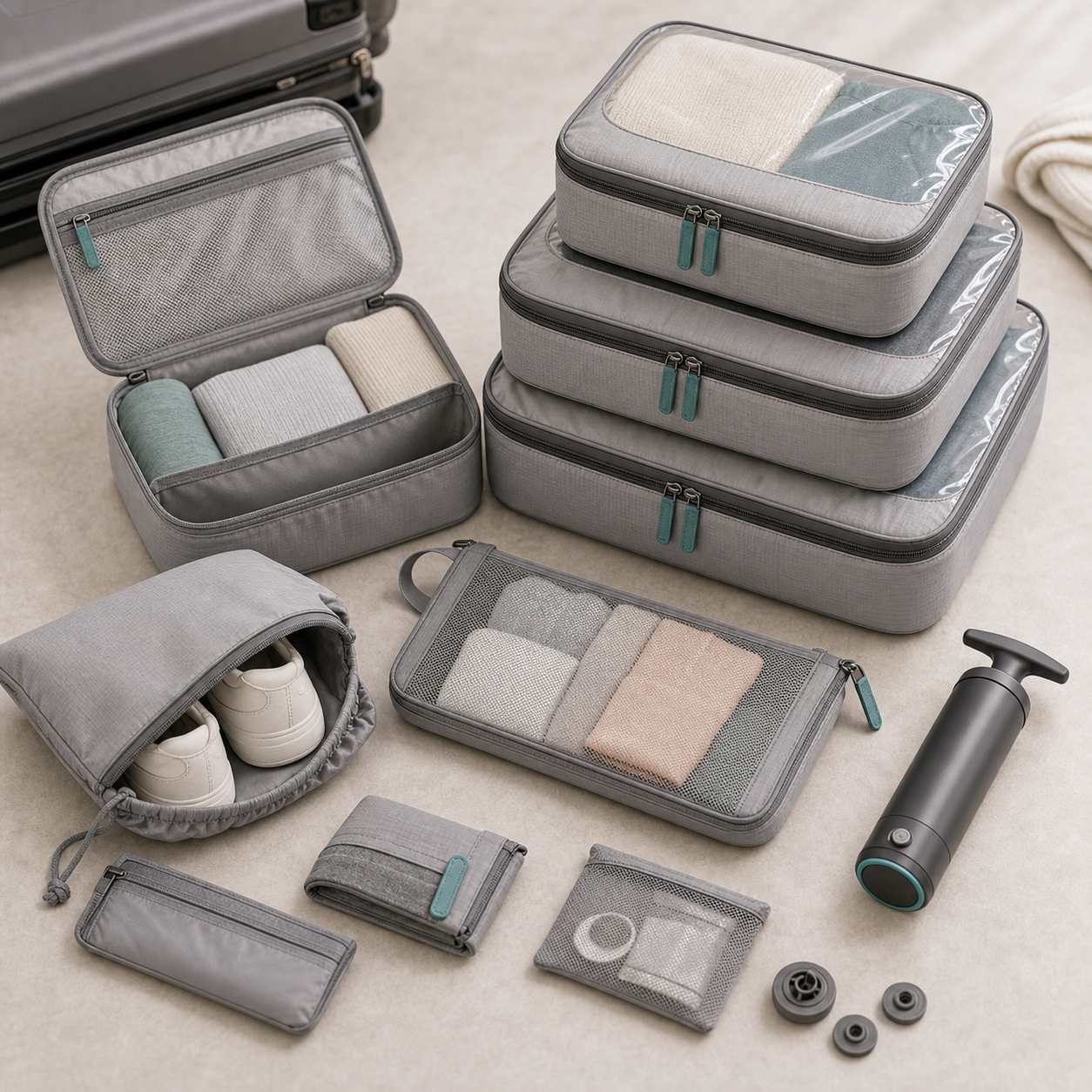
Compression changes how much space clothing occupies; it does not make the clothing lighter. The KudBo compression packing cubes are described as a luggage organization and space-saving set. Buyers should confirm the quoted sizes, fabric, zippers and number of pieces. The most common marketing risk is implying that a compressed suitcase will comply with airline weight limits merely because it looks smaller.
The related vacuum pouch versus cubes comparison contrasts mechanisms. This article focuses on measuring the specific cube system inside a real suitcase. The protocols below are buyer suggestions, not a claim that a particular KudBo set achieved a published reduction percentage.
Define a Repeatable Packing Load
Choose a small wardrobe representing the target traveler: similar garments, known quantity and a normal mixture of thicknesses. Photograph and weigh the clothing before packing. Put the same load in ordinary cubes or loose in a suitcase, then in the compression cubes. Keep the suitcase, folding method and operator as constant as practical. Record the loaded cube's dimensions or approximate profile, not only a dramatic side-by-side photo.
Test whether the compression zipper can close without a second person forcing it. A buyer may find that a cube compresses a stack of T-shirts well but struggles with a bulky jacket. That is a use-boundary observation, not a defect in every scenario. Avoid a blanket “saves 50% space” statement unless a reproducible method and garment set support it. State what is measured: the cube's exterior volume, the suitcase's unused space or the number of garments that fit.
Pack the cubes into actual carry-on luggage. A thinner cube may not create usable extra capacity if the suitcase has a rigid divider or narrow corners. Try different sizes and combinations. A mixed set can be more useful than several identical large cubes, but the best mix depends on the suitcase dimensions. List internal and exterior dimensions of each cube separately; the difference grows when seams and zipper gussets are substantial.
Keep Airline Limits Separate
IATA's safe-journey guidance reminds passengers to follow their airline's carry-on allowance. It does not endorse a particular packing cube or set one universal limit.
Weigh the finished suitcase before and after using cubes with the same clothing. The load will not become lighter; the cubes themselves add some mass. The IATA baggage resource describes general airline handling context, not a single universal allowance. Actual size and weight limits depend on the airline, fare and route. A retail page should direct travelers to check current rules and weigh the final bag.
Compression may allow a shopper to fit more items, increasing the chance of an overweight bag. That is a useful warning, not an argument against the product. Market the cubes for organization, separation and space management rather than as an airline-fee avoidance device. If a buyer demonstrates an improved fit, show the same garment load in both images and label the comparison method.
Distinguish mechanical compression from a vacuum pouch. A cube generally uses zippers and fabric tension; a vacuum pouch requires a valve and sometimes a pump. The two products have different maintenance, repacking and carry-on issues. Do not label ordinary cubes “vacuum sealed” because the final stack looks compact.
Mid-Article CTA
Send Your Requirements with desired cube sizes, suitcase category, fabric preference and target market. Email info@kudbo.com for a component and sample review.
Inspect Zippers, Seams and Repacking
Use the compression zipper with the intended load repeatedly. Observe whether fabric catches in the teeth and whether the pull tab gives enough control around corners. A strong zipper matters, but seam anchoring and pattern design can be the earlier failure point. Check stitching at the zipper ends and carrying handles under an agreed load. Do not infer durability from a nominal zipper brand alone.
Ask a traveler to unpack and repack the kit halfway through a trip. Are the cubes still helpful when some garments are dirty or damp? A breathable fabric may be desirable for one use but cannot be marketed as a waterproof barrier without testing. If one cube is intended for laundry, specify that compartment and cleaning method. A product that compresses tightly at home may be difficult to close at a crowded hotel, especially if overfilled.
At shipment inspection, count size variants, measure key dimensions, check zipper movement, seam finish, handles and labels. Verify whether the retail set includes a storage pouch. A packaging photo should show the actual size distribution, not a prop set with more units than the quoted carton. Record fabric and zipper revisions because a change in thickness or gusset geometry can alter fit even if the outside color stays the same.
Product-Page Disclosure Checklist
The product page should state the number and dimensions of cubes, material, closure method, care instructions and what each photographed set includes. If a suitcase appears, label it as a prop unless bundled. A before-and-after comparison should use the same garments and suitcase. If the claim is “more organized,” show the compartments and how clean and worn clothes can be separated. If the claim is “saves space,” describe the specific measured comparison instead of offering a universal percentage.
Put the baggage-weight disclaimer near the volume claim, not deep in an FAQ only. Compression can tempt customers to add garments until the bag becomes too heavy. The product can still be positioned confidently: it helps control packing shape and keep categories separate. It does not change airline rules, and the traveler still has to weigh the final case. That honest boundary can reduce disappointed returns after a gate encounter.
Ask the supplier whether size labels and spare-parts or warranty support are available for the chosen set. A buyer may decide to sell cubes individually as refills, but that requires stable size and fabric specifications across runs. If a later fabric changes compression behavior, update the images and claim evidence rather than treating every colorway as identical. A consistent SKU architecture gives travelers confidence to add one matching cube later.
A Suitcase Comparison That Can Be Reproduced
For product photography and wholesale evidence, choose one suitcase and a written clothing inventory. Photograph the empty case and weigh it. Then pack a defined set of garments loose, close the case without forcing it and record whether there is unused space. Repeat with ordinary packing cubes if the buyer plans a comparison, and finally with the proposed compression set. Keep folding style and operator consistent. If the packer changes the garment selection midway, the image can no longer support a fair space-saving statement.
Record at least two outcomes: the exterior profile of the filled cubes and the usability of space left in the suitcase. A lower cube profile may create empty space in the wrong place to accept another item. The buyer can photograph the suitcase from directly above with the same camera position in each condition. Avoid using a smaller case in the “after” photo or hiding loose clothing outside the frame. Transparency can be a competitive advantage because sophisticated travelers are accustomed to exaggerated compression claims.
Now weigh the finished case. With the same clothing, compression does not remove mass. If the cubes replace heavier organizers, the total may change slightly because the organizers themselves differ, but the garment weight stays fixed. Report such a comparison accurately. If the purpose is to fit more clothes, add one item at a time and weigh the case again. The buyer may discover the point at which capacity improves but airline weight risk becomes unacceptable. That is the boundary a truthful retail page should explain.
Repacking and Durability as Retail Costs
Ask a traveler to unpack one cube, wear some garments and repack at the end of the trip. The volume and shape of worn clothes change. A suitcase that closed easily on departure may be harder to pack on return. Check whether the compression zipper can be operated without laying the cube completely flat, and whether the pull tab provides control around a fully packed corner. If the user regularly catches fabric in the teeth, the design or instructions need improvement before promising effortless packing.
Create a repair and warranty map for zipper jams, torn handles, seam failure and normal wear. A torn carry loop does not always mean the compression system failed; a stuck second zipper might make the cube unusable even if the first zipper closes. Inspect both separately. For private-label orders, retain the approved fabric, stitching, zipper profile and size measurements. A changed fabric coating can affect washability and drying, while a small gusset change can alter usable suitcase fit.
At shipment inspection, count the exact size distribution, compare dimensions with agreed tolerances and exercise each zipper on sampled units. A short closure check is not a durability test; longer repeated-use evidence belongs in a separate file. Customer service should ask for the cube size, garment load and a photograph of the jam location. An accurate support path and clear weight disclaimer can prevent more returns than an unsupported percentage-reduction headline.
Decide Which Traveler Benefits
A weekend traveler with a small rigid carry-on may value slim cubes that keep clothing categories separate. A long-trip traveler may prefer a larger cube that compresses bulky layers, but the full suitcase weight remains a separate constraint. A family may benefit from color or size coding even if compression is modest. These are distinct applications. Buyers should not select one set configuration solely because it looks dramatic in a before-and-after advertisement.
Ask a pilot user to choose a cube size without coaching, pack it and locate one specific item later. If the only way to find a shirt is to open and recompress every cube, the organization claim may be weak. Transparent mesh can help visibility, but it may affect water resistance and durability. A solid fabric can protect contents from view but require clearer size labels. Test these trade-offs on the actual quote rather than writing a universal recommendation.
The retail kit may be positioned as a repeat-use system. A buyer can offer one starter set and compatible single cubes later, provided dimensions, fabric and zipper systems remain stable. Check whether a replacement cube from a later lot compresses similarly and fits the same suitcase arrangement. If the product changes, update the SKU and imagery. A consumer who adds one piece should not discover that the new “medium” has a different profile without explanation.
This segmentation supports better copy: “organize a carry-on with three specified cube sizes” is a verifiable offer; “pack twice as much for any flight” is not. A careful use case can convert more of the right shoppers while reducing returns from customers expecting a lighter bag.
Frequently Asked Questions
Do compression packing cubes reduce luggage weight?
No. The clothing keeps its mass, and the cubes add their own. Compression may help fit more items, so weigh the final bag against the airline's current rules.
Are compression cubes the same as vacuum bags?
No. Cubes usually compress through fabric and zippers. Vacuum pouches use an air-removal method and have different valve or pump considerations.
How should a space-saving claim be tested?
Use the same garments, suitcase, folding method and measurement definition for both conditions. Report what changed and under which conditions.
What is the main durability point?
Check zipper action, seam anchoring and snagging after repeated use with realistic loads. The zipper's advertised strength alone is not sufficient.
Which sizes should a wholesale set include?
Base the mix on target suitcase dimensions and garment types. Trial a physical set rather than relying only on catalog measurements.
Conclusion
Compression cubes can make a bag more organized and sometimes free usable space, but they are not weight-reduction devices. A transparent packing test, durable closure and truthful component list give retailers stronger claims and travelers a more predictable experience.
Final CTA
Get a Quote by emailing info@kudbo.com with set sizes and packaging needs. Review KudBo products, buyer guides and product sourcing articles for other travel-kit comparisons.