Introduction
Lumens describe total light output, while lux describes illumination arriving at a surface. A camping lantern can have a useful lumen figure yet perform differently at the customer’s table because distribution, distance and orientation matter. Solar charging adds a separate energy question that should not be solved with a brightness slogan.
For outdoor buyers, the right comparison starts with a task: reading, preparing food, providing ambient light or finding equipment. Each task can require a different placement and operating mode. A high-output mode may also consume energy faster than a modest mode, so brightness, runtime and recharge expectations belong in one model-specific review.
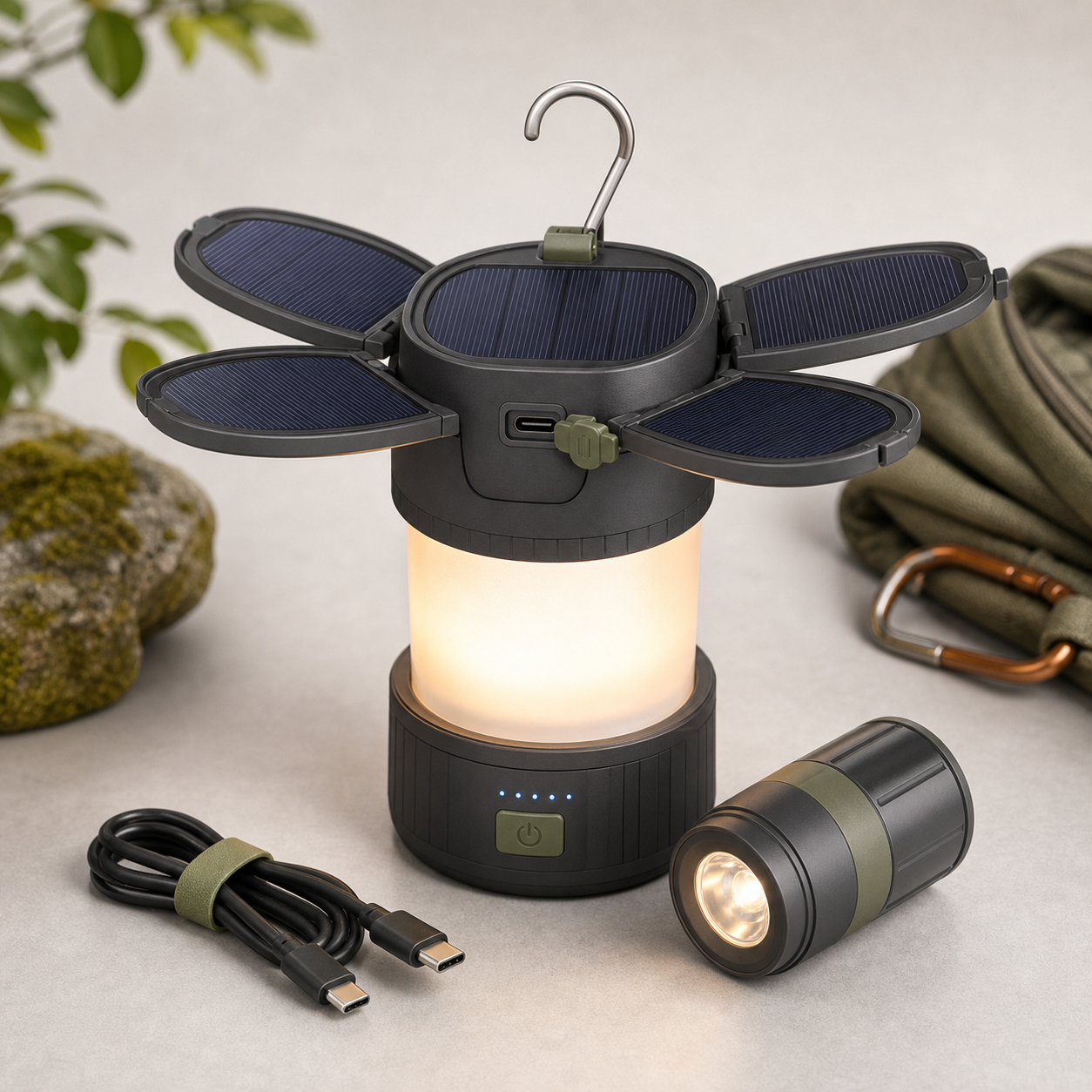
This solar lantern lumens vs lux guide supports evaluation of a solar folding lantern. It provides proposed calculations and trials, not KudBo measured performance. Confirm the quoted light, battery, panel and supplied accessories. Do not assume the product is an emergency system or supports an unlisted charging function.
Separate Output, Illumination and Electrical Input
The US Department of Energy’s light-bulb purchasing guidance distinguishes light output from input power. Its product category is not a camping-lantern certification, but the measurement distinction is useful. Watts alone do not state brightness, and lumens alone do not describe illumination at a chosen working surface.
Ask whether the supplier’s output figure applies to the complete lantern, a light source component or a brief initial condition. These are different claims. Identify operating mode, power condition and measurement method. Do not copy a component’s theoretical output into a finished-product specification without evidence.
For a solar lamp task distance test, define the working plane and placement. Lux varies with distance, geometry and light distribution. A reading directly below the lamp does not establish uniform illumination across an entire table. Record the relevant positions rather than choosing only the brightest spot.
Define the Camp Lighting Task
Ask who uses the light and where it is placed. A hanging lantern, table light and pathway marker have different useful distributions. The product’s mounting instructions and supported orientation matter. Do not suspend it from an unapproved point merely because that creates an attractive photograph.
For reading or food preparation, evaluate the actual work area and user view. Record whether glare, shadows or blocked light interfere with the task. Those practical observations can matter even when a numerical output claim is accurate. A pleasant ambient mode is not automatically sufficient for every detailed task.
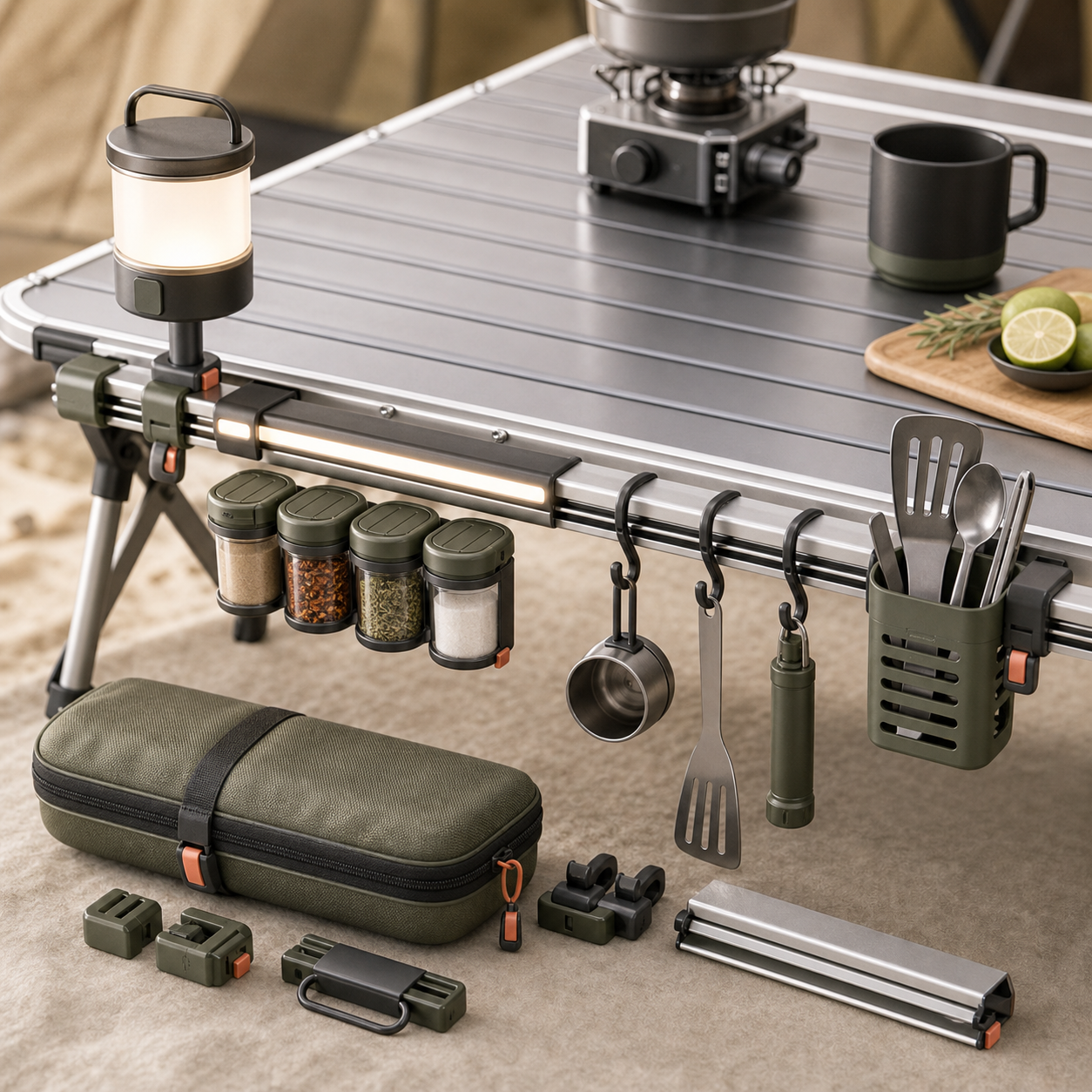
Compare the lantern with a camp table light rail only within their supported arrangements. One may distribute light from a different position. Related products can have distinct roles without one universally replacing the other. The buyer should select the geometry that fits the intended campsite routine.
Review Lantern Mode Power Comparison
List every mode and its supported function. Ask for output, power consumption and runtime conditions separately for each mode where those claims are offered. Do not pair the highest brightness from one mode with the longest runtime from another and present them as simultaneous benefits.
If output changes over time, request an appropriate description and method. A light remaining faintly on is not necessarily continuing to deliver useful task illumination. Define the stopping criterion behind a runtime claim. Keep it separate from the customer’s subjective impression of usable light.
Observe controls with the draft instructions. A customer should be able to find the intended mode without cycling through unexpected flashing patterns. Record power-on behavior and memory functions if relevant. Do not invent an emergency signaling application solely because a flashing mode exists.
Build a Camping Light Energy Budget
Energy can be expressed in watt-hours, while power is expressed in watts. A simplified planning calculation divides usable stored energy by average operating power to estimate duration. Actual electronics, battery limits and changing conditions can affect the result. Use the arithmetic for planning, not as a substitute for measured runtime.
As a hypothetical example, 8 watt-hours of usable energy at an average 2-watt load suggests four hours before considering other limitations. These values are not KudBo ratings or a promised lantern result. The calculation also requires usable energy, not an unexplained battery-capacity number that lacks voltage and system context.
For numerical claims, request the model’s actual evidence and uncertainty. Battery nameplate capacity, energy available to the light and energy consumed at each mode are distinct. A supplier should explain which quantity appears in the quotation and how it was assessed.
Make a Small Solar Panel Recharge Estimate Honest
DOE’s solar-radiation overview explains that available solar energy depends on conditions. A panel’s rated power is not continuous energy delivered throughout every day. Shade, orientation, weather and system losses can change charging input.
A planning estimate can multiply an appropriate power assumption by an equivalent exposure period and account for the system’s losses. Label every assumption. Do not promise a full recharge in one day from a panel rating alone or treat daylight behind any window as equivalent to the assessment conditions.
Ask whether solar input is a primary charging route, a supplementary route or a maintenance contribution for the quoted model. Clarify alternative charging, if supplied, and its approved electrical requirements. A USB socket should not be assumed to supply power to other devices unless that output is actually supported.
Mid-Article CTA
Send Your Requirements with the lighting task, placement, expected use period and quantity. Email info@kudbo.com to discuss a mode-specific sample and documentation request.
Define Camp Lighting Output Verification
| Review item | Record | Avoid implying |
|---|---|---|
| Output | Complete-product mode and method | Component output equals lantern output |
| Work surface | Position, distance and orientation | One lux point covers the whole campsite |
| Runtime | Starting state and stopping criterion | Highest output and longest duration coexist |
| Solar input | Exposure and system conditions | Rated panel power is delivered continuously |
| Charging | Approved source and connection | Every USB socket is a power-bank output |
| Mounting | Supported arrangement | Any hook or orientation is acceptable |
Use suitable instruments and competent methods for numerical assessment. A camera photograph is useful context, but exposure can exaggerate brightness and hide shadows. Do not derive a lumen or lux figure from a lifestyle image. Keep functional observations and photometric evidence separate.
For sample comparisons, preserve the same geometry and mode. If one light is closer to the table, a higher lux result does not establish greater total output. Record the full setup so the buyer can interpret the difference rather than merely ranking one number.
Review Charging and Storage as Customer Tasks
Check the approved charging sequence, indicators and cable requirements. Ask whether the user can distinguish charging, charged and unavailable states. Do not infer complete charging from one illuminated icon unless the instructions define it that way. Relevant electrical and battery safety review belongs with qualified personnel.
After use, follow the approved storage routine. Folding should not pinch a cable or require force outside the instructions. Ask how the panel, diffuser and moving parts are protected in the supplied case. A compact shape is useful only if the customer can return to it reliably.
Do not assume water resistance from outdoor positioning. Obtain the exact model’s supported conditions and relevant evidence. Keep charging precautions, exposure limits and cleaning instructions clear. An outdoor product is not automatically suitable for immersion, heavy weather or charging while wet.
Make Application Images Physically Credible
Show the full light and its actual placement. If the scene includes a separate panel, charging cable or support, explain whether it is supplied. Do not depict a tiny lantern illuminating a large campsite with a uniform cinematic glow when the claim concerns a small working area.
For dusk photographs, use an exposure that communicates the scene without implying measured output. A caption can identify the mode and arrangement as illustrative. Do not present an AI-generated test-bench image as evidence that a photometric or charging assessment took place.
The retail story should describe a supported task and its energy limits. Claims such as unlimited solar light or charges fully in any weather are broader than ordinary evidence. A credible product can offer flexible lighting with a clearly stated charging routine and realistic dependence on exposure.
Preserve the Approved Light and Power System
Changes to the light source, diffuser, battery, panel, charging controller or firmware can affect the reviewed results. Require notification and assess the affected claim. A matching exterior does not establish unchanged output, runtime or solar charging behavior.
Factory testing should explain assembly and operating checks separately from photometric and energy assessment. Shipment inspection can verify identifiers, complete accessories and agreed screening. It cannot reproduce every customer’s weather or establish a universal recharge promise.
Compare quotations on the same configuration: lantern, panel arrangement, cable, case and instructions. Identify provisional data and confirm carton dimensions for the actual pack-out. The KudBo catalog supports selection, while the approved model-specific evidence should determine the purchasing boundary.
An Example Lighting Decision
Imagine a hypothetical buyer needing a compact table light for several evening tasks. One sample has high initial output but limited duration at that mode; another provides less peak output with an arrangement better suited to the table. The buyer should compare the task and energy requirement, not choose the highest lumen badge automatically.
If daily solar input is uncertain, the buyer can require an appropriate alternative charging route or narrow the use expectation. This is an illustrative decision, not a KudBo customer case or measured comparison. It demonstrates how a light and its energy supply should be evaluated as one system.
Pair Each Mode With Its Charging Expectation
Create a mode sheet recording the task, output evidence, duration and recharge assumptions. Keep them on the same row. This makes it harder for artwork to combine the brightest mode with the longest duration from another condition.
Ask whether duration ends at a specified output or when the light stops visibly glowing. The answer affects the claim. A light may remain visible after it no longer supports the defined reading task. Keep usefulness and the test stopping rule distinguishable.
For solar input, record whether the panel is integrated or separately positioned. The arrangements have different orientation and setup requirements. Customers need the actual configuration, cables and supports. A photograph should not imply optimal exposure occurs automatically wherever the lantern is placed.
If the audience faces uncertain weather, review an approved alternative charging route. Do not promise dependable daily operation merely because the name contains solar. A specification can describe supplementary input where that matches the model, without concealing its limits.
Give the sheet to the person preparing copy and photography. They should name the condition shown and identify separately required equipment. An illustrative dusk scene is not a measured output or charging result.
Retain the sheet with the sample and energy evidence. If a diffuser, battery or controller changes, review the affected row rather than assuming all modes remain valid. This connects engineering questions to the concise description customers see and gives repeat purchasing a concrete reference.
Keep the Approval Evidence Retrievable
Record the model, revision, method, conditions, observations and reviewer in the purchase file. A later reader should distinguish a supplier statement, a buyer observation and an unresolved requirement. Do not describe an illustrative photograph as a completed factory test or a real customer project. If a revised sample is proposed, identify what changed and review the affected requirement before carrying the earlier conclusion forward. This record should support the decision, not create certainty that the evaluation never established. Keep the final claim within the observed or appropriately documented scope, and make remaining limitations visible to the person approving artwork and the order.
Name Separately Required Charging Equipment
If the sample relies on a supply, cable or panel support absent from the retail box, identify it in the quotation and instructions. A complete demonstration should not make the product appear self-sufficient when customers need another approved item. Confirm that the proposed equipment suits the actual charging arrangement and preserve its identity in the assessment record before using the result in a product claim.
Related Buyer Resources
Continue with Camp Shower Flow, Bucket Size and Storage for a complementary purchasing question. Compare the full product catalog, or browse the KudBo sourcing blog or the product sourcing topic collection for additional buyer guides. These resources provide decision context; each product still needs its own model-specific approval.
Frequently Asked Questions
Are lumens and lux the same?
No. Lumens describe total light output, while lux describes illumination at a surface. Distribution, distance and orientation affect lux. Identify the measurement method and geometry. One bright point on a table does not establish uniform coverage or the lantern’s complete output.
Does panel wattage prove a daily recharge time?
No. Available exposure, orientation, weather and system losses matter. A rated power is not continuously delivered throughout every day. Request model-specific charging evidence and label planning assumptions. Do not promise a full daily recharge from the panel number alone.
Can maximum brightness and maximum runtime be advertised together?
Only if the evidence supports both under the same stated conditions. Different modes often have different power demands. Keep output and duration paired with their mode, starting state and stopping criterion. Combining the most favorable figures from separate modes can mislead the customer.
Does an outdoor lantern automatically resist water?
Do not assume so. Obtain the exact exposure limits, instructions and appropriate evidence. Outdoor application photographs do not establish immersion, severe-weather or wet-charging suitability. Preserve charging, storage and care precautions rather than extending a supported condition to every campsite environment.
What changes require renewed review?
Relevant changes include the light source, diffuser, battery, panel, controller and firmware. They can affect output, distribution, runtime or charging without changing appearance. Require notification and reassess affected evidence before using the original claims for another production revision.
Conclusion
The solar lantern lumens vs lux comparison should connect output to a task and an energy budget. Define placement, mode, useful duration and realistic charging conditions. A transparent system description is more useful to buyers than a bright photograph or a solar promise without exposure context.
Final CTA
Get a Quote or email info@kudbo.com with your destination, quantity and lighting routine. KudBo can discuss available outdoor options and sample arrangements. Confirm mode-specific output, energy and charging evidence before production approval.