Introduction
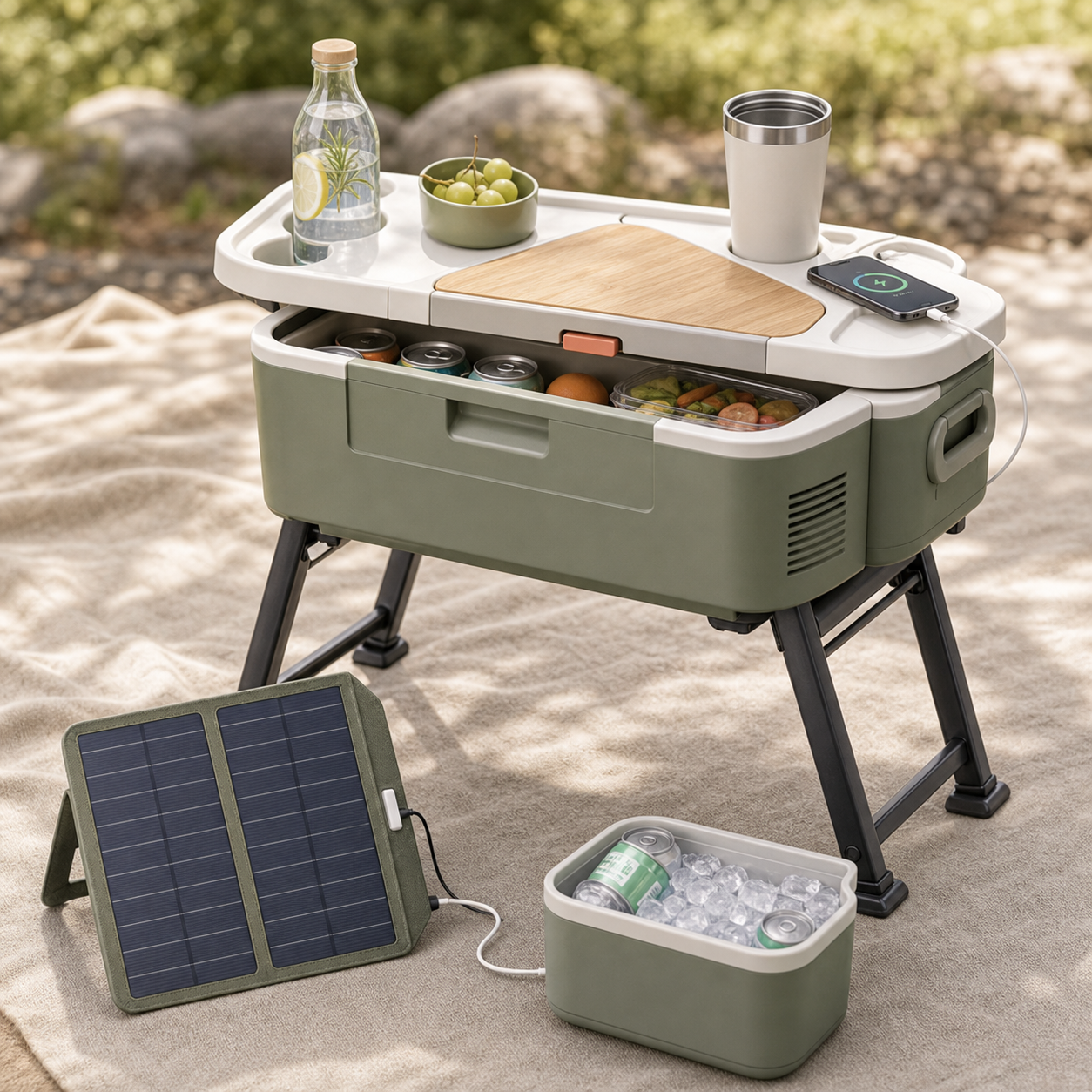
A solar panel does not keep food cold by itself. Some outdoor tables combine a passive insulated compartment with a solar-powered accessory such as lighting or device charging. Others may include a powered cooling system. A buyer must identify the exact architecture before writing a product title, preparing a picnic image or comparing prices.
The KudBo solar cooler table sits at the intersection of outdoor furniture, storage and power. Prior guidance considers insulation and charging and drainage and packing. This article asks a narrower customer question: what supplies the cold, and what can the product honestly support when food is involved? It does not assert that the current catalog model provides refrigeration.
The distinction matters in a retail aisle. A shopper may see a panel and assume the compartment cools itself. If the product actually needs frozen gel packs, the first-use card should say so in words and pictures. The buyer's specification should make the thermal and electrical systems visible to a reviewer before an RFQ becomes packaging artwork.
Identify Passive and Active Functions
Ask for a block diagram. List insulation, lid, gasket, compartment volume, any drain, panel, controller, battery, outlets and any refrigeration component. Mark what is included in the quoted unit and what is optional. If no active cooling circuit exists, never call the compartment a refrigerator merely because a solar panel sits nearby. If active cooling is proposed, request model-specific power, temperature and electrical evidence with test conditions.
Solar output is variable. The U.S. Department of Energy's PV performance explanation describes how temperature and operating conditions affect photovoltaic output. It does not measure this table's panel. A buyer should therefore separate a rated panel figure under defined conditions from power actually available at a shaded picnic site.
Draw the user flow: pre-chill food, freeze a cold source if needed, transport, set the table, open the lid repeatedly and return home. Ask which step the product performs and which the customer must perform. A passive insulated box slows warming; it does not produce cold. That plain sentence belongs near the top of the listing when customers might otherwise misunderstand.
Build a Defensible Cold-Source Test
For a passive compartment, choose a realistic load and specify starting temperatures of the food simulants, compartment, gel packs and ambient air. Place thermometers where they answer the user's question, not only beside the coldest pack. Record lid-open frequency, shade, duration and load arrangement. Use a food-safety professional's advice before translating an in-house temperature profile into a consumer safety claim.
The USDA outdoor food-safety guidance advises keeping perishable food cold and using sufficient cold sources. The source does not certify any table. A buyer should not state “keeps food safe all day” from a showroom test with empty space. The amount and condition of the cold source, contents and surrounding heat matter.
Distinguish beverage cooling from storage of perishable meals. A table used for canned drinks may be described without implying that raw meat can be safely stored for a day. If marketing shows prepared food, ask whether the approved instructions and evidence actually cover that use. A photograph of a picnic spread is a claim context, even when the words underneath are restrained.
Design Around Shade, Openings and Drainage
Outdoor shoppers may place the table in shade to keep the compartment cooler, while the panel performs best in stronger light. That is a real tradeoff, not a defect to hide. Ask whether the panel or charging module can be repositioned independently, and whether the product will still work as a passive cooler when no solar power is available. If a claim depends on direct light, put that condition in the method and copy.
Open the lid repeatedly under a defined sequence to see how the gasket seats and how readily warm air enters. Compare an easy-to-clean drain with its sealing behavior when the table is carried. A drain that is convenient after an outing should not leak onto electronics or into the vehicle. Test with inert water, within the manufacturer's instructions, and separate interior cleanup from electrical component cleaning.
Observe the tabletop under a typical picnic arrangement. Is there a route for spills toward a port, cable or battery compartment? Are drinks meant to sit near the panel? Ask for the supplier's environmental ratings and electrical instructions for the exact assembled product. Do not infer water resistance from an outdoor lifestyle image or assume a household extension cord is appropriate in wet conditions.
Review Electrical Separation
Trace every wire and connector relative to food, meltwater and drainage. A low-voltage port does not remove the need to manage water ingress and electrical protection. The CPSC guidance on electrical safety near wet areas addresses more hazardous settings than a picnic table, but it reinforces the importance of qualified electrical design where water and power meet. Have a competent reviewer assess the intended market and exact product.
If a battery or power bank is included, identify its location, removability, capacity, transport documents and service path. If it is not included, do not picture it as a standard accessory. List compatible devices for any charge port only where voltage, current and connector tests support the claim. A panel rating in watts does not guarantee a particular phone charge time.
Check customer setup: will they put the table on uneven ground, extend a leg near a cable or try to charge a device while pouring out water? The manual should show permitted use and the order of cleanup. A retailer can avoid many support cases by explaining the cold source and power functions separately.
Mid-Article CTA
Send Your Requirements with desired cooler volume, passive or powered design, food-use scenario, power feature and market. Email info@kudbo.com for a model-specific configuration and evidence discussion. Include the expected cold-source method in your brief.
Compare Total Pack-Out and Ownership
Price the complete offer: table, insulated liner, lid seal, drain plug, panel, cable, battery if applicable, gel packs if supplied, manual and outer carton. A low quote that omits the cold source may be acceptable if the listing is honest; a gift program may prefer a complete first-use bundle. Decide deliberately which party supplies each part.
Check replacement availability for gaskets, drain plugs, feet and electrical modules where the design allows service. A missing plug can make a compartment unusable even when the insulation remains sound. Label parts by model revision, and ask how a customer obtains them after the initial sales season.
Factory testing should cover the functions in the approved configuration, such as lid closing, port output under a defined setup and drain integrity. Shipment inspection should compare pack-out, visible wiring, labels and reference images. Neither is a substitute for a food-safety temperature study under a representative load or a qualified electrical assessment. Store those reports separately and describe their scope accurately.
Release One Clear Consumer Story
Write two sentences the shopper can understand: how the compartment is cooled, and what the panel powers. If active cooling is present, add the operating requirements and limitations documented for that exact model. If it is passive, say what to pre-chill and how to use a suitable cold source. The buyer should not need a footnote to correct the inference created by the main photograph.
Test the first-use card with someone who has not seen the supplier presentation. Ask them what they believe will keep food cold. If their answer differs from the product's architecture, change the copy before printing. This is a comprehension check, not proof of safe food storage.
| Claim area | Buyer needs to document | Do not infer from |
|---|---|---|
| Cooling method | Passive or active design and cold source | Solar panel photo |
| Food use | Load, temperatures, conditions and instructions | Empty-box insulation test |
| Charging | Port, power conditions and included parts | Nominal panel rating |
| Cleaning | Drain and electrical isolation | Outdoor lifestyle image |
Separate Energy, Insulation and Food Claims
Build three independent evidence columns for a combined cooler table. The energy column covers solar input, battery or USB output, test sunlight and connector limits. The insulation column covers the box, lid openings, ambient temperature and cold-source mass. The food column covers what a user can safely store and for how long under a defined procedure. Do not use a successful phone-charge demonstration as evidence of safe food temperature, or a chilled bottle photograph as proof that a solar panel powers refrigeration.
Ask the supplier for a wiring diagram and an explanation of how wet areas are isolated from electrical connections. An outdoor table can encounter rain, condensation and spills; retail copy should state the intended exposure boundary. If the quoted unit has only passive insulation, the instructions should explain that users must add a cold source. If it actively cools, specify the electrical conditions under which that function was tested. The word “cooler” alone does not settle either question.
During sample review, follow a believable picnic sequence. Pre-chill the contents, add the stated ice or packs, open and close the lid at a defined frequency, and record temperatures at relevant points. If the buyer wants to make a duration claim, use the results from that method and preserve the log. If no such test is performed, market the unit as a portable insulated table and give users general food-safety guidance rather than an invented number of safe hours.
Define the Picnic Scenario the Product Can Support
Imagine a family carrying the table from a car to a shaded picnic area. They pack drinks and pre-chilled food, open the cooler repeatedly, charge one phone and clean up afterward. That scenario identifies three separate requirements: safe lifting and setup, appropriate cold-source space and a realistic electrical output. Ask the supplier to show the full packed weight and carrying method. A foldable table may be awkward for one person even when its folded dimensions look compact.
If the solar panel is part of the table surface, check where cups and food can be placed without covering or damaging it. If it is separate, verify cable length, storage compartment and weather exposure instructions. Test charging in a documented light condition and do not claim continuous output in shade. A buyer who wants a “solar picnic” story should be able to explain that sunlight availability varies and that food cooling may still depend entirely on ice packs.
After use, determine how melted ice or condensate is drained without wetting electrical parts or vehicle upholstery. Include a safe cleaning method for food-contact or food-adjacent surfaces and a drying position for storage. The first marketing photograph should show the actual interface between cooler, table and panel, rather than hiding the parts that make the setup work.
Frequently Asked Questions
Does a solar panel mean the table has refrigeration?
No. A panel may power lighting or charging while the cooler itself is passive. Request an exact component diagram and verify whether any active cooling unit is included. If cooling relies on ice or gel packs, state that clearly in the listing and instructions.
Can a passive cooler table keep perishable food safe all day?
Not without conditions and appropriate evidence. Starting food temperature, cold-source quantity, ambient heat, shade, lid openings and duration all matter. Follow authoritative food-safety guidance and use a thermometer for relevant foods. Do not market a universal safe-duration promise from one informal test.
Why might shade help cooling but reduce charging?
Shade can reduce heat gain into the compartment, while a photovoltaic panel generally receives less sunlight there. The exact tradeoff depends on design and conditions. Buyers should test the two functions separately and describe the setup that supports each claim.
Should gel packs be included in the wholesale quote?
Decide based on the promised first-use experience. If included, document their size, count, placement, material and pack-out. If excluded, tell customers what compatible cold source to prepare. A photograph showing accessories does not make them part of the quoted SKU.
What can pre-shipment inspection establish?
It can compare production samples with the approved model for parts, assembly, labels, drain and routine electrical function under a defined method. It does not by itself establish food-safety temperature performance under every outing. Keep test and inspection scopes distinct.
Conclusion
A solar cooler table should have a transparent thermal story and a separate power story. Decide the food scenario, test the cold source under defined conditions, protect electrical parts from wet handling and ensure the retail pack says exactly what is included. That makes a complex outdoor product easier to buy and to use responsibly.
Final CTA
For related sourcing questions, browse all buyer guides or the Product Sourcing collection.
Explore the current KudBo product catalog when comparing this guide with available SKUs.
Contact KudBo or email info@kudbo.com with destination, quantity, cooling method and power-feature priorities. KudBo can help coordinate a sample and a configuration-specific evidence request before artwork approval.