
Introduction
Approve private-label colors on the actual materials, under agreed lighting, against a controlled physical reference. A color code or photograph is a starting point, not a complete acceptance specification. When two materials match under one light but differ under another, metamerism may be involved. Buyers should combine suitable instrumental measurements with a repeatable visual review of the assembled product.
This matters when a retailer displays coordinated accessories, an ecommerce seller promises a consistent brand color, or a gift program combines plastic, textile and printed packaging. The goal is an appearance the customer can reasonably expect across the intended settings. The workflow below describes proposed approval practices; it does not claim measured color performance for any KudBo product.
Define What Matching Means for the Product
Begin with the parts customers see together. For a modular lunch box set, the lid, body, strap and outer sleeve may all use a similar color while having different surfaces. Decide whether the requirement is an exact visual match, a coordinated family of shades or an intentional contrast. Those are different design decisions and should not be left for an inspector to infer.
Create an appearance map showing the approved relationships. Mark which adjacent parts are critical and which components are normally hidden. A slight difference between two separate accessories may be acceptable while the same difference across adjoining molded parts may be distracting. Record the intended judgment before the supplier invests in color trials.
Separate Brand Identity From Manufacturing Acceptance
A brand guide communicates a design direction. A production acceptance specification tells a supplier how approval will happen. The latter should identify the physical reference, material, surface finish, lighting, viewing arrangement and any agreed measurement method. It should also identify the person who can resolve borderline results.
If a design team supplies only a digital value, ask for a physical development reference or an agreed procedure for creating one. Screen appearance depends on the display and viewing environment. Do not let an email attachment silently become the permanent manufacturing master simply because it was the first image shared.
Understand Metamerism Without Overcomplicating the RFQ
X-Rite explains visual evaluation and metamerism as part of its color-control guidance. Materials can appear matched under one lighting condition and mismatched under another. For buyers, the practical implication is to review the assembled item under more than the factory office light when its intended use spans different environments.
The supplier does not need to promise an impossible match under every light in the world. Instead, agree the important viewing conditions and the permitted appearance relationship. A product sold for a store display and then used at home should be considered in those contexts. Keep the decision connected to the intended application rather than an undefined demand for perfect color.
Do Not Specify Light by Color Temperature Alone
Two light sources with a similar stated color temperature can render materials differently. Ask the color specialist to define suitable illumination and viewing conditions, including relevant retail lighting information supplied by the customer. The specification should be detailed enough for both parties to repeat the review, rather than relying on the phrase daylight lamp.
If the buyer and supplier use different equipment, discuss how results will be compared. A disputed sample should first be reviewed under aligned conditions. Sending more photographs between two unmatched viewing environments may document the disagreement without resolving its cause.
Choose a Physical Master That Can Be Maintained
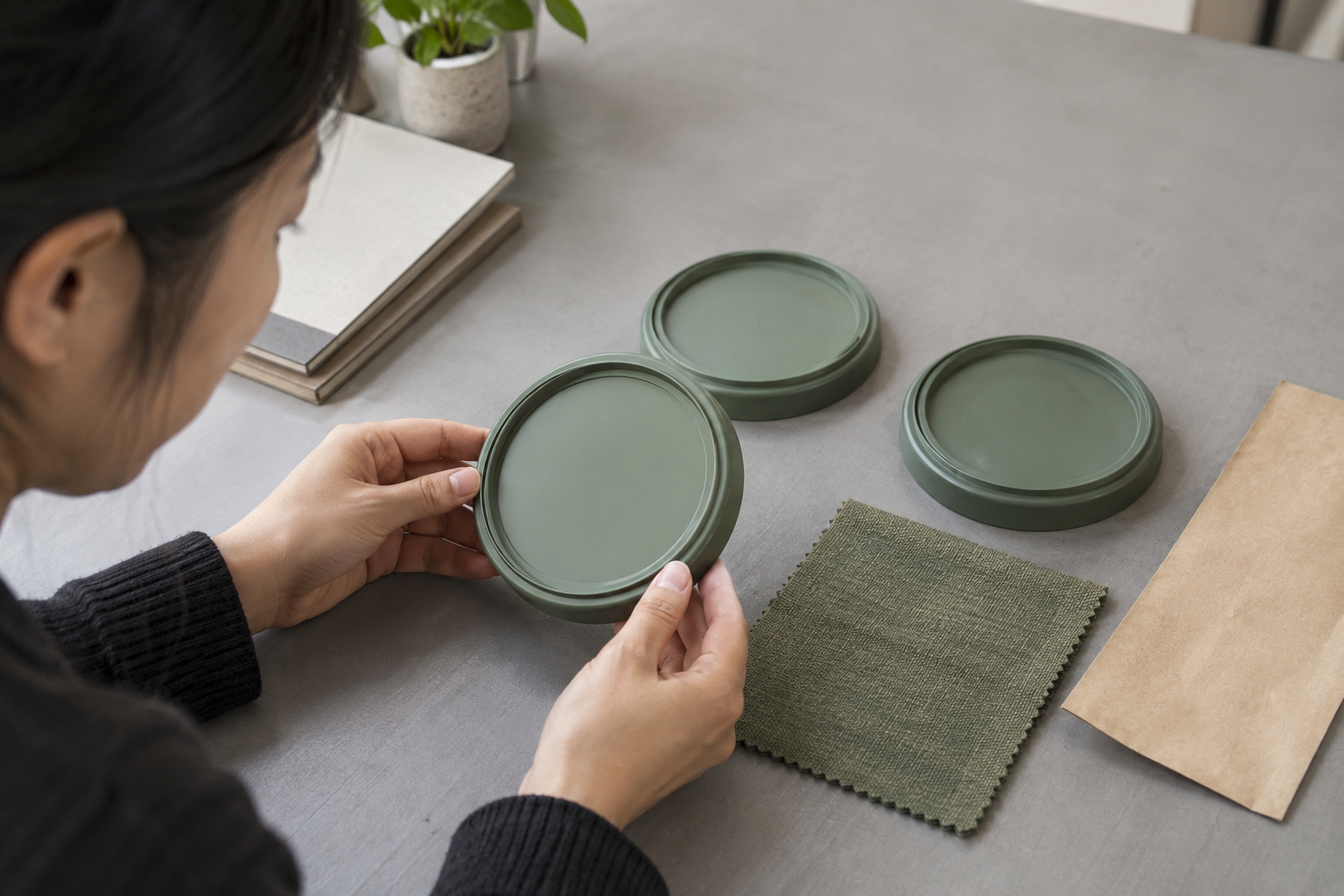
Use a master made from the actual production material and finish where feasible. A paper swatch can guide a plastic development sample but cannot reproduce every feature of its gloss, translucency or texture. Identify the master with a revision, approval date and application. Keep its relationship to any original brand reference visible.
Store the master in conditions suitable for the material and limit handling that could change its surface. Maintain working references for routine use and define when they should be compared with the retained master. A faded, scratched or contaminated standard creates disagreement even when the production process has not changed.
| Reference | What it can help decide | Important limitation |
|---|---|---|
| Digital artwork | Initial design direction and layout | Display conditions affect appearance |
| Paper color reference | Communication and development target | Different substrate and finish |
| Approved production sample | Actual material appearance | Requires controlled storage and identification |
| Instrumental target | Repeatable numerical comparison | Method and visual relevance must be agreed |
For a multi-supplier gift set, nominate one coordinating owner for the complete appearance. Individually approved components may still look inconsistent when assembled. Send the suppliers an agreed reference hierarchy so they do not each optimize against a different interpretation of the same color name.
Specify the Measurement Method Before the Tolerance
A numerical color tolerance is useful only when the measurement conditions are clear. Ask the technical provider to identify the instrument setup, color-difference formula, illuminant and observer settings, measurement area and sample presentation. Gloss, texture, curvature and translucency can affect how a specimen should be measured. Do not copy a tolerance from another product without understanding its method.
There is no single universal delta-E threshold that makes every consumer product acceptable. A practical tolerance should reflect the material, process, viewing conditions and customer's expectations. Develop it with representative samples and a qualified color specialist. Where the geometry prevents reliable readings, document an appropriate alternative instead of generating numbers that appear precise but are not meaningful.
Keep Visual and Numerical Decisions Connected
Define what happens if the sample is numerically acceptable but visually unsuitable as an assembled set, or vice versa. The response should be an escalation and review against the approved criteria. Do not permit either party to choose whichever method happens to support its preferred shipment decision.
Review several samples near the proposed acceptance boundary before production. This makes a vague disagreement more concrete: the buyer can explain which differences affect the design and which are tolerable. Identify these development samples as decision aids, not as evidence that future lots will automatically remain within the same range.
Mid-Article CTA
Developing a coordinated private-label color range? Send Your Requirements with the product materials, brand reference, intended retail setting and components that must match. KudBo can discuss sample coordination and appearance approval, with final acceptance based on agreed references and evidence rather than screen images alone.
Run a Repeatable Visual Review
Use a suitable neutral viewing area, the agreed light sources and consistently positioned samples. Present the reference and trial part together. Keep avoidable visual distractions out of the comparison and allow reviewers to follow the same process. X-Rite's lighting and visual evaluation resource provides a primary explanation of why controlled viewing matters.
Record the light source, sample orientation, reference revision and result for each condition. Review the assembled item as well as separate parts. A curved glossy lid can look different when turned even though its pigment formulation has not changed. The inspection instruction should explain the normal viewing positions relevant to customer use.
Include the Packaging Beside the Product
If the package uses the same brand color, review the printed and finished packaging with the product. Lamination, varnish and paper selection can change the visual relationship. Approval of an uncoated proof should not silently approve a different final finish. Ask for the relevant production-intent sample before committing to the entire print run.
For ecommerce, use product photography to communicate the offer accurately, but keep photographic approval separate from production approval. A retouched image can conceal a mismatch or create a color expectation that the physical item cannot meet. Marketing and sourcing should use the same approved product configuration when planning images and customer descriptions.
Connect Color Approval to Purchase Quantities
Color development and manufacturing quantities are connected commercially, but they answer different questions. A low minimum order does not establish repeatability, and a large order does not justify a vague acceptance standard. Review the mixed-color MOQ planning guide alongside the appearance specification so the number of shades and the approval work remain realistic.
Ask the supplier to distinguish development samples, first production approval and routine lot checks. Define whether different colors are produced in separate runs and how lots are identified. If a purchase order combines replacement units with existing stock, consider the appearance relationship to that retained inventory rather than only to a newly approved sample.
Keep the quotation transparent about color-development work, sampling, production constraints and changes. If a proposed saving requires a different material or surface process, it deserves a new appearance review. Treating that substitution as invisible can undermine the very brand consistency the buyer is paying to establish.
Investigate a Color Dispute in a Fixed Order
First confirm that both parties are evaluating the same product revision against the same reference. Next align lighting, sample orientation and measurement settings. Then compare material and process records. This sequence can prevent unnecessary reformulation when the disagreement originates in a changed standard or a different viewing condition.
Request identified physical samples from the disputed lot, including representative pieces rather than only the best or worst example. Keep photographs as supporting records. If a new pigment, coating or substrate is proposed as a correction, obtain the relevant product and compliance review as well as color approval. Appearance should not become a reason to bypass material requirements.
A Hypothetical Buyer Decision
Imagine a gift set with a green plastic container and a green fabric sleeve. They look coordinated under the agreed daylight condition but visibly separate under the buyer's store lighting. The buyer could revise the materials, approve an intentional contrast or reject the combination. The right decision depends on the selling promise, technical feasibility and commercial timing, not on which party has the most flattering photograph.
Document the chosen outcome and update the master set. If the buyer approves contrast, marketing should show it honestly. If the supplier changes a material to improve matching, repeat the relevant approval steps. This hypothetical example illustrates a decision process, not a customer case or a measured test result.
Prepare the Shipment Inspection Brief
The inspector needs the approved sample identifiers, lighting instructions, sampling plan and escalation contacts. Identify whether the inspection includes instrumental checks, visual checks or both. Include the assembled appearance and any critical adjacent parts. A single line reading check color does not tell an inspector what evidence the buyer expects.
Retain the results with the lot reference and packaging version. Where a borderline result is accepted, document the exact concession and whether it applies only to that lot. Avoid allowing one exceptional approval to become a permanent relaxed standard through repetition. The next reorder should refer to the current controlled specification.
Use the KudBo catalog to group products by shared appearance requirements before requesting samples. A coordinated collection may benefit from one review session covering all visible combinations. That makes it easier to spot a mismatch between products that separate category teams might otherwise approve independently.
Write a Color Approval Sheet the Factory Can Use
Give every required shade a line on the sheet, with the product part, material, finish, master reference and approved viewing conditions. Add the measurement procedure where applicable and identify which assembled combinations need visual review. Keep design comments separate from acceptance criteria so an operator does not mistake an early preference for a final production instruction.
For each sample round, record what changed. A supplier might adjust pigment, texture or coating to improve appearance; the buyer needs to know which variable moved and whether other requirements are affected. Compare the new sample with the controlled master and the previous development version where useful. Do not approve a sample whose construction is unknown simply because its color looks closer.
Name the decision owner and response deadline for unresolved samples. Procurement can coordinate the schedule, but an appearance concession should come from the person authorized to accept the customer-facing difference. Keep the supplier's capacity and material constraints visible during that decision. An approval that assumes a development sample can be repeated at any quantity may create a preventable production dispute.
Close the sheet by identifying the production reference and the treatment of obsolete samples. Mark rejected trials clearly and prevent them from returning to the packing or inspection area as unofficial standards. This simple administrative step helps preserve the technical work already invested in matching the range, especially when purchasing, design and factory staff change during a long project.
Frequently Asked Questions
Is a color code enough to approve production?
No. It is a useful communication reference, but production approval also needs the actual material, finish, viewing conditions and acceptance method. Establish an identified physical master or an agreed instrumental target. Review the assembled product where different materials are expected to look coordinated in normal use.
Why can two matching parts look different in a store?
Different lighting can reveal a mismatch that was not visible during initial approval. Metamerism is one possible cause, while surface finish and viewing geometry can also matter. Align the review conditions and compare identified samples before deciding that a pigment change is the appropriate correction.
Should a buyer accept color from photographs?
Use photographs for communication and documentation, not as the sole basis for a critical physical color match. Lighting, camera processing and displays can alter appearance. Approve suitable physical samples under agreed conditions, then use photography to represent the approved product honestly in marketing and sales materials.
What color-difference tolerance should the purchase order use?
Choose a tolerance with a qualified specialist for the material, process and customer expectation. Specify the measurement method and settings alongside the value. A number copied from another product may not reflect the visual differences that matter for your design, especially across textured or translucent materials.
When should color approval be repeated?
Review changes to pigment, resin, fabric, coating, finish or manufacturing conditions that could affect appearance. Also reassess a deteriorated master or a newly important retail lighting condition. Keep routine lot checks separate from development approval so repeat orders remain linked to an identifiable and maintained standard.
Conclusion
Private-label color approval becomes manageable when matching has a defined meaning. Agree the materials, physical reference, lighting and measurement method, then review the assembled product and packaging together. Keep records through production and shipment inspection. This gives buyers a defensible appearance decision and suppliers a specification they can actually follow.
Related Buyer Resources
Continue with the KudBo buyer blog and product sourcing collection, or use the sourcing enquiry section to describe the application and approval evidence you need.
Final CTA
Ask for Product Catalog or contact KudBo to discuss a coordinated private-label range. Share your product list, color references, intended market and order quantities. The next useful step is a sample and approval plan that connects brand expectations with the actual materials being purchased.