Introduction
A pet travel bottle has two water paths: clean water going out and used water that may return toward the reservoir. The buyer needs to know whether its valve, tray and user instructions keep those paths understandable. A bottle that looks convenient during a ten-second demonstration may be harder to clean after a muddy walk or a hot day in a vehicle.
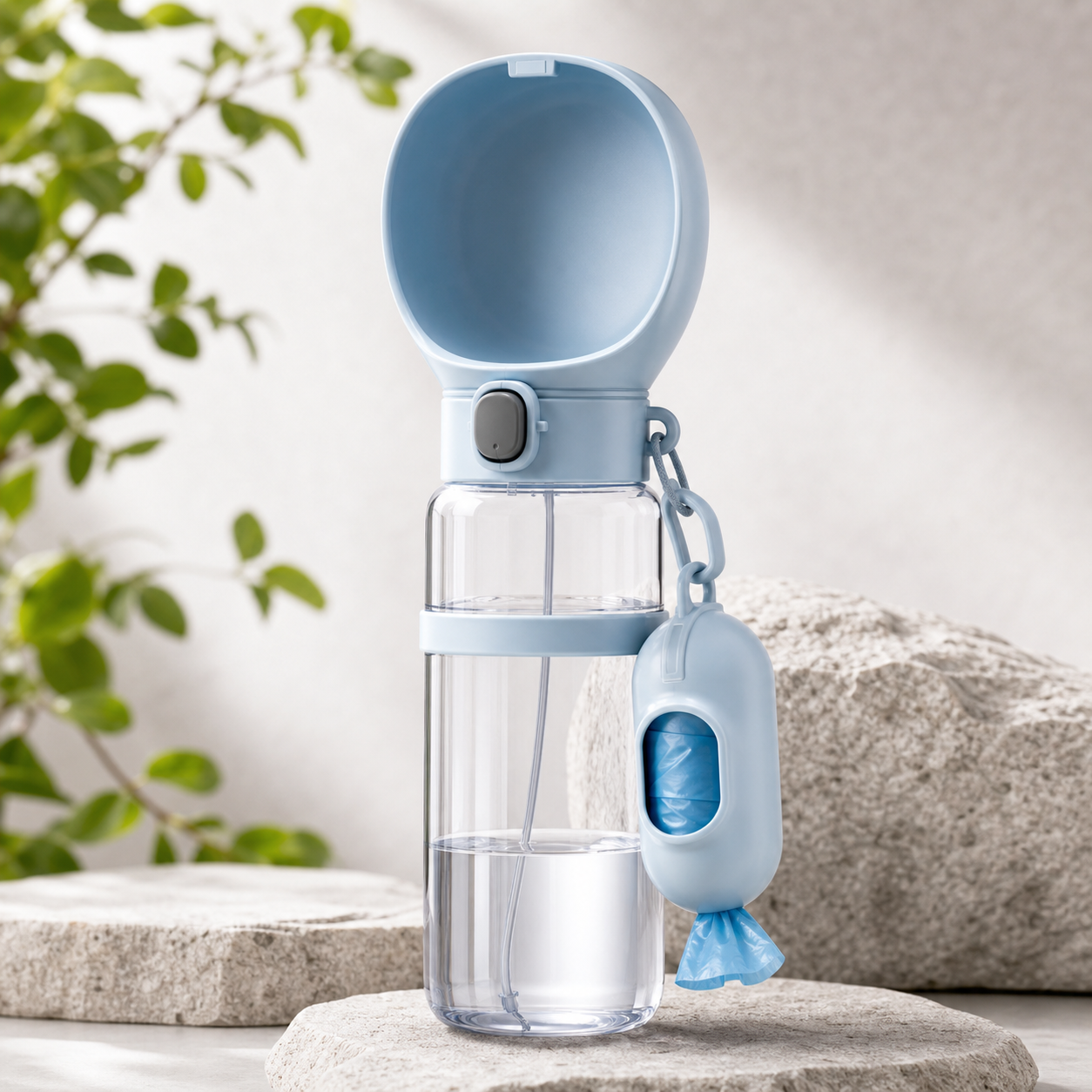
The KudBo pet travel water bottle serves owners who need one-handed dispensing away from a fixed bowl. Earlier guidance covers leak resistance and the wider pet bottle versus outdoor filter bottle choice. This article concentrates on the handling and hygiene questions a distributor should settle before promising an effortless, reusable product.
Do not treat the bottle as a veterinary or water-treatment device. It does not make unsafe water safe, and its appearance cannot establish antimicrobial performance. The following sample checks are buyer workflows to request or perform under stated conditions, not claims of completed KudBo laboratory testing.
Watch the Complete Drink-and-Return Sequence
Ask how water moves from reservoir to tray and what the owner is expected to do with unused water. Some designs allow liquid to return through a valve; others require the user to discard it. Neither decision should be hidden. If water that touched a pet's mouth can return to the main reservoir, buyers need to understand the pathway, its cleaning implications and how the manual describes it.
Use clean test water and an inert substitute for first bench review. Dispense at the angle a person would hold the bottle outdoors. Observe how the tray fills and whether a small dog can reach the water without forcing an awkward bottle angle. Then perform the manufacturer-approved empty or return action and document visible residual water. Do not infer microbial safety from the direction a valve appears to move in a video.
Try the sequence while holding a leash in the other hand. Does the button require excessive force? Can it be locked before the bottle goes back into a bag? Does the tray accidentally fold while full? These practical details are often more important to a retailer than a decorative accessory. Record the user position and sample configuration so two suppliers can be compared fairly.
Map Surfaces That Need Cleaning
Disassemble only parts the final instructions authorize. Lay out reservoir, tray, valve, seal, hinge and any drinking spout. Ask which pieces can be soaked, brushed or placed in a dishwasher; one dishwasher-safe component does not make the whole assembled product dishwasher-safe. Check blind corners and narrow passages where water remains after draining.
The CDC's guidance on cleaning pet supplies notes that pet items can carry germs and gives cleaning frequency examples for water bowls. A travel bottle has its own geometry, so use the source as a hygiene principle rather than claiming it specifies this bottle's exact schedule. The product instructions should tell owners how to clean and dry each part and when additional precautions may be appropriate.
Ask for acceptable cleaning agents and temperature limits for the actual material and seal. A resilient-looking gasket may deform under a cycle the manufacturer never approved. After reassembly, repeat dispensing and leakage checks. A design that cleans well only when a trained worker reassembles it may need a clearer user guide or a simpler part layout.
Specify the Reservoir and Water Source
State intended water contact clearly. Buyers should request material declarations for water-contact parts, relevant market documentation and model-specific review. A pet bottle's water path is not automatically equivalent to a human drinking bottle even when the materials look similar. Label and advertising copy should not borrow a human-use certification from another SKU without evidence.
The CDC safe-water-storage guidance recommends clean containers and protection from contamination for stored drinking water. It does not certify any travel bottle. In consumer instructions, tell owners to start with suitable clean water, empty and clean the product as directed, and avoid storing dirty returned water. Do not imply that an integral tray filters stream water.
Test realistic fill levels. A completely full reservoir may dispense differently from a nearly empty one; a clear body may become hard to read with condensation or surface marks. If a capacity figure is printed, define whether it is total molded volume or usable fill volume under normal closure. A sample can be measured with an ordinary graduated vessel, but a claim still needs method and tolerance.
Assess Carrying and Leak Path
Pack the closed bottle in a bag with inert absorbent indicators and repeat after several open/close cycles. Test upright, sideways and at the angles the manufacturer's instructions permit. A single immediate no-leak observation is not evidence of indefinite leakproof performance. Note whether a wet outer tray transfers water to surrounding items despite the reservoir remaining sealed.
Check strap, clip and handle positions while the bottle is full. A clip that holds an empty sample may bend when the water is inside. If the retail image shows attachment to a backpack, include that attachment in the sample pack-out and clarify whether it is supplied. Measure size with the tray folded so customers can judge bottle-pocket fit.
The valve is often a service bottleneck. Ask whether it can be replaced, what part revision it uses and how a buyer distinguishes a user-cleaning problem from a failed seal. Avoid telling customers to use improvised parts or adhesives on a water path. A modest stock of approved replacement seals may make a range more supportable than a lower-price sealed assembly that must be discarded after one small fault.
Mid-Article CTA
Send Your Requirements with bottle capacity, target animal size, water-return preference and cleaning expectations. Email info@kudbo.com for a model-specific sample discussion. Mention any need for replaceable valves or retail care cards.
Write an Instruction That Prevents Ambiguity
A useful quick-start card should show fill line, lock/unlock state, dispense action, what to do with leftover tray water and how to separate approved components for cleaning. Do not rely only on a generic cartoon of a dog drinking. The owner needs to know where water can remain after the walk and how to dry the product before storing it.
Ask a person unfamiliar with the design to perform the sequence using the draft card. Record mistaken actions, such as trying to twist a nonremovable tray or assuming the return button sterilizes water. Revise wording where the misunderstanding arises. This small observation does not establish all-user usability, but it can prevent predictable support messages.
For international packaging, specify the actual sales languages and any market-required marks through qualified review. A pictogram may help but should not imply a cleaning temperature or dishwasher method the supplier has not validated. The retail image, manual and quote should refer to the same included strap and valve arrangement.
Build an Evidence and Inspection File
Store a dated reference sample with images of the fully assembled and disassembled approved state. Include material identity for water-contact parts, cleaning instructions, simple functional-check method, pack-out, spare-part list and revision history. If a hinge, seal or tray material changes, repeat the relevant water-flow and cleaning checks before approving new production.
Factory testing can verify assembly and a defined dispensing/closing cycle. Shipment inspection can sample visible finish, accessory count and an agreed leak procedure. Neither by itself proves the absence of microbes after long-term use. Make consumer claims only to the level supported by the actual method and product.
| Review area | Buyer observation | Open question for supplier |
|---|---|---|
| Water path | Dispense and unused-water handling | Can used water return to the reservoir? |
| Cleaning | Authorized part removal | Which agents and temperatures are allowed? |
| Carry | Full-bottle clip and bag fit | Are accessories standard or optional? |
| Service | Valve and seal identification | Can approved replacement parts be ordered? |
Work Through Three Real Use Settings
On a short urban walk, the owner may offer a few sips and then return the remainder to the bottle. A buyer should determine whether returned water mixes with the main reservoir or is discarded, and how that choice is explained on the box. In a car, the same bottle may sit sideways in a bag for hours after the drinking tray is wet. In a park, sand or grass can get into the open trough. These scenarios create different cleaning and leak questions even for the same molded product.
Build a sample sequence for each setting. Fill to the stated line, offer water using a clean simulation, operate any return button, close the tray and carry it in the intended orientation. Check external wetness, trapped water, valve position and whether the owner can disassemble the mouthpiece without a tool. Use safe, clean test water and record the procedure. Do not convert a brief inverted hold into a general “leakproof” guarantee for pressure changes or a damaged seal.
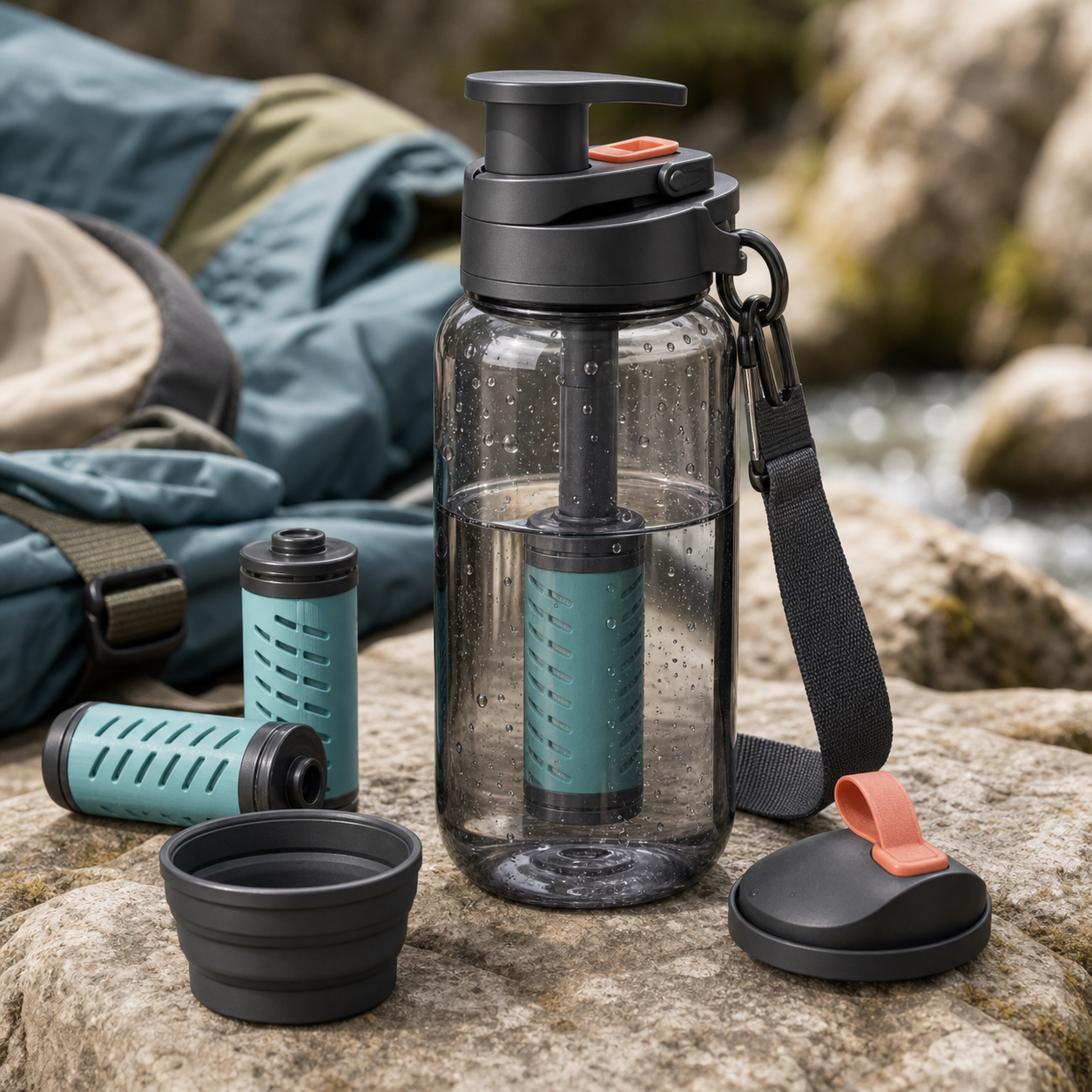
The end-user instruction should tell owners when to empty and refresh water, how to clean contact surfaces and what to do with visibly soiled water. A pet bottle is not a water purifier. If a carbon insert or filter is offered, identify its actual purpose, replacement interval and evidence rather than treating all filters as interchangeable. Quote spare seals and mouthpieces if they are removable. An accessory that cannot be cleaned or replaced may create a higher return rate than a slightly more expensive, serviceable design.
Compare the Bottle with the Owner's Carrying Gear
Measure the filled bottle, not only its empty weight. Check whether it fits a leash-side holder, stroller pocket, vehicle cup holder or backpack side pocket intended by the target market. A clip can keep a bottle accessible but may swing into the animal or owner; a wrist strap may be easier on a short walk. The useful configuration depends on the routine. Ask for a sample carried with realistic gear and identify any accessory pictured but not included.
The drink area should suit the pet sizes claimed. A shallow tray may be easy for a small dog but difficult for a larger animal to use without spills. Avoid a blanket species or size claim from a single photograph. Include a dimensioned drawing of the trough and a practical cleaning demonstration. If the owner must press and hold a valve during drinking, show that action in the instructions; a still image may make the function look hands-free when it is not.
At retail launch, offer a concise maintenance answer: rinse after use, clean the mouthpiece and reservoir at the maker's specified interval, dry before long storage and replace a damaged seal. If the product has a filter, distinguish it from cleaning. A filter cannot compensate for stale water or a dirty drinking surface. Clear care language helps both animal welfare and after-sales trust.
Frequently Asked Questions
Is returned tray water automatically clean enough to keep?
No. Water in a pet's drinking tray may be contaminated by saliva or the environment. Buyers should ask how the exact bottle handles unused water and make the consumer instruction explicit. A return mechanism is a convenience feature, not evidence of sterilization or filtration.
Can I describe a bottle as dishwasher-safe because the reservoir is plastic?
No. Plastic type alone does not establish dishwasher suitability, and seals, valves or coatings may have different limits. Request the manufacturer-approved cleaning method for each removable part and test the complete intended care sequence on a sample.
What is the most useful first sample test?
Rehearse fill, one-handed dispensing, tray emptying, closure, carrying and cleaning in that order. Use clean water, defined orientations and an unfamiliar operator with the draft instructions. Record specific observations rather than a single “passed” label.
Does the bottle filter water collected outdoors?
Do not assume so. A dispensing bottle and a filtration device are different products. Unless the exact configuration includes a documented treatment element and appropriate evidence, owners should use water already suitable for the pet and follow local guidance for the destination.
Should a retailer stock replacement seals?
It depends on whether the design permits safe replacement and the supplier can identify approved parts. Ask for a part list, compatibility by revision and lead times. A replacement plan can reduce unnecessary unit returns, but only if the user instruction is clear and the water path remains sound after reassembly.
Conclusion
The best pet travel bottle is not merely the one that dispenses fastest. Buyers should understand backflow, cleaning geometry, carry leakage and support for small parts. Translate those findings into precise consumer instructions and a revision-controlled sample file.
Final CTA
For related sourcing questions, browse all buyer guides or the Product Sourcing collection.
Explore the current KudBo product catalog when comparing this guide with available SKUs.
Contact KudBo or email info@kudbo.com with your market, quantity and use scenario. KudBo can coordinate a model-specific sample and the water-path, material and care questions to resolve before order approval.