Introduction
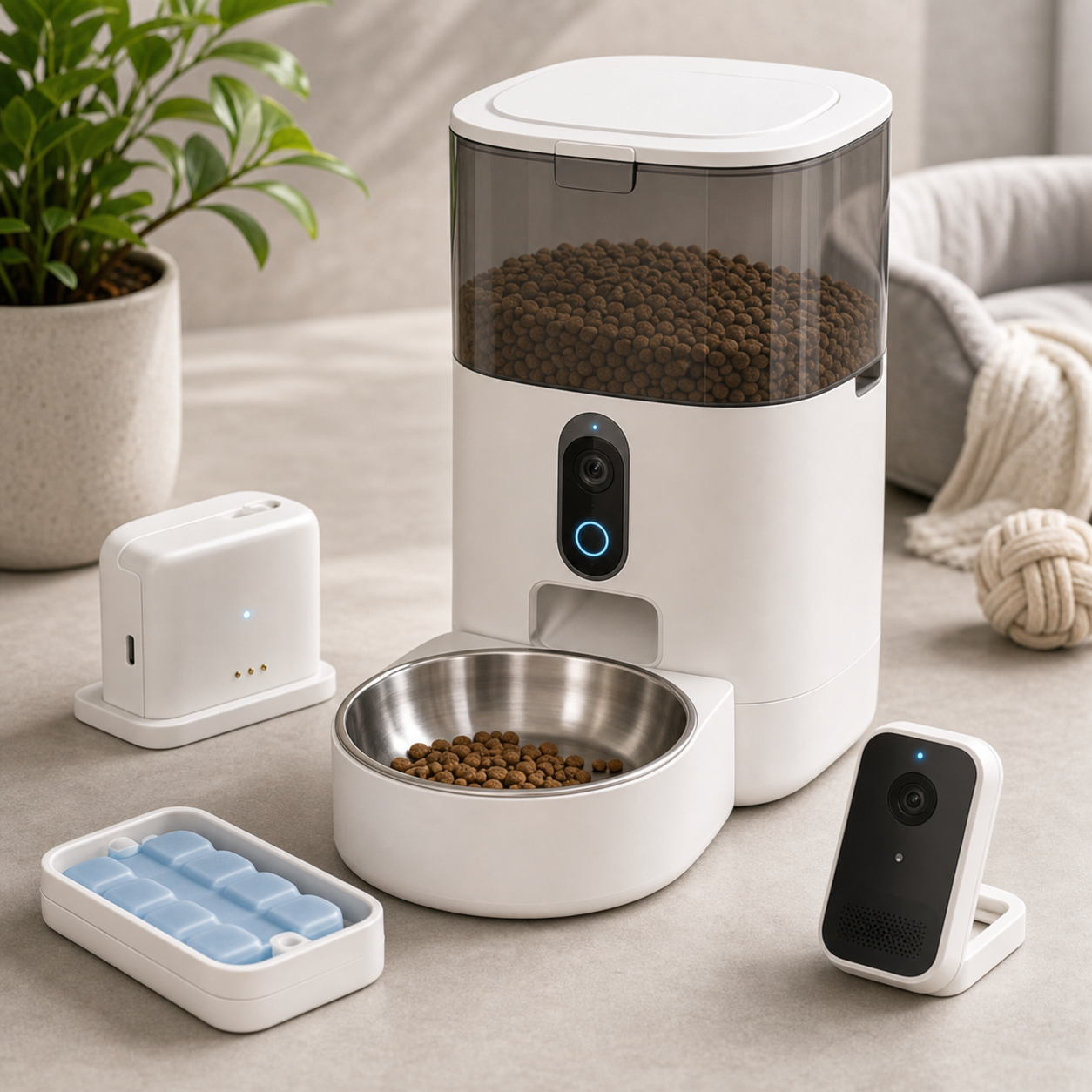
An automatic feeder should be evaluated with the intended dry food and with the network unavailable, not only with an empty hopper and a connected app. Food shape, dispensing geometry, schedule storage and power recovery all affect whether the device performs the buyer’s actual task.
Camera quality can attract attention, but feed delivery is the core function. A device may display a clear image while struggling with the selected kibble or behaving unexpectedly after a connection interruption. Procurement teams need separate evidence for dispensing and connected features rather than a single smart-feeder label.
This pet feeder kibble jam test guide supports evaluation of a smart pet feeder camera. The procedures are proposed sample checks, not completed KudBo testing. They are not veterinary feeding advice. Food selection, meal quantity and supervision should follow appropriate professional guidance and the exact manufacturer’s instructions.
Define Dry Food Shape Compatibility
Ask the supplier which food types, dimensions and conditions the dispensing mechanism supports. Length and width may matter as well as a nominal diameter. Irregular shapes, surface condition and mixtures can behave differently. Do not assume that every dry food is suitable because one reference kibble passes through the sample.
PetSafe’s FlexFeed assembly instructions provide a model-specific dry-food requirement and exclusions. They are a useful example of explicit documentation, not limits that can be transferred to another feeder. Obtain the equivalent scope for the quoted KudBo catalog configuration.
Record the reference food identity and relevant physical description in the trial file. Do not rely solely on a photograph of a handful. If the target market commonly uses several foods, agree representative supported examples with the supplier. Keep unsupported wet or semi-moist material out of the test rather than using it to challenge an unapproved mechanism.
Distinguish Jamming From Hopper Bridging
A dispensing obstruction and food that stops flowing toward the outlet can produce similar customer complaints. Ask the supplier how each condition is recognized and what approved recovery procedure applies. A motor noise or app notification may not identify the cause reliably without further investigation.
Hopper bridging evaluation should consider the intended fill level and reference food. Do not assume a nearly empty demonstration represents a full hopper. Record fill condition, dispensing sequence and the point where a symptom appears. Avoid shaking, inserting tools or reaching into moving parts to make the trial continue.
Require clear stop-and-clean instructions for suspected blockage. Customers should not be told to increase motor force, bypass guards or repeatedly activate a jammed mechanism. Recovery needs to follow the manual, including disconnection where prescribed. A feature called anti-jam still needs an explained method and limitations.
Evaluate Pet Feeder Portion Repeatability
Ask what a portion means on the exact model. It may be an operating increment rather than a fixed gram quantity for every food. Density and shape can change the mass delivered by an equivalent mechanism setting. Retail copy should not promise a universal meal mass unless appropriate evidence supports it.
Use an agreed number of dispensing observations with the reference food and suitable measuring equipment. Record each result, fill condition and setting. Keep variation visible rather than reporting only an average that conceals missed or unusually large deliveries. The sample count and method should match the intended screening purpose.
Do not turn a small buyer trial into a nutritional prescription or a guaranteed dispensing tolerance. If the program needs a numerical acceptance range, define it with relevant expertise and supplier agreement. A catalog claim about accuracy should identify its food, conditions and assessment scope.
Verify the Automatic Feeder Offline Schedule
Establish where the schedule resides
Ask whether programmed meals are stored on the device, in an app or in a remote service. A schedule visible on a phone does not prove that the feeder can execute it without connectivity. Confirm the clock source, time-zone handling and any required account or subscription.
Distinguish loss of internet from loss of local network and loss of power. These are different events. A feeder may continue local timing while remote notifications stop, or it may have another behavior. Request the actual sequence and evaluate it under an agreed safe method without animals relying on the trial unit for food.
Separate feeding from notifications
A delivered meal and a successful notification are different outcomes. Record each independently. The absence of a phone message does not necessarily mean no food was delivered, and a message alone is not proof of the actual quantity in the bowl. A camera image may help observation but should not replace a controlled dispensing record.
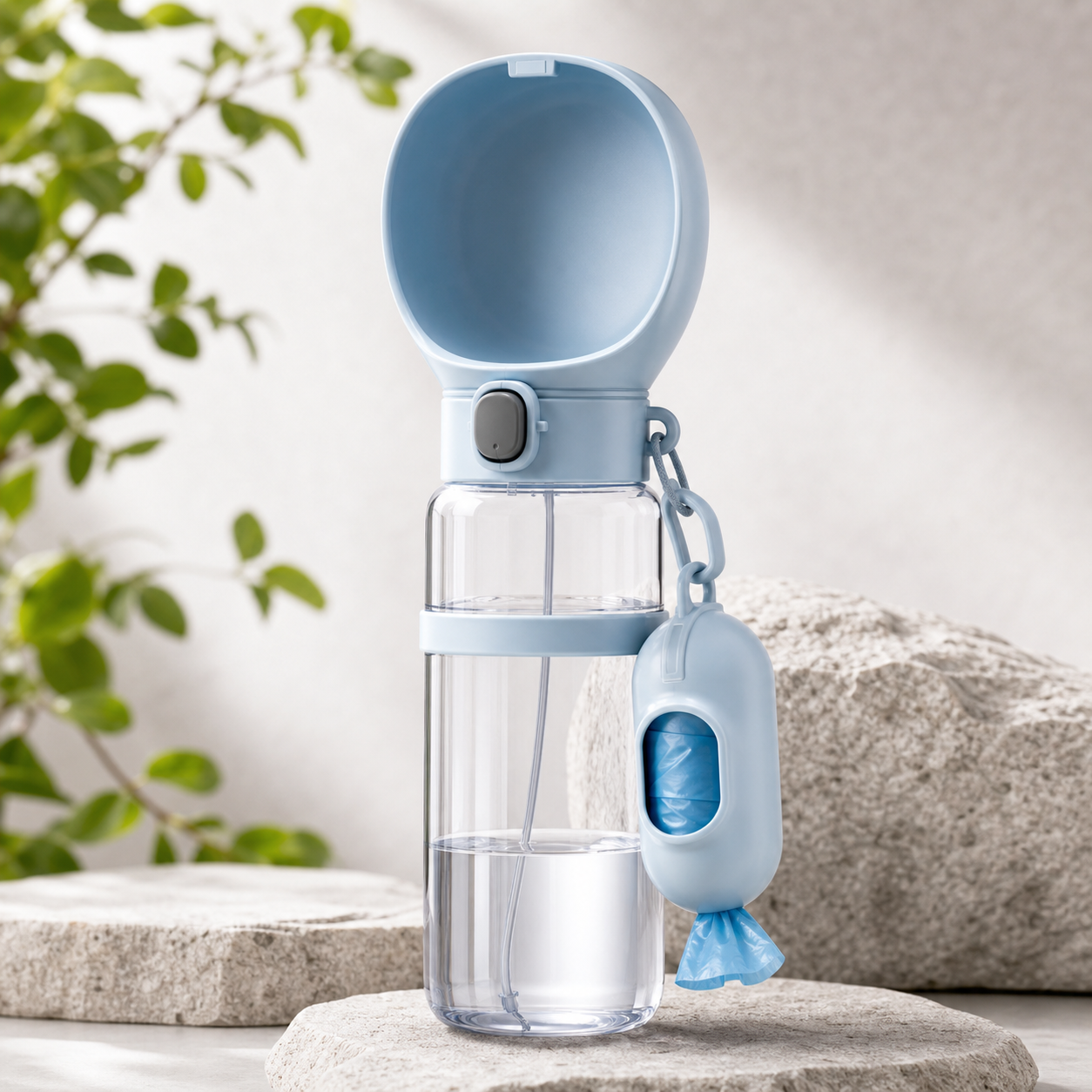
For a comparison with a simple pet travel water bottle, keep the customer task clear. A connected feeder involves schedule and power responsibilities that an unconnected accessory does not. Buyers should account for that support burden when building an assortment.
Create a Failure and Recovery Matrix
| Event | Question to resolve | Record separately |
|---|---|---|
| Internet unavailable | Does a saved meal still execute? | Feeding and remote notification |
| Local network unavailable | What functions remain? | Device behavior and app access |
| Power removed | Is backup supported? | Backup configuration and limits |
| Power restored | How is the next meal handled? | Clock, schedule and duplicate delivery risk |
| Food obstruction | What approved recovery applies? | Mechanism symptom and user action |
| Account changed | Who controls the device? | Schedule ownership and reset procedure |
Use the manufacturer’s approved procedures and competent review for relevant tests. Do not infer all rows from a single app screenshot. The matrix should name the model, firmware and account configuration, so a future update can be assessed against a clear baseline.
Mid-Article CTA
Send Your Requirements with your supported food types, customer setting, schedule needs and quantity. Email info@kudbo.com to discuss model-specific sample and documentation requests before approving a retail program.
Examine Feeder Power Recovery Behavior
If backup power is offered, identify whether it supports feeding, connected features or a limited subset. Ask about the approved batteries or supply and replacement instructions. Do not assume a backup icon means the entire camera and network system operate unchanged during an outage.
Review the behavior after restoration. Ask how the clock is checked, whether missed meals are skipped or handled another way, and whether the user receives an appropriate indication. Do not invent a preferred automatic response without considering the application. The actual behavior must be explained before customers depend on it.
Keep trials independent of animal care. Use a collection bowl and test account, with no pet relying on a prototype or unapproved sample for feeding. A technical pilot cannot replace the owner’s monitoring or a professional feeding plan. Avoid wording that encourages users to leave animals unsupervised solely because the device is connected.
Review Setup and Cleaning as One Routine
Use the actual retail pack to assess assembly, food loading, clock setup and an initial dispensing task. Then follow approved cleaning and reassembly. A correctly fitted food path at first use may become incorrectly assembled after washing if instructions are unclear. Record those steps and relevant removable parts.
Ask which components can contact water and which must remain dry. Do not recommend submerging an electronic base because the bowl is washable. Approved cleaning and complete drying can affect the mechanism and customer support. The instructions should distinguish the parts with diagrams where useful.
Check whether the user can identify a correctly installed hopper, bowl and food-path component. If a latch or seal is essential, confirm how engagement is recognized. A missing visual cue may create a recurring setup complaint even when the mechanism itself is functional.
Keep Connected Features and Data Claims Honest
Identify whether audio, images or account information leave the device and what service is required. This is separate from feeding performance. A buyer should obtain privacy and security information suitable to the market and use, without assuming that a camera accessory is harmless because it is intended for pets.
The ICO’s data-protection principles provide a useful framework for reviewing personal-data responsibilities where applicable. They do not certify the feeder or settle every jurisdiction’s obligations. Use test accounts and avoid recording real homes or customer information during sample evaluation.
If the app or cloud service changes, assess the affected schedule, account and notification behavior. Do not promise perpetual service without an agreed support basis. Customers need a clear account-reset and transfer process if the product is returned or changes ownership.
Compare Quotations and Preserve Revisions
Record the feeder mechanism, food scope, power configuration, bowl, relevant accessories, firmware and service requirements. A quotation including backup components is not equivalent to one that requires customers to purchase them separately. Subscription costs and limits should be disclosed where applicable.
Require notification of changes to the dispensing geometry, motor, sensors, firmware or schedule logic. A familiar housing can contain a materially different mechanism. Retain the approved reference food and test conditions so renewed review is possible rather than relying on an earlier product name.
Factory testing should explain the checks used to detect assembly or operation problems. Shipment inspection can verify retail contents, identifiers and agreed dispensing screening. It cannot establish compatibility with every pet food or guarantee uninterrupted feeding under every failure event. Keep those evidence boundaries visible.
A Practical Acceptance Decision
Imagine a hypothetical retail buyer whose target food passes the agreed dispensing checks, but whose sample loses its schedule after a documented power interruption. If continued scheduled feeding is a core requirement, a good camera image does not compensate for that mismatch. The buyer should request clarification or another configuration before approval.
If a revised sample addresses the issue, repeat the affected sequence and preserve its firmware identity. Do not call the problem resolved merely because the app now displays the old schedule. This scenario is not a KudBo customer project; it illustrates why physical dispensing and software state need independent observation.
Write a Feeding-State Explanation for Customers
Ask the supplier to explain the states a customer may see: schedule saved, meal attempted, food dispensed, notification sent and a fault requiring attention. These are not necessarily the same event. A useful instruction distinguishes them without suggesting that an app confirmation proves the bowl contains the intended amount.
For the buyer pilot, label each observation with its evidence. A physical collection confirms what reached the test bowl under the method. A software log records what the system reports. Keeping both can reveal a mismatch that one source alone would miss. Do not discard a discrepancy because the interface looks normal.
Document what the customer should check after cleaning, moving the unit or changing food within the supported scope. An approved setup confirmation can reduce confusion, but it should not become a claim that monitoring is unnecessary. The owner remains responsible for appropriate care and should follow relevant professional guidance.
Prepare a support intake form that asks for the model, firmware where accessible, supported food, fill condition, power arrangement and symptom. Avoid requesting unnecessary images of a real home or animal. A reproducible description of the mechanism and schedule is more useful for investigation than a dramatic video without context.
For a revised firmware or food-path component, repeat the affected observations before calling the issue resolved. A successful app login alone cannot close a dispensing question. Equally, a successful manual dispensing command cannot establish that the saved schedule survives the relevant offline or restoration event.
This combined state explanation helps procurement compare two smart products honestly. One may provide strong remote features but a different local schedule scope; another may prioritize local operation. The correct choice follows the customer requirement and documented behavior, not the number of icons on the promotional page.
Related Buyer Resources
Continue with Pet Grooming Vacuum Filters and Ownership Cost for a complementary purchasing question. Compare the full product catalog, or browse the KudBo sourcing blog or the product sourcing topic collection for additional buyer guides. These resources provide decision context; each product still needs its own model-specific approval.
Frequently Asked Questions
Does one portion equal the same mass for every kibble?
Not necessarily. The meaning of a portion depends on the mechanism and food properties. Ask for the model’s definition and evaluate representative supported food. Record variation and conditions. Do not turn a setting into a universal gram amount or feeding recommendation without appropriate evidence and professional guidance.
Will an automatic feeder work without internet?
That depends on where its schedule is stored and the model’s design. Feeding, app access and notifications can behave differently. Confirm the specific firmware and evaluate an agreed offline sequence without animals depending on the sample. A connected-app screenshot does not prove offline operation.
Can buyers test jams with wet food?
Only if the model expressly supports that food and the reviewed method permits it. Many mechanisms have narrower requirements. Do not introduce unsupported food or unsafe obstructions to create a challenge. Use the stated reference food, documented fill conditions and approved recovery procedures.
Does backup power preserve all smart features?
Do not assume so. Backup may support feeding but not every camera, network or notification function. Request the supported configuration and limits. Review power restoration and clock behavior separately, and explain the actual scope in the retail instructions rather than using a broad uninterrupted-operation promise.
What should a repeat-order review cover?
Include dispensing geometry, food scope, power arrangement, firmware, schedule logic and relevant account services. Changes can alter operation without changing the housing. Require notification and retain the approved sample, food reference and method so affected claims can be reassessed before another shipment.
Conclusion
A useful pet feeder kibble jam test examines the food path, portion behavior and approved recovery routine. Combine it with a documented automatic feeder offline schedule review and power-restoration check. Clear limits and separate observations provide a stronger purchase basis than a camera-focused demonstration alone.
Final CTA
Contact Us or email info@kudbo.com with your destination, quantity, food scope and required schedule behavior. KudBo can discuss catalog options and sample arrangements. Confirm model-specific feeding, power and connected-service evidence before production approval.