Introduction
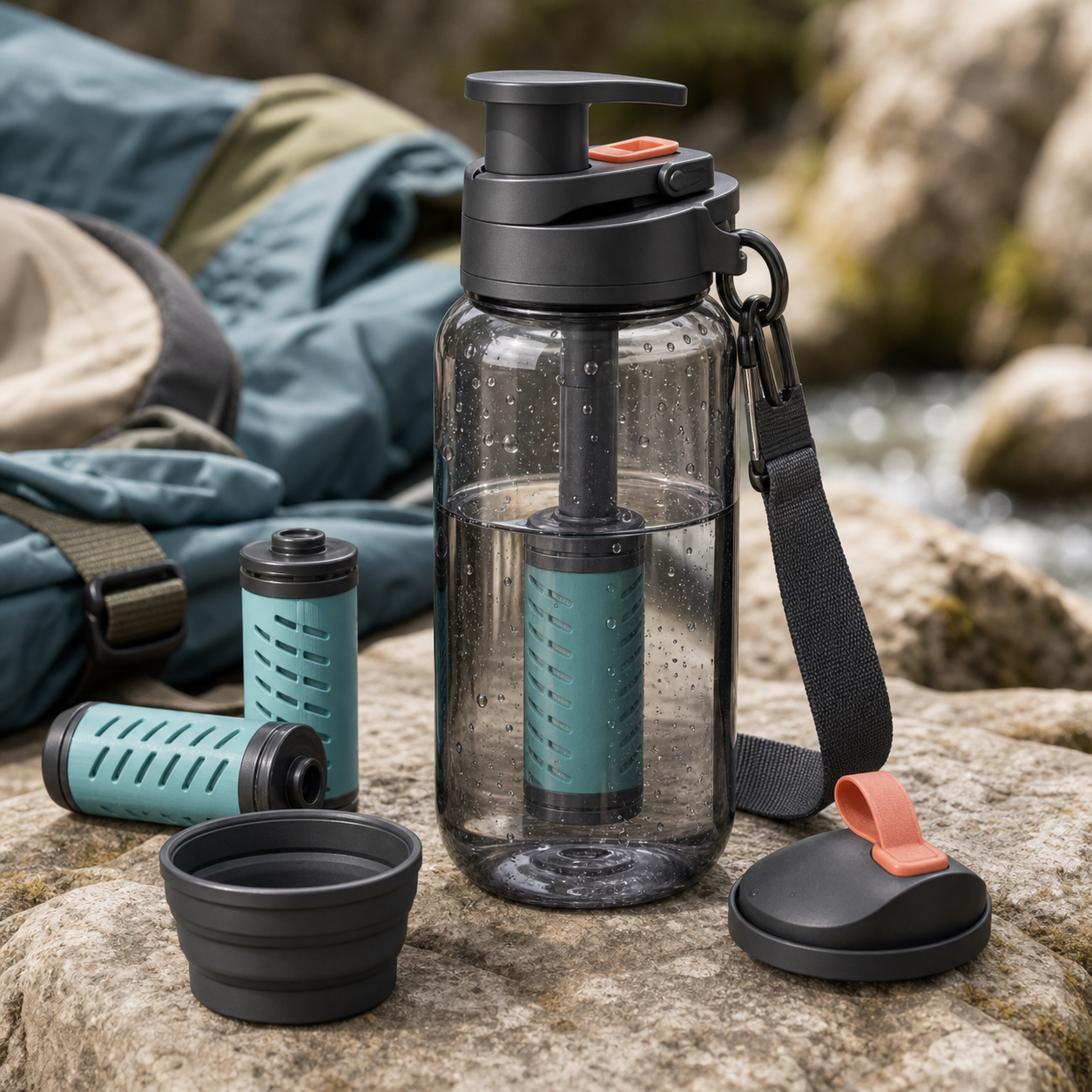
A filter bottle is not a universal promise that any water is safe to drink. The KudBo outdoor filter bottle is a portable bottle kit. A buyer must identify the cartridge and its verified treatment scope, then match it to likely source-water risks. Sediment, bacteria, protozoa, viruses and dissolved chemicals are not interchangeable problems. A clear-looking stream can still carry microbial risk; a filter's good taste result does not prove safety.
Related posts cover replacement cartridge sourcing and cleaning and traceability. This guide centers on source-water selection and the boundaries of consumer claims. The protocols are proposed buyer checks, not an assertion that a KudBo cartridge has been tested against a particular organism or chemical.
Begin With the Intended Water Sources
Write down realistic use settings: maintained campsite tap, backcountry stream, rainwater collection or international travel. Each presents different risks. Identify what users are likely to do when water is visibly cloudy or when an advisory has been issued. Do not use a photograph of a pristine mountain stream as evidence that its water is safe or that the bottle covers every contaminant.
Ask the supplier for independent or appropriately qualified test results for the exact cartridge revision, flow direction and stated life. Look for contaminant names, test method, challenge conditions and results, not just a “purifies water” headline. A filter that removes larger parasites may not reliably address viruses or dissolved chemicals. If the proposed claim is broader than the report, narrow the claim. Consider whether additional treatment, such as disinfection, is required for the intended use.
The CDC guidance on treating water while traveling and CDC Yellow Book water-disinfection chapter explain why treatment choice depends on hazards and methods. These sources do not certify this bottle. They are useful for drafting customer-facing limitations and a backup plan.
Review Flow and User Error
Fill the bottle with source water only under a safe test protocol; do not ask staff to drink untreated or unverified water as a demonstration. Measure practical fill volume and drinking flow with the actual cartridge, following its instructions. A cartridge may pass a laboratory removal test yet be too slow for a long hike. Record whether flow changes after sediment loading and whether a prefilter or backflush method is supported.
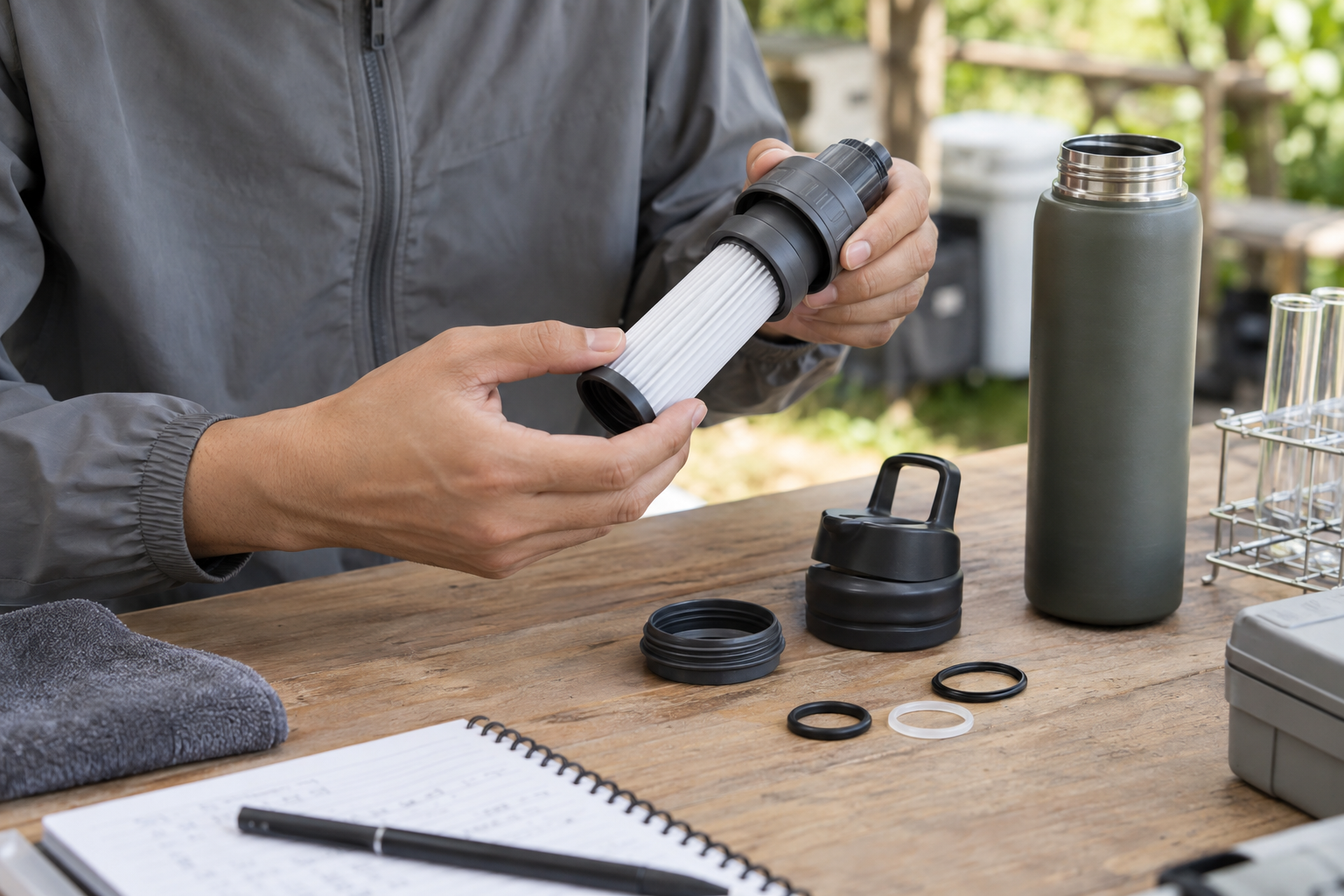
Inspect the clean-side and dirty-side design. Can unfiltered water touch the mouthpiece during filling? Does the cap prevent a user from swapping components incorrectly? If an O-ring is missing or twisted, is the error visible? A short pictorial setup guide may prevent misuse more effectively than a dense paragraph of filtration claims. Ask a new user to assemble the kit from the retail carton, then identify the clean outlet without coaching.
Check what happens if the cartridge freezes after being wet, is dropped or reaches end of life. Some filter media can be compromised by such conditions; follow the maker's actual instructions and evidence. Do not publish a fixed capacity or replacement interval from a different cartridge design. Provide a usable part number, fit guide and disposal guidance for the sold revision.
Mid-Article CTA
Send Your Requirements with destination markets, likely water sources, contaminant claims and replacement-cartridge plan. Email info@kudbo.com for configuration-specific documentation questions.
Write a Safe Product Page
State clearly what the quoted system is tested to reduce, under what conditions, and what it is not intended to treat. Do not use “100% safe” or “drink from any source.” If the product is only designed for already potable tap water taste improvement, show that application instead of a wilderness survival scene. If a broader outdoor claim is supported, include the limits and any required pre-treatment or disinfection in simple English.
Avoid using laboratory imagery or official-looking badges without the actual test report and permission to use a mark. A claim matrix should tie each statement to cartridge revision, method, report and destination-market review. Retail customers also need maintenance instructions: rinse or backflush if supported, avoid cross-contamination during storage and replace the cartridge on the documented schedule. A visual flow chart may help, but it must match the exact valve arrangement.
At shipment inspection, verify cartridge count, seal integrity, cap fit, instruction leaflet, revision code and packaging protection. A functional flow check should follow a defined non-consumption protocol and not contaminate sellable units without an approved process. Retain reference cartridges and track lot numbers to support a complaint investigation. If the filter media or housing changes, re-evaluate claims before using the same product page.
Retail Education Without Overpromising
A useful bottle listing can show three columns: intended source, tested treatment scope and additional precautions. For example, a buyer might specify an already treated tap-water use, a backcountry microbial scenario supported by the exact cartridge evidence, and an unsupported chemical-spill scenario. The content should not invent protection where no report exists. It should tell customers when to avoid a source or use a separate, validated treatment approach. That is better than a single green checkmark beside “all water.”
Provide an illustrated replacement sequence. A customer should know which side of the cartridge is clean, how to keep dirty water off the mouthpiece and how to seat the new seal. If the cartridge is discarded after a defined capacity, explain the conditions behind that capacity. Turbid water may shorten practical flow life even if a lab rating uses clearer water. A buyer should not equate slow flow with guaranteed removal or continued safety.
Support documentation should help a retailer answer the difficult question “what happened if the user got sick?” without pretending to diagnose the cause. Keep lot records, published claim versions, cartridge instructions and the source-water limitation visible. Escalate safety reports through appropriate processes. An honest statement that the bottle has a defined, limited treatment scope is not a weakness; it is necessary for responsible outdoor equipment sales.
A Claim-to-Evidence Matrix
Create a table for every proposed contaminant claim. Include the contaminant, the precise test method, laboratory, cartridge revision, challenge concentration, flow or contact time, reported result and any limitation. The source document should be available to the person approving the product page. A generic “tested filter” badge is insufficient when a customer needs to know whether the claim concerns sediment, protozoa, bacteria, viruses or chemical substances. If the report covers only one cartridge but the quotation substitutes another media source, stop using the old claim until equivalence is established.
The matrix should also identify what the product does not address. Some water sources contain hazards beyond the scope of a portable bottle. A buyer should distinguish “tested to reduce a named contaminant under stated conditions” from “makes unknown water safe.” The second statement is far broader and may endanger users. If additional disinfection or a known safe backup source is necessary, include that instruction in the manual and the online listing, not only in a small warranty insert.
For photographs, use a realistic campsite water setup only if the tested scope supports the implied use. A person drinking directly from a visibly contaminated puddle sends a strong message even without text. Avoid it. If the cartridge is intended for treated tap water taste improvement, show that setting. If outdoor stream use is supported, show proper collection, assembly and clean-side handling rather than a theatrical purity glow.
Replacement and Failure-Mode Planning
Ask what a traveler should do when the bottle flows slowly. Possible causes include a clogged prefilter, airlock, cold temperature or a cartridge near end of life, but the maker's instructions should determine the appropriate response. Do not instruct a user to bypass the filter to restore flow. If backflushing is supported, demonstrate it with the supplied parts and confirm it does not contaminate the clean outlet. If no cleaning method is supported, make replacement intervals and cartridge availability especially clear.
The spare cartridge should have a part number and revision marking a customer can see without dismantling the media. Confirm that the replacement seal seats correctly and that an incorrect cartridge cannot be mistaken for a close-fitting one. For wholesale programs, quote spare cartridges and their packaging separately from the bottle. A bottle that requires a proprietary cartridge but has no dependable refill supply can produce both disappointed customers and unsafe improvisation.
At shipment inspection, check the body, cap, mouthpiece, seals and correct cartridge in sampled cartons. Keep lot traceability for media, not just bottle color. A flow check at the factory is useful for assembly defects but does not prove contaminant removal. Formal performance evidence belongs in an appropriately qualified test file. Customer support should ask about source water, cartridge age, storage and observed failure without asking customers to drink test water. The safest result of an uncertain case may be to stop use and obtain a verified safe water source.
Scenarios That Require a Different Response
Consider three situations before approving a wilderness claim. In the first, a traveler uses a maintained potable tap and wants improved taste; the relevant question is what the cartridge actually reduces and whether that benefit is demonstrated. In the second, a hiker considers a stream after heavy rain; sediment and microbial risks may differ from a clear-water lab test, and the filter's stated scope matters. In the third, local authorities warn about chemical contamination; a portable cartridge designed for other hazards may be inappropriate. The correct retail content should tell customers when not to use the bottle as their sole protection.
Ask a new user to identify those scenarios from the instructions. If they cannot tell which sources are out of scope, the packaging needs clearer language. A small icon can help but should not replace words naming the tested contaminant class and limitations. The retailer should not rely on the product category name “filter bottle” to communicate safe use. If an additional disinfection step is required, state it where the use case is presented, not hidden at the end of a manual.
For travel distribution, discuss replacement availability in each sales region. A bottle without compatible cartridges becomes a short-lived accessory. Obtain part numbers, availability periods and packaging that protects sealed media. Keep traceable lot records for both the bottle and cartridge. A buyer can then investigate a complaint about poor flow or damaged seals without conflating it with a report about contaminant performance.
A responsible product page may sound more cautious than a dramatic survival ad. It can still be persuasive by showing the exact cartridge, the documented test scope, a realistic clean-side handling sequence and a straightforward refill path. Those are concrete purchasing signals for serious outdoor retailers.
Frequently Asked Questions
Can an outdoor filter bottle make any water drinkable?
No. Its capability depends on the tested cartridge and the hazards in the source water. Some risks require additional treatment or should be avoided entirely.
Does clear water mean it is safe to filter and drink?
Not necessarily. Microbial or chemical contamination may be invisible. Follow local advisories and source-water guidance, not appearance alone.
Is a filtration claim the same as a purification claim?
No. Use the exact, evidence-backed contaminant language from the product's test scope. Broad words can imply protection the cartridge does not provide.
How does a buyer verify replacement cartridges?
Match part number, revision, seal design, tested media and instructions. A visually similar generic cartridge may not preserve the approved performance.
What is a sensible backup for a hike?
Plan according to the water source and current public-health guidance. A separate verified treatment method or known safe water may be necessary when a filter is damaged or the source exceeds its scope.
Conclusion
The correct bottle specification begins with the water hazard, not the bottle photograph. Buyers should demand revision-specific evidence, test the user's fill-and-drink workflow and provide clear limits and replacement support. Honest source-water guidance builds trust more reliably than a universal purity promise.
Final CTA
Ask for Product Documentation at info@kudbo.com with source-water and market requirements. Compare KudBo products, the blog and product sourcing guidance before approving claims.