Introduction
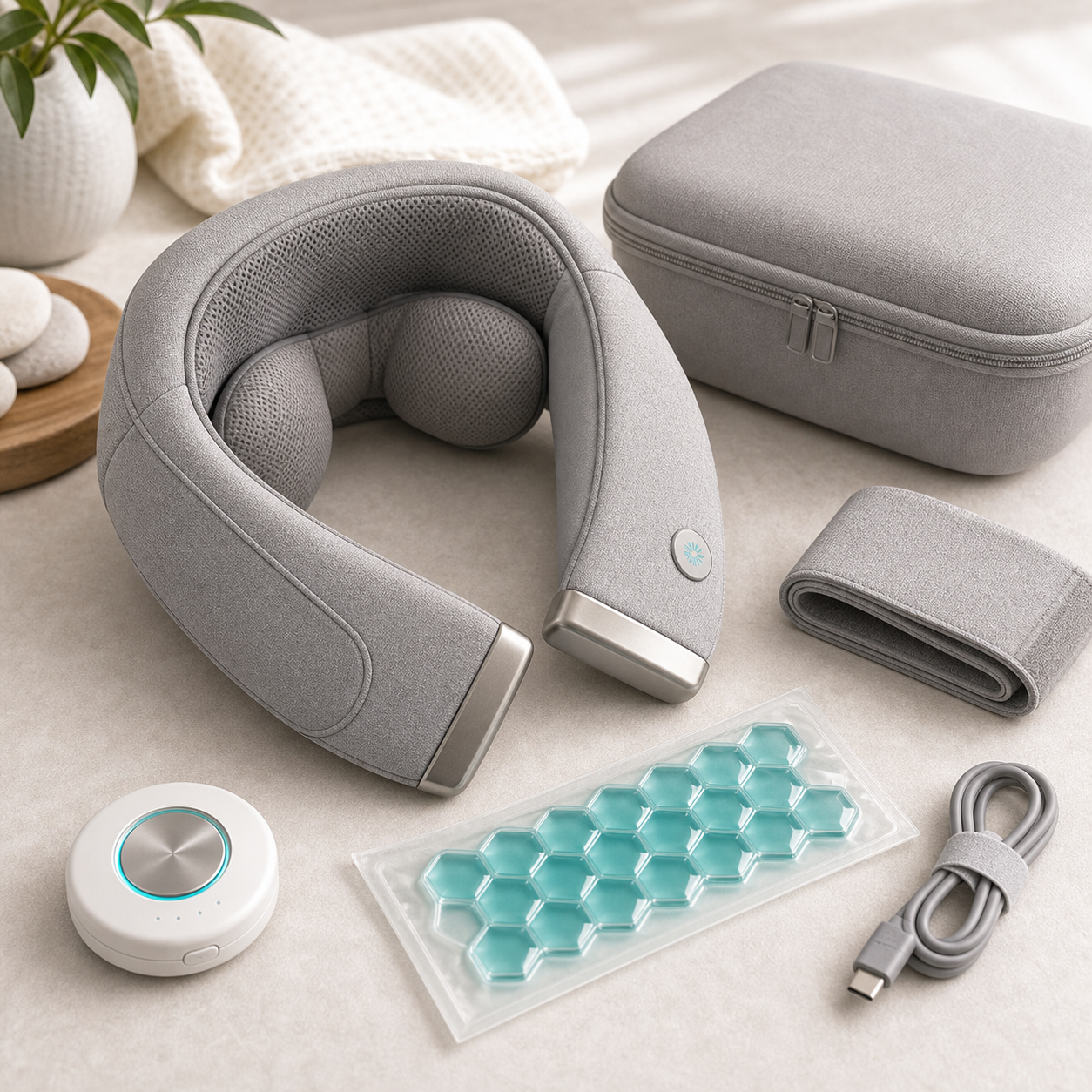
Desk comfort is not determined by heat alone. A collar can warm evenly yet press against a chair, impede head movement or put controls out of reach. The KudBo neck therapy collar is described as a neck heat and massage wrap. Buyers should confirm the exact heat, vibration, sizing and power features of the quoted SKU, then test it in the sitting position customers will actually use.
This guide looks at fit, routine and claim boundaries. The checks are procurement suggestions, not proof of a clinical effect or a report of completed KudBo trials. A product name containing “therapy” does not itself justify medical advertising. The heated fascia kit claims guide offers a useful comparison of claim discipline across wellness accessories.
Map Fit as a Range, Not a Single Model Photo
The OSHA workstation-position guidance supplies general context for seated posture; it is not evidence that wearing this collar improves ergonomics.
Measure collar opening, adjustment range, contact-pad location and cable or battery housing on the sample. Try a range of adult body sizes using consented reviewers, and record where the collar sits while upright and while looking down at a laptop. Do not use photos of one model as evidence of universal fit. A neck accessory that feels comfortable for five minutes may shift when the wearer turns or leans back.
Consider common clothing. A thin shirt collar, a hoodie and direct skin contact can produce different heat perception and stability. State the manufacturer's intended wearing method; do not recommend a new one solely because it appears comfortable in a demo. Check whether hair catches in closures and whether the adjustment can be operated with one hand. If the collar must be fitted before powering on, make that sequence obvious.
Chair interaction matters. A thick rear battery housing or rigid frame can push the head forward against a high-backed chair. Test at a normal desk, not only while standing. Ask the reviewer to type, look at a second monitor and stand up. Record any obstruction, shifting or need to remove the product. Comfort observations are subjective and should remain framed as observations, not population-wide promises.
Review Controls and Charging in a Real Workday
Confirm how users select heat and massage modes, how the chosen mode is indicated and whether there is an automatic shutoff. If controls sit behind the neck, an on-screen diagram or tactile differentiation may be needed. Test the act of lowering intensity during a meeting without distracting others. Noise can matter in shared offices, but any noise claim should have a defined measurement method and distance.
Identify battery type, charging input, supplied cable and whether the collar can operate while connected to power. Do not infer all-day battery life from a single runtime test at the lowest setting. If runtime is advertised, obtain mode-specific tests with conditions. A user guide should explain what happens at low battery and whether the unit can be safely carried in a bag without accidental activation.
Inspect the electrical and textile interface. Can any cover be removed for cleaning, or must the device be wiped? Check how sweat and skin oils are addressed by the approved care instructions. If shared in an office or demonstration store, a one-user-per-collar policy may be more appropriate than an unsupported wipe-down promise. Do not instruct customers to immerse an electrical wrap.
Mid-Article CTA
Get a Quote with intended size range, market, care requirements and preferred control layout. Email info@kudbo.com for a fit and sample discussion.
Build a Truthful Comfort Page
Separate observable product functions from health outcomes. A buyer can verify a heat mode, automatic shutoff and adjustment range on a sample. Claims that the collar cures pain, improves circulation or treats a condition require a different evidence and regulatory review. The FTC Health Products Compliance Guidance is a US reference on substantiating health-related advertising; it is not approval of this product.
Use images showing normal supported wear, with a visible control and realistic clothing. Avoid anatomical diagrams that imply a specific treatment mechanism unless the claim is supported. If a product page says “for desk workers,” explain the practical basis: seated fit, unobtrusive controls and suitable wear guidance, not an invented ergonomic outcome. Office users should be able to choose not to use heat if it feels uncomfortable.
Ask the supplier for warnings, intended users, stop-use conditions and charging instructions appropriate to the design. Have qualified advisers review any health-related phrasing for destination markets. An appealing gift bundle still needs readable safety language. Retain the approved product revision, especially if the battery, heating element, fabric lining or temperature control changes.
At shipment inspection, check size marking, closures, contact surfaces, mode indicators, power function and pack-out. The purpose is to catch inconsistent units, not to certify that a wearable will feel identical to every customer. A returns form should separate fit, heat perception, charging and control issues so the next order can address the actual cause.
Define a Fit-Centered Warranty and Return Path
Wearable accessories can be electrically sound and still unsuitable for an individual. Ask which adjustments are intended, which body-size range is supported and what a customer should do if the collar presses against the chair or moves during normal work. The product page should display the adjustment method and dimensions rather than making an abstract “one size fits all” claim. A fair return policy should distinguish individual fit from a unit that fails to heat or charge.
For a pilot shipment, record fit complaints by collar revision, not just by color. A change in foam, lining or rear housing can affect comfort without changing the electronics. Ask a small reviewer panel to test the final production sample under the same seated routine used for the approved prototype. If a revised collar fits differently, update the sizing guidance and photographs before repeat-order publication.
Keep customer-service language within the documented comfort use. An agent should not tell a customer to keep wearing an uncomfortable heated device to obtain a benefit. The manual should clearly identify stop-use conditions and how to switch the product off. That practical boundary can make the product more trustworthy than any unsupported promise of therapy or posture correction.
Compare Three Seated Work Profiles
A practical sample trial should include a high-backed chair, a low-backed chair and a standing-desk position if those are relevant to the customer. Use the same collar and settings, and note where the rear housing, fabric edge and adjustment strap sit. The reviewer should perform normal tasks: look at a screen, type, turn toward a colleague and lean back briefly. Do not recruit someone merely to create a flattering product photo. The goal is to find fit boundaries and instruction gaps.
Repeat the trial over a thin shirt and over the maker's recommended clothing configuration. Heat perception and collar stability may change. Record subjective comfort as subjective, with the reviewer's size and conditions, rather than publishing a claim that “all users feel relief.” If the wearer repeatedly adjusts the product, investigate whether the cause is weight balance, strap friction or an unreachable control. A redesign or clearer sizing chart may solve the problem more effectively than a stronger heat setting.
Check whether a simple accidental press changes the mode while the wearer reaches for a laptop bag or sits against a chair. A safe control layout should make active heat status understandable. Inspect charging after the unit has cooled and been cleaned as instructed. If a rechargeable cell is present, ask for shipping documentation and destination-market electrical requirements; the retailer should not assume a generic USB cable makes every charger safe to use.
The acceptance record should identify the exact collar revision, size range, mode settings, power input and care method. At shipment inspection, verify these observable attributes and compare the lining against the approved sample. A fabric change can affect warmth perception and cleaning even when the electronics are unchanged. Track any changed warning language, especially where the supplier translates “comfort” into stronger health promises.
Merchandising Without a Medical Shortcut
A desk-use product page can show the collar on a seated adult with the chair and controls visible. It should explain how the unit is worn and cared for and should disclose relevant limitations. Avoid a before-and-after posture image implying that the collar corrects anatomy. If the brand wants to mention tension or soreness, obtain appropriate evidence and review the wording in each destination market. Otherwise, stay with verifiable descriptions such as adjustable fit and selectable warming modes, if confirmed on the actual unit.
Customer-service categories can help the next order: fit discomfort, mode confusion, charging problem, cleaning issue or expected-benefit mismatch. A high proportion of expectation complaints may signal exaggerated copy, not a manufacturing defect. The supplier should receive anonymized, specific observations so it can improve sizing, controls or instructions. Keep returns and claim revision linked to product batches rather than rewriting the listing based on one unverified review.
Fit Information Worth Publishing
An online size chart should contain measured collar dimensions, adjustment range and the wearing method used for the photographs. It should not translate a single model's appearance into a universal promise. Explain where the heating contact surfaces sit and whether clothing is recommended between the collar and skin. If the product requires direct contact, follow the manufacturer's exact guidance and warnings. A retailer should not invent a different method to make a fit problem disappear.
Photograph the collar from front, side and rear on a consenting adult, including the chair back in at least one desk-use view. The rear view matters because a thick control or battery housing may interact with a chair. Show the controls and their labels. A gift buyer should be able to judge whether the wearer can operate the device without repeatedly removing it. If a cord is used during charging, do not photograph a seated working setup that implies operation while charging unless supported.
A pilot return form can distinguish size, pressure, heat preference, mode confusion and technical fault. Those categories are useful because the fix differs. A size issue may need a better chart or adjustment range; a heat-setting problem may need clearer controls; a charging fault may require component inspection. Keep the final pack's textile and electrical revisions traceable to each report so data from an older version does not mislead the next purchase order.
If the product is advertised for office use, a practical manual should tell users when to switch it off, how to store it after cooling and what to do if it becomes uncomfortable. That instruction is more trustworthy than a sweeping claim that the collar corrects posture or treats pain. Buyers can sell a well-defined comfort product without stepping into unsupported clinical territory.
Frequently Asked Questions
Is one neck heat collar size suitable for everyone?
Usually a universal claim is too broad. Measure the actual adjustment range and test representative body sizes and clothing conditions. State the verified fit range in understandable terms.
Can it be worn while working at a desk?
Test the collar seated against the chair and while turning and looking down. Desk suitability depends on weight distribution, rear housing, controls and the maker's use instructions.
Can it treat neck pain?
Do not make a treatment claim without appropriate evidence and regulatory review. Observable warming or massage functions are not the same as a clinical outcome.
How is the contact surface cleaned?
Follow the exact maker instructions for the quoted textile and electrical construction. Determine whether a cover is removable and whether a shared-use cleaning protocol is supported.
What runtime should be advertised?
Only a runtime supported by mode-specific testing with disclosed conditions. Heat level, massage setting, ambient conditions and battery revision can affect it.
Conclusion
Neck heat collars should be sourced around real seated fit, reachable controls, care and appropriately narrow claims. A sample review in an ordinary office can reveal useful limitations before they become customer complaints. The result should be honest guidance for a comfort accessory, not a promise of medical treatment.
Final CTA
Send Your Requirements to info@kudbo.com with size, market and packaging questions. See the product catalog, buyer blog and product sourcing articles for adjacent procurement decisions.