Introduction
Validate multilingual product instructions by asking representative users to complete realistic tasks with the actual product and final-format instructions. Translation review checks language quality; it does not prove that readers can identify parts, install the product or understand a warning. Buyers should align the source content, technical review, translation, layout and usability observations before approving the production insert.
For importers and private-label sellers, an instruction sheet is part of the purchased product experience. A technically accurate sentence can still be difficult to find, an illustration can show the wrong revision, and a folded leaflet can hide the first step. This guide explains a practical sourcing process without claiming a universal legal language list or documented test results for KudBo products.
Define the User, Market and Task
Start with the intended user and the activities they must complete. Separate unpacking, installation preparation, assembly, normal operation, cleaning, storage and troubleshooting. Not every product requires a long manual, but every included instruction should support an actual task or information need. Avoid filling a leaflet with generic text merely because the print template has available space.
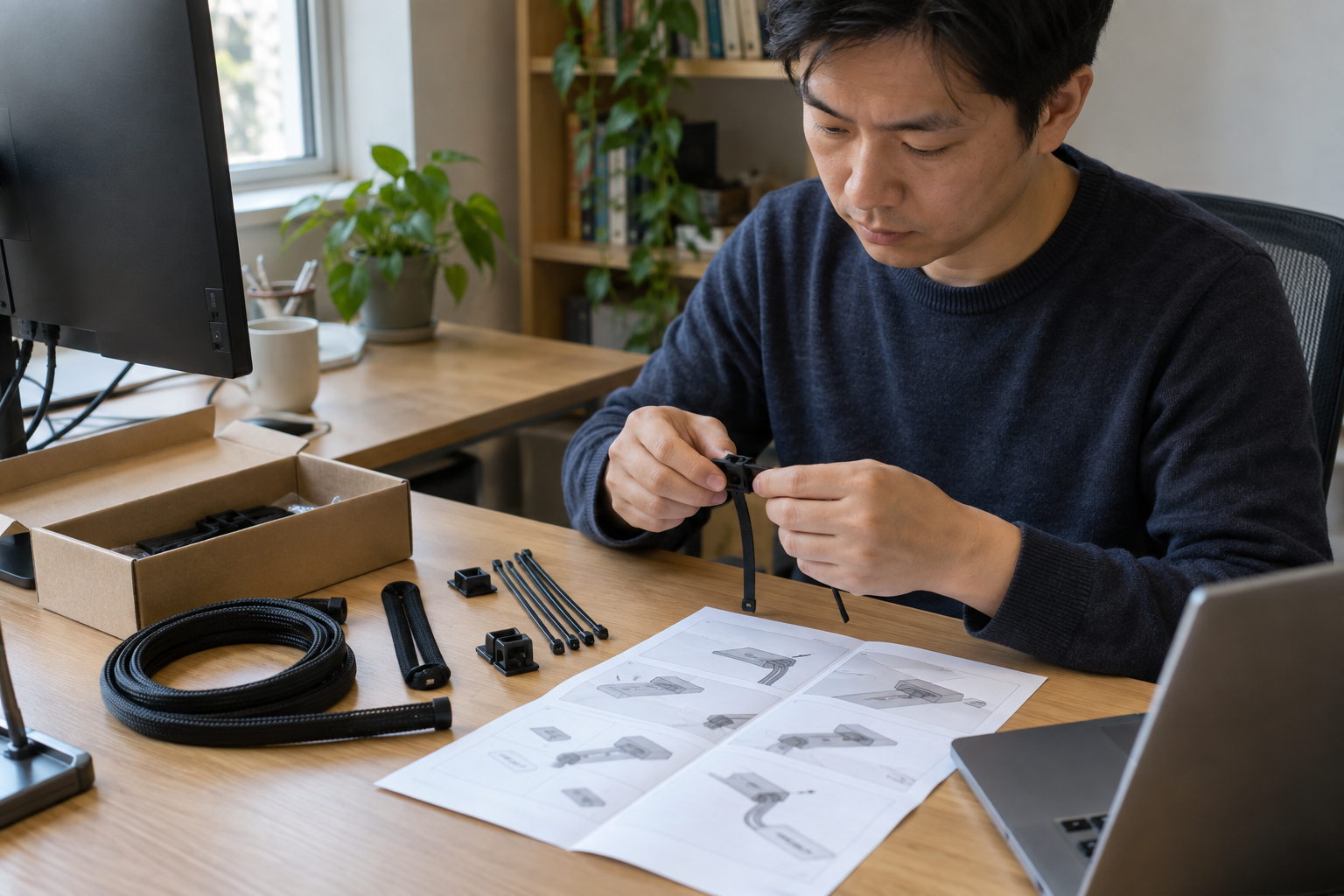
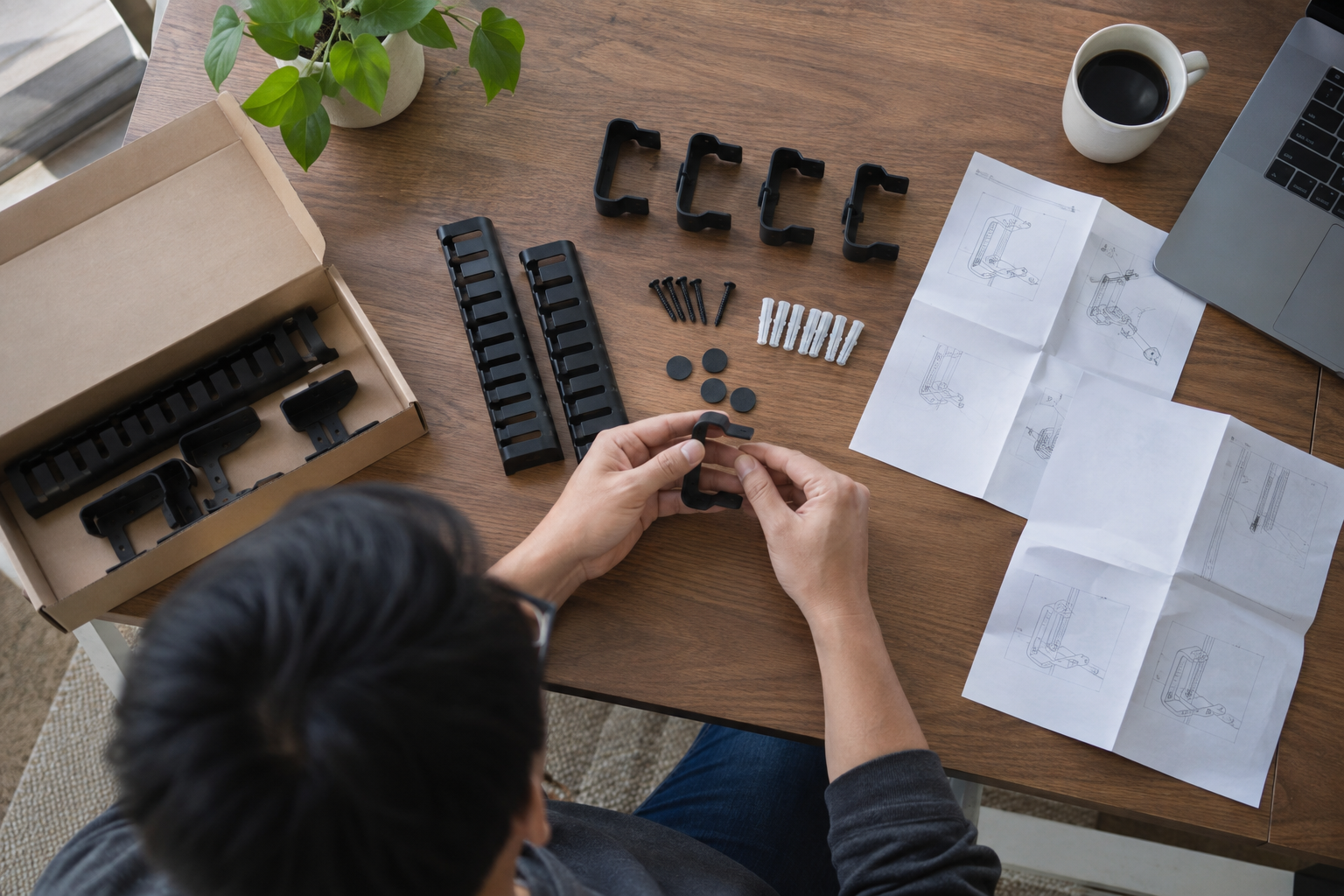
For a desk cable raceway kit, a useful task sequence could include identifying components, checking installation suitability, selecting the approved mounting method and routing cables as intended. The actual sequence must follow the manufacturer's validated design and limitations. Do not invent mounting loads, compatible surfaces or electrical installation instructions from a product photograph.
Build a Market and Language Matrix
List each destination market, sales channel, required language review and product version. Identify who will confirm applicable product-specific obligations. Language and instruction requirements vary by market and category, so a general procurement article cannot replace that determination. Keep the matrix in the approval file and update it when a new destination is added.
Distinguish the purchaser from the end user. A corporate gift buyer may read English while recipients need another language. A distributor may require several language versions in one carton. Agree which instructions travel with each unit so the final recipient receives the correct material rather than relying on the buyer's ability to explain it later.
Create a Controlled Technical Source Before Translation
Write one approved source document from the actual product configuration. Verify component names, sequence, limitations, illustrations and included accessories. Ask engineering or the responsible technical reviewer to resolve ambiguities before translation begins. Translating an uncertain source simply distributes the uncertainty across more files.
The CPSC Manufacturer's Guide to Developing Consumer Product Instructions is a primary resource for planning instructional materials. Use it as development guidance, while separately checking current requirements for the product and market. Its existence does not certify a supplier's manual or establish that every item needs the same format.
Use Consistent Part Names
Assign one name or identifier to each component and use it throughout the text, drawings and packout. If two brackets look similar, explain the distinction where the user needs it. An internal factory nickname may be meaningless to a consumer. Review names from the user's viewpoint, not only from the bill of materials.
Keep a terminology list for translators and reviewers. Include approved product names, controls, materials and any phrases that must remain consistent. Provide context and illustrations instead of isolated strings. This reduces the chance that a technically important term is translated differently in the parts list, procedure and troubleshooting section.
Separate Technical, Language and Usability Review
Technical review asks whether the content is correct for the product. Language review asks whether the translation conveys that content accurately and naturally. Usability review asks whether intended readers can find and apply the information. These activities overlap, but none should be assumed to cover the others automatically.
Assign a responsible reviewer for each task and keep the approval status visible. A distributor can offer valuable local-language feedback, but the technical owner should assess changes that affect meaning. Conversely, a technical specialist who does not read the target language cannot independently confirm that the translation preserves the approved instruction.
| Review | Main question | Example evidence |
|---|---|---|
| Technical | Does this match the supplied product and its limitations? | Reviewed source and identified product sample |
| Language | Is the meaning accurate and natural for the target reader? | Translator and reviewer comments |
| Layout | Is the final printed information legible and correctly associated? | Actual-size folded proof |
| Usability | Can users complete the intended task without avoidable confusion? | Observations linked to document revision |
Do not collapse these approvals into a single checkbox reading manual approved. When a problem occurs, the buyer needs to know whether the underlying instruction, its translation or its presentation was reviewed. Separate records also make later changes easier to assess without repeating unrelated work.
Design a Practical User Observation Session
Choose representative participants who have not helped write the instructions. Give them the product in the state the customer receives it, with the intended packaging and documents. Ask them to complete defined tasks without coaching. If safety requires intervention, stop the activity and record why rather than allowing the session to continue for the sake of an observation.
Record where users pause, search, misidentify a component or repeat an action. Distinguish an unclear instruction from a product design problem. A leaflet should not be used to explain away a confusing or unsuitable design that requires technical correction. The purpose is to improve the product experience, not to prove the document flawless.
Agree What Counts as a Problem
Define the task outcome and escalation criteria before observing users. Consider incorrect assembly, missed preparation, inability to identify a part, misunderstood limits and failure to locate help. Avoid setting a universal pass percentage without a suitable study design. A small formative exercise can identify issues without representing the behavior of every customer.
Keep participant observations factual and proportionate. Record that a reader selected the wrong bracket at a particular step, rather than assuming the reader was careless. Link the observation to the document and product revision. This gives the writer and designer something concrete to fix and a basis for checking the revision afterward.
Mid-Article CTA
Preparing a product for several overseas markets? Send Your Requirements with the product version, destinations, languages and installation or care tasks. KudBo can discuss sample and document coordination so the instruction review is included before packaging approval and shipment preparation.
Validate the Final Printed Format
Review an actual-size print, including folds, paper, contrast and image resolution. A readable desktop document can become difficult to use after being reduced to fit a small box. Check whether the first step is visible when the leaflet is opened naturally and whether diagrams remain beside the relevant text.
Allow for different text lengths across languages. Do not automatically reduce type size to preserve the original page count. A revised layout or separate language insert may be more usable. Check language headings, page references and numbered steps after final composition, because layout changes can introduce errors after translation was approved.
Examine Illustrations Against the Actual Sample
Verify connector orientation, component shape, handedness and assembly order. An attractive drawing can be wrong if it comes from an earlier product version. Use consistent viewpoints and make important differences visible. If an illustration cannot clearly show a necessary action, revise the drawing or sequence rather than relying on a vague caption.
Pictograms should be reviewed for comprehension in context. A symbol that seems obvious to the design team may be interpreted differently by another reader. Where regulated or standardized markings apply, obtain the appropriate technical review. Do not create lookalike marks or imply compliance merely by adding familiar visual symbols.
Decide What Belongs in Print and What Can Be Digital
A QR code can lead to supplementary video, updated support or an accessible document, but buyers should not assume it can replace information that must accompany the product. Determine applicable obligations and practical needs first. Essential access should not depend on a promotional landing page, a login or a temporary campaign link.
Test the destination URL and the actual printed code. Check language selection, product identification and compatibility with the supplied version. A generic support page can confuse users when similar-looking products have different assembly steps. Keep the digital document revision linked to the physical insert rather than treating the website as an unrelated marketing asset.
Plan for Long-Term Access
Assign an owner for the support domain, document storage and redirects. If a product is discontinued, customers may still need its instructions. Agree how archived versions remain identifiable and accessible. Avoid replacing every old manual with the newest one if the new instructions do not apply to earlier hardware or accessories.
If a video supplements the manual, check that it uses the same approved product and sequence. Captions, spoken instructions and visible actions should agree. A polished video can introduce a new contradiction if it demonstrates a shortcut that the technical source does not support.
Connect Documents to Product and Packaging Versions
Use a revision identifier that links the manual to the relevant product configuration and language set. Keep the approved source, translations, print file and digital version together. The packaging artwork version-control guide explains the broader release discipline; instruction content needs the same care because it affects how the customer uses the product.
The CPSC manufacturing best-practices guidance identifies consumer instructions as part of communicating proper use. A practical buyer response is to make instruction approval part of product release rather than a last-minute print task. This is a process recommendation, not a claim that following one checklist satisfies every applicable requirement.
When the supplier changes a component, ask whether the instruction text, drawings or troubleshooting need revision. A physically interchangeable part can still change how the user identifies or installs it. Make the document impact an explicit question in the change review so the factory does not ship old instructions with a new configuration.
Include Instructions in Shipment Inspection
The inspector should verify that the correct document version and language set are present in the actual retail pack. Check print quality, page completeness and any required relationship between product variant and insert. A packing list that says one manual included does not establish that it is the right manual.
Sample the relevant configurations under the agreed inspection plan. Where several similar inserts are used, examine how the packing line prevents mixing. Identify obsolete stock and control its disposition. Keep a retained production pack so later support teams can see exactly what customers received, including the folded order and printed revision.
Use the KudBo product catalog to identify products that need shared terminology or a common support experience. A consistent document style can help a range, but avoid forcing different products into identical instructions. Each model still needs accurate technical content and an appropriate task sequence.
Learn From Support Questions Without Inventing Evidence
After launch, collect recurring questions by product version and language. Distinguish missing information from information users cannot find. If customers repeatedly ask how to identify a part, adding more general safety text will not address the specific problem. Revise the relevant diagram or step and review the change with the appropriate owners.
Do not claim that a revised manual reduces returns by a particular percentage without suitable data. Record the change and the observation period, then compare relevant outcomes carefully. A product, packaging or channel change may also influence results. The immediate objective is a clearer instruction supported by review, not an unsupported marketing statistic.
Put Document Ownership Into the Sourcing Agreement
Identify who supplies the technical source, who commissions translation and who approves the final print file. Agree how editable files and illustrations will be retained so future revisions do not require recreating the manual from a flattened image. Include the language glossary and review comments in the handover where appropriate, with access limited to the project participants who need them.
Make the supplier responsible for flagging product changes that affect instructions, and identify the buyer's reviewer for those notices. Set a release boundary: production uses an approved document identifier, not whichever attachment was most recently received by an operator. If several versions are deliberately shipped, provide a clear mapping to the corresponding models, markets and purchase orders.
Budget for sample printing and revision time before the launch deadline. These are ordinary development activities, not unexpected extras to be removed when the schedule tightens. A small pilot pack can reveal missing pages, reversed folds or unclear diagrams while correction is still inexpensive. Record its findings and confirm that the final production insert incorporates the approved corrections.
Frequently Asked Questions
Is professional translation enough to approve a manual?
No. Translation review is important, but the source must also be technically correct and the final document usable. Review the actual layout and observe representative users completing relevant tasks. Keep technical, language and usability approvals identifiable so changes can be assessed by the right people.
Can a QR code replace the printed instruction sheet?
Do not assume so. Check the applicable product and market requirements and the user's practical access needs. Digital content can supplement printed material, but required accompanying information and essential use instructions need an appropriate delivery method. Test the code, destination, language and product-version match before release.
How many languages should a buyer include?
Start with the destination markets, sales channels and applicable requirements, then consider the actual recipients. There is no universal language count for all consumer products. Record who confirms the requirements and how each product unit receives the correct language version, especially in mixed-market orders.
What should an installation-instruction trial observe?
Observe preparation, part identification, sequence, handling and the user's ability to recognize completion or find help. Use the actual product and final-format instructions without unnecessary coaching. Stop unsafe actions and record the cause. Treat a small trial as a way to find problems, not a universal performance guarantee.
When must instructions be reviewed again?
Review them when product components, assembly, limitations, care guidance, languages or presentation change. Also investigate recurring support questions and errors. Link each revision to the applicable product configuration and check that production packing and digital support use the correct approved version.
Conclusion
Multilingual product instructions need more than correct translation. Build an accurate technical source, review each language, check the final print and observe real tasks with representative users. Keep document versions connected to the supplied product and shipment inspection. This gives buyers a practical basis for approving the customer experience across markets.
Related Buyer Resources
Continue with the KudBo buyer blog and product sourcing collection, or use the sourcing enquiry section to describe the application and approval evidence you need.
Final CTA
Get a Quote or contact KudBo with your product, market and language requirements. Include any installation or support concerns and the planned launch quantity. The next step is a coordinated sample, document and packaging review with clear responsibilities before production release.