Introduction
A mini desktop vacuum intended for dry crumbs is not automatically suitable for cleaning internal electronics, liquids, hot particles or hazardous dust. Buyers should define the permitted surfaces and debris before comparing suction claims or accessory counts. A narrow, useful cleaning scope is more credible than a promise to clean everything on a desk.
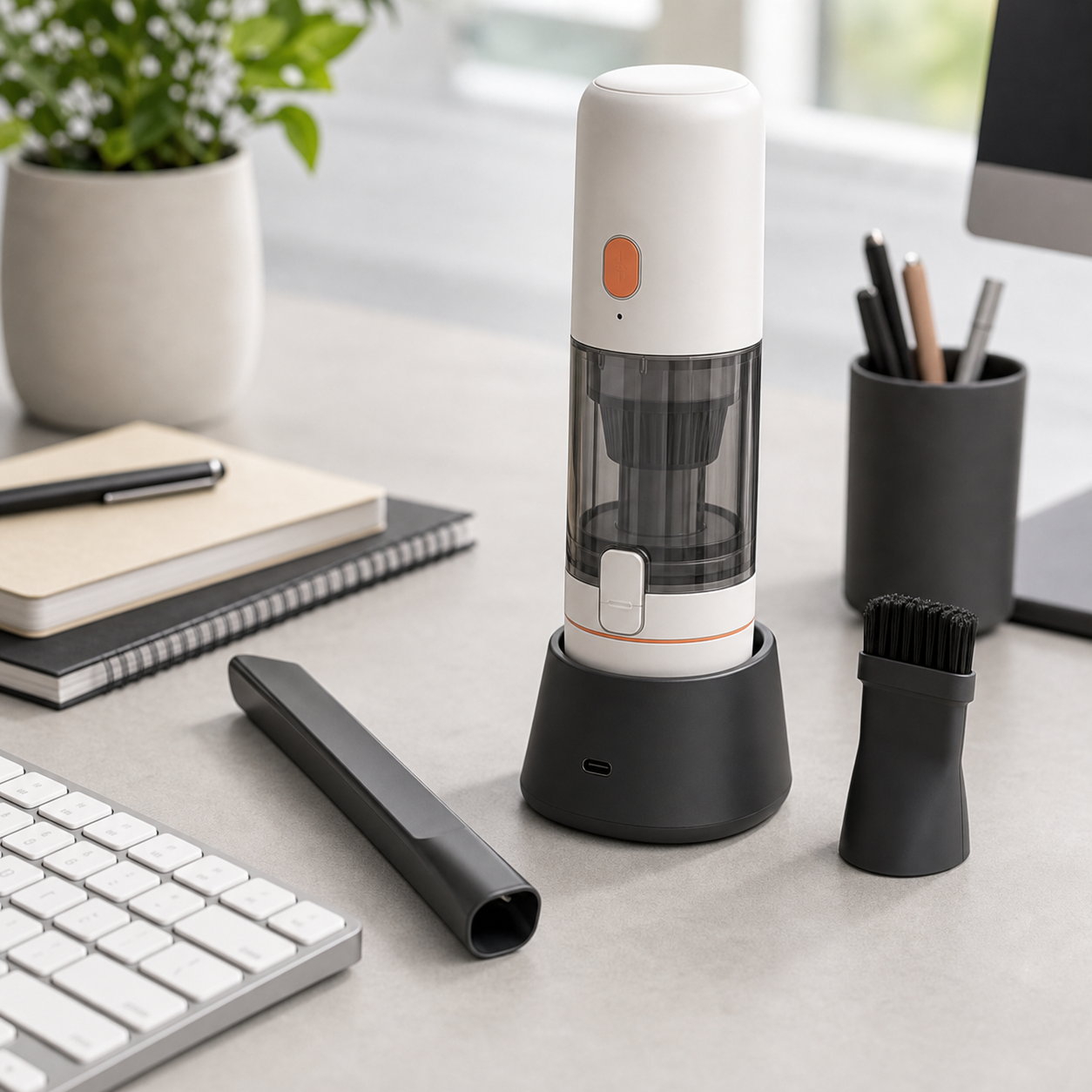
The distinction matters because product photographs often place a small vacuum next to a keyboard or computer. Customers may interpret that scene as permission to use it inside equipment. A convenient surface cleaner and a specialist electronics-service tool can have different design requirements. Neither an attractive nozzle nor a charging socket establishes the broader capability.
This guide helps office-accessory buyers assess a mini desktop vacuum around ordinary surface-cleaning tasks. The proposed evaluations are not completed KudBo tests. Product application, electrical safety and specialist service suitability must be confirmed for the exact model. Do not open electronics or conduct hazardous cleaning experiments to extend a catalog claim.
Define the Mini Desktop Vacuum Cleaning Scope
Start with the intended user and surface. A home-office customer may want to remove biscuit crumbs from a hard desktop. A classroom may need to collect eraser debris. A repair technician may need a specialist process for sensitive equipment. These are not equivalent applications, even when the visible debris appears small.
Write the allowed debris description in the buyer brief. Specify dry, cool, nonhazardous material if that is the model’s intended scope. Ask the supplier to list exclusions and relevant operating precautions. Unknown powders, broken glass, batteries, liquids and hot material should never be added to a demonstration merely to make it look demanding.
For a crumb vacuum vs electronics cleaner comparison, identify what evidence would be needed to support the second application. Do not assume the ordinary model meets electrostatic-control or other specialist requirements. If the supplier cannot document those capabilities, keep the retail description within the confirmed surface-cleaning task.
Separate Pickup Performance From a Suction Number
A suction specification needs a measurement location and method. Ask whether the figure represents a motor or pump condition, a sealed inlet or usable airflow through the supplied nozzle and filter. These measurements answer different questions. A large number does not automatically mean effective pickup on the customer’s desk.
Small vacuum debris pickup test results should be based on a defined spill and surface. Record debris identity, mass where practical, distribution area and cleaning passes. The objective is to compare a repeatable task, not to manufacture an impressive before-and-after photograph. Keep residual debris and unsuccessful passes visible in the record.
Do not confuse pickup with filtration. Collecting visible crumbs does not establish containment of fine particles or suitability for allergens. If a filtration or health-related claim is proposed, request evidence specific to the assembly and conditions. FTC advertising guidance requires evidence-based claims; a supplier’s descriptive filter name is not a substitute for relevant support.
Evaluate Desktop Vacuum Nozzle Access
Reach and contact are different questions
A narrow nozzle may reach a gap but contact the surface in an undesirable way. Check geometry, edge finish and whether a soft brush is supplied for permitted applications. Observe whether the nozzle lifts loose debris or pushes it into another location. The trial should use an approved ordinary surface, not sensitive equipment whose service requirements are unknown.
If a keyboard is shown, define whether the intended task is accessible surface debris with the device prepared according to its manufacturer’s instructions. Do not turn that photograph into permission to dismantle the keyboard or vacuum internal components. Keyboard vacuum application limits should be explicit in both the product description and support guidance.
Accessory retention affects the task
Check how attachments connect and whether they remain secured during normal approved use. An attachment that falls off can interrupt cleaning or scratch a surface. A tight fit that requires excessive force can also create frustration. Record the fitted configuration so the supplier knows which nozzle or adapter caused the observation.
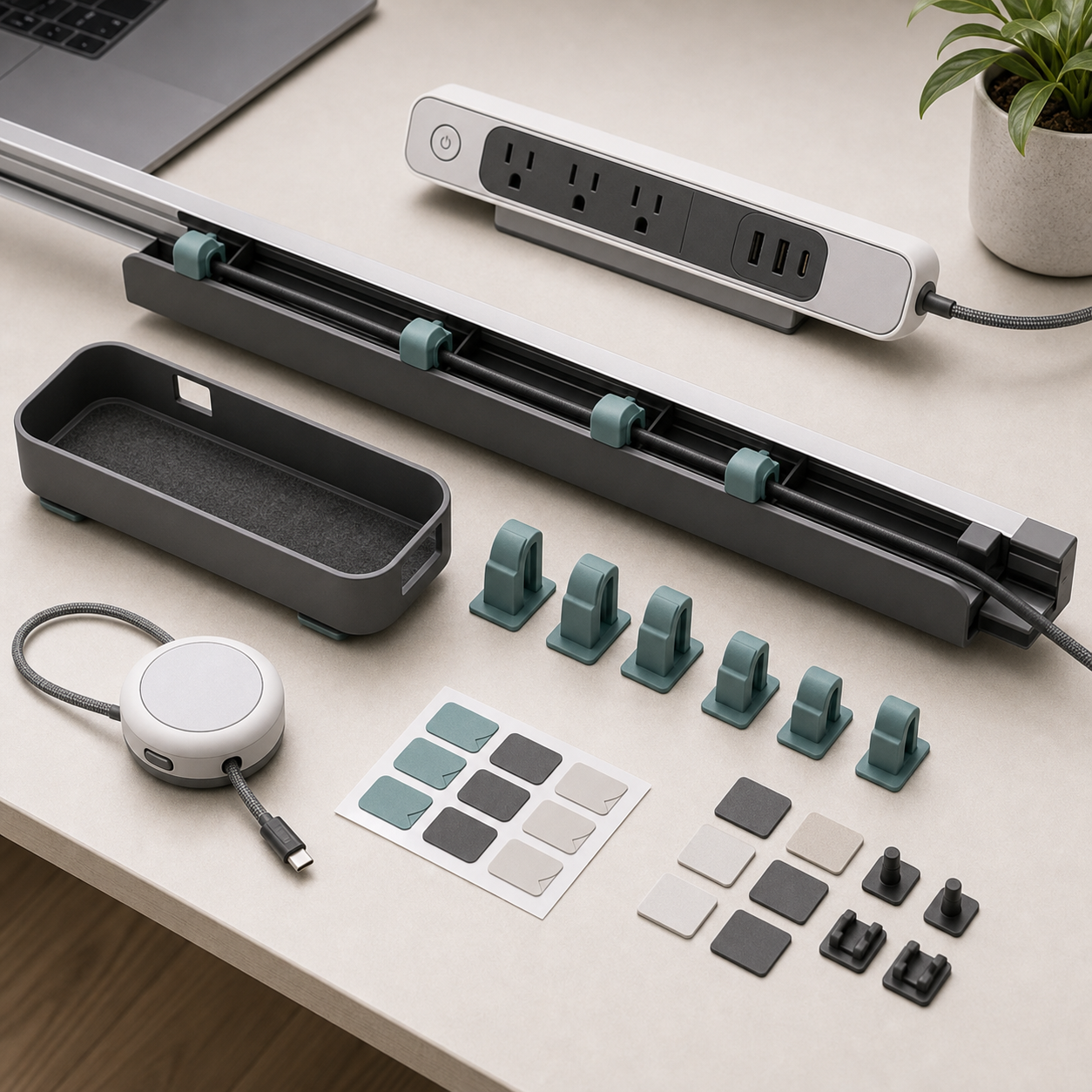
For a desk-accessory bundle, cable raceway kits can improve organization, but they do not demonstrate that a vacuum is safe around every cable or connector. Evaluate the cleaning task separately from installation and cable routing. Complementary products should have distinct, documented roles.
Plan a Controlled Surface-Cleaning Trial
| Trial step | Record | Avoid assuming |
|---|---|---|
| Define surface | Material and condition | One desktop represents every finish |
| Define debris | Approved dry reference material | Visible crumbs establish fine-dust filtration |
| Set configuration | Nozzle, filter and charge state | Every attachment performs identically |
| Perform passes | Path, count and elapsed time | An expert demonstration predicts all users |
| Review result | Residual debris and surface marks | A photograph alone measures effectiveness |
| Empty and restore | Steps, mess and correct reassembly | Easy pickup means easy maintenance |
Use the same reference spill when comparing samples. If a mass balance is used, consider material lost during preparation and emptying. Do not report false precision for a trial that cannot account for those losses. A descriptive observation can be more reliable than an unsupported percentage.
Try the task with the draft instructions and another suitable user. Note whether the person selects the right nozzle and understands the exclusions. When the task fails because an essential step was omitted, revise the insert and review it technically. Do not simply remove the failed trial from the evidence file.
Mid-Article CTA
Send Your Requirements with the intended desk surface, debris type, user group and order quantity. Email info@kudbo.com to discuss a sample review that keeps ordinary cleaning separate from unsupported electronics-service claims.
Desk Cleaner Filter Care Is Part of Performance
The filter and collection chamber can affect both use and maintenance. Ask which parts are removable, which are washable and how they must dry before reassembly. Never recommend washing a component because it looks like another model’s filter. The approved care method should match its material and construction.
Observe emptying with the prescribed debris. Check whether the chamber opens predictably, whether retained crumbs are accessible and whether reassembly is obvious. Record if the user needs a separate tool or cleaning brush. A disposable-looking part may actually be intended for reuse, while a reusable-looking filter may require replacement; obtain the supplier’s written guidance.
Do not invent a fixed filter service interval. Usage intensity and debris can differ substantially. A retail claim should describe the manufacturer’s actual maintenance recommendation and any relevant limitations. For a private-label program, confirm replacement identifiers and supply terms before promising that filters will remain available indefinitely.
Treat Runtime as a Defined Operating Condition
If the model is rechargeable, identify battery information, charging requirements and supplied accessories. Runtime should specify the operating mode, attachment, debris condition and stopping point. A motor running freely without pickup is not necessarily the customer’s cleaning runtime. Ask for the method behind any figure.
Evaluate charge indication and the transition to a low-power state using the approved procedure. Record whether pickup behavior changes before the unit stops. This helps explain a user experience but does not establish battery safety. Battery transport and destination-market evidence require their own model-specific review.
Do not add unattended charging, damaged-cable use or improvised electrical tests to a buyer trial. OSHA’s electrical overview describes workplace electrical hazards and safeguards; it does not certify a consumer vacuum. Assign safety assessment to competent personnel and keep operational observations within the manual.
Preserve the Surface, Not Only the Debris Result
A successful cleaning task should leave the permitted surface in an acceptable condition. Inspect for visible marks using a consistent lighting arrangement and before-use reference. Distinguish material already present from a mark produced during the trial. Do not make a universal scratch-free promise based on one surface.
Ask whether the nozzle contacts a painted finish, soft mat or raised key differently. If the assortment targets several surfaces, evaluate representative approved examples. A model that is suitable for a hard tabletop may not be appropriate for a delicate coating. The retail copy can name the supported application without implying every desk material is covered.
Also consider noise as a context question rather than a vague quiet label. A shared office and a home workspace have different expectations. If a numerical sound claim is required, obtain a documented method, distance and operating condition. A brief subjective observation should be reported as such, not converted into a decibel value.
Make the Retail Unit and Support Route Clear
Freeze the attachment count, filter configuration, charging accessory and instruction version in the quotation. Similar photos can conceal a missing brush or a different chamber. Approval should refer to the complete retail unit, not the motor housing alone. Check that the packaging shows only supplied accessories or clearly labels optional items.
Keep the model identifier on a durable part of the product where feasible. Customers may discard the carton before needing a replacement filter. Support should be able to distinguish revisions without relying only on color. A changed filter seat or attachment interface may make an older spare unsuitable.
Prepare answers for reduced pickup, difficult emptying and charging confusion. Support should ask about the configuration and approved debris rather than immediately assigning blame. Suspected damage, abnormal heating or use outside the instructions needs an appropriate stop-and-escalate response, not a suggestion to run the motor harder.
Use Factory Testing and Shipment Inspection Appropriately
Ask the supplier which production checks relate to attachment fit, chamber closure, filter presence and basic operation. A statement that all units are tested should identify what is checked and the record retained. It should not imply that every unit has undergone a full customer-use or specialist filtration assessment.
Shipment inspection can compare selected packed units with the approved specification, inspect visible condition and perform agreed screening checks. Define how a missing essential filter differs from a cosmetic mark on the outer box. If the report finds a functional issue, link it to the model, lot and test configuration.
For repeat orders, require notification of changes to the motor, battery, filter, chamber seal or attachment interface where relevant. Reassess the affected claims rather than treating a similar exterior as proof of identical performance. The KudBo product catalog is a selection resource; the approved product file controls the final order.
Turn a Trial Finding Into a Buying Decision
Consider a hypothetical sample that removes the agreed crumbs efficiently but is awkward to empty without spilling them. A buyer targeting occasional home use might accept that limitation with better instructions, while a school purchasing for frequent classroom tasks might reject it. The pickup result alone cannot settle the decision.
Record the consequence and the proposed response: revise the chamber, change the accessory set, narrow the customer promise or choose another model. Then verify any revised sample against the same task. This is an illustrative decision process, not a reported KudBo project. It shows why maintenance and user effort belong in the specification alongside cleaning performance.
Make the Cleaning Claim Observable
Translate the desired benefit into a task a buyer can watch. For example, the brief can ask the user to remove a defined dry reference spill from an approved hard surface and restore the collection chamber afterward. It should not say cleans the whole office, which has no clear acceptance boundary.
Record what the trial intentionally does not address: hazardous dust, internal electronics, liquids and any unreviewed surface. Those exclusions help the sales team answer enquiries without expanding the promise. A prospect asking for specialist electronics service should receive a compatibility review, not an ordinary crumb-vacuum recommendation by default.
For photography, keep the approved debris modest and plausible. A mountain of crumbs may make a dramatic image but describe an unrealistic use case or obscure the maintenance burden. Show the full product, nozzle and collection arrangement, and label the scene as illustrative where appropriate. This makes the visual information consistent with the written application rather than allowing the picture to imply a much broader cleaning capability.
Related Buyer Resources
Continue with USB-C Desk Hub Compatibility and Power Budgets for a complementary purchasing question. Compare the full product catalog, or browse the KudBo sourcing blog or the product sourcing topic collection for additional buyer guides. These resources provide decision context; each product still needs its own model-specific approval.
Frequently Asked Questions
Can a mini desktop vacuum clean internal computer parts?
Do not assume so. Internal electronics can require specialist service procedures and electrostatic controls. An ordinary crumb vacuum needs explicit model-specific evidence before being marketed for that application. Follow equipment-manufacturer guidance and keep unsupported internal-cleaning use outside the product description and buyer demonstration.
Does a high suction number prove good crumb pickup?
No. The measurement condition, airflow path, nozzle and filter matter. Compare a defined approved spill on the intended surface and record the cleaning passes and residual material. A peak or sealed-inlet figure alone does not establish the complete surface-cleaning performance customers will experience.
Can the filter always be washed?
Only if the exact filter’s instructions permit it. Materials and construction differ. Confirm washing, drying and replacement guidance with the supplier, then observe correct reassembly. Do not infer care from appearance or advise a universal cleaning chemical. A wet or incorrectly fitted filter can change operation.
What should a desktop cleaning trial exclude?
Exclude liquids, hot material, hazardous or unidentified dust, sharp debris and specialist electronics tasks unless expressly supported by the reviewed model instructions and suitable evidence. A demanding-looking demonstration is not worthwhile if it creates unsafe use or a retail claim outside the product’s intended scope.
Which changes matter in a repeat order?
Relevant changes can include the motor, battery, filter construction, chamber closure and attachment interface. Require notification and review the affected performance and care claims. Retain the approved sample and revision record so a visually similar replacement is not assumed to preserve the original cleaning configuration.
Conclusion
Define the mini desktop vacuum cleaning scope before selecting a model. Evaluate pickup, nozzle access, surface condition and maintenance as one ordinary-use task. Clear exclusions and traceable configuration make the product easier to position and support than broad electronics-cleaning promises that the supplier cannot substantiate.
Final CTA
Get a Quote or email info@kudbo.com with your destination, quantity, surface and debris requirements. KudBo can discuss available desk-product options and sample arrangements. Confirm the final attachment set, maintenance instructions and application evidence before production approval.