Introduction
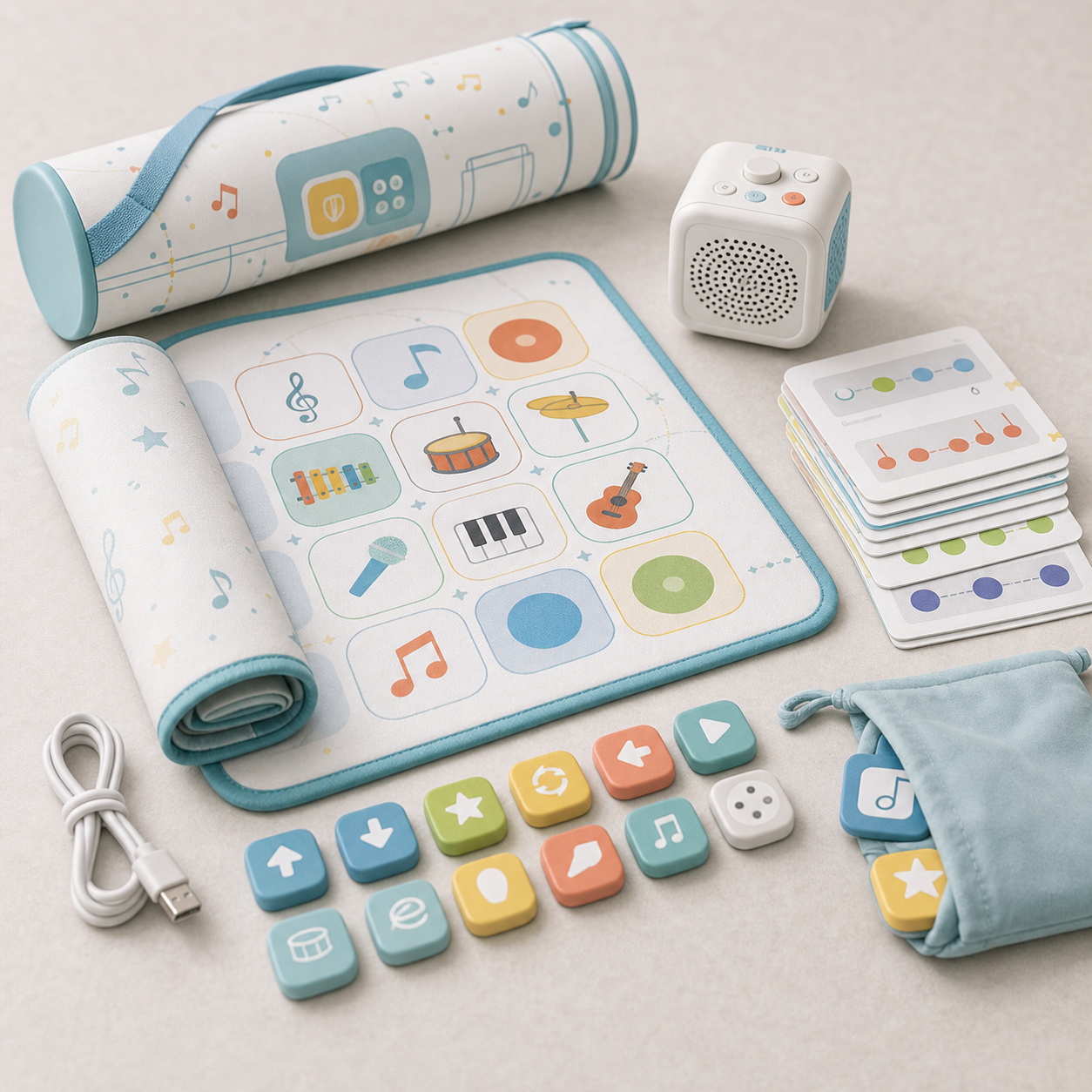
A musical mat that delights one child may overwhelm a group lesson if sound and turn-taking are poorly controlled. The KudBo kids coding music mat is described as a soft play mat combining sequencing, rhythm and coding activities. A buyer should verify the actual inputs, sound modes, power source and included activities on the quoted sample. The words “coding” and “STEM” should be tied to observable play tasks, not treated as proof of learning outcomes.
The earlier audio-component buyer guide examines hardware. This article treats the classroom as a system: multiple children, a teacher, storage, cleaning and a limited noise budget. The review steps below are suggested, not a report of a completed school deployment.
Set Up the Room and Group Routine
Unfold the mat in a representative room and measure the clear floor space it needs, including walking room around it. A product dimension alone may understate the teaching footprint. Observe whether corners lift, whether the underside slips on a common classroom floor and whether cables or batteries create a trip or supervision issue. Follow the maker's use and age guidance, and stop any setup that places controls where children can open them unsupervised.
Ask how many children can participate meaningfully at once. A mat may have many printed zones but accept only one reliable input at a time. Run a short activity with two and then a larger group under adult supervision, using a clear turn-taking rule. If simultaneous steps are unsupported, describe the toy as a small-group rotation activity rather than a whole-class floor instrument. The teacher needs a way to reset the sequence without troubleshooting mid-lesson.
Inspect activity cards or instructions. Does a simple sequence produce a predictable result? Are errors visible so a child can try again? Avoid asserting that any particular curriculum standard is met unless the kit includes a documented, reviewed mapping. Buyers should request translations for prompts and symbols, especially if the product uses voice feedback. Language support is a feature to verify, not assume.
Test Sound as an Operating Condition
Check the minimum, intermediate and maximum settings if the sample offers them. Use a controlled listening position at the expected teacher and child distances; record the selected mode and room conditions. A small classroom with hard surfaces can sound louder than a furnished room. Ask whether multiple mats will be used at the same time, since summed sound may change the practical limit. Do not publish a decibel figure without a documented instrument and measurement method.
The NIDCD loudness resource provides general hearing-health context. It is not a test report for this mat. The sourcing question is whether a teacher can keep the product audible at a comfortable setting and lower or mute it quickly. If the lowest mode is still intrusive, a “volume adjustable” label may be technically true but not practically useful.
Listen for clipped audio, delayed responses and repetitive prompts after many steps. A delayed tone can make a coding sequence harder to understand. If headphones are mentioned in a quotation, verify connector type and whether group instruction remains workable. Do not add a headphone claim to a unit without the feature. A written lesson card can help a teacher explain the task even if the sound is temporarily muted.
Mid-Article CTA
Send Your Requirements with target age, group size, floor area, language and sound-control expectations. Email info@kudbo.com for sample and pack-out questions.
Clean, Fold and Reuse the Mat
Run the end-of-lesson routine: switch off, wipe as permitted, dry, fold or roll and store. Identify which parts can be wiped and where moisture must be kept away from electronics. Test the printed surface after repeated approved cleaning. A mat that is easy to use but hard to store is less suitable for shared spaces. Check whether the folding line crosses an input zone or conductor path and whether a replacement bag is available.
At shipment inspection, compare the print, stitched or sealed edges, response zones, sound controls, power compartment and instructions with a retained sample. A function check can play a reference pattern and confirm responses; it should not be described as proof of educational effectiveness. The CPSC toy-safety resource is a US starting point for age suitability and compliance questions, not a product certificate. Review requirements for the final configuration in each destination market.
Budget for consumables and repairs. If a controller, cable or storage bag is separate, request part numbers and lead times. Capture pilot feedback about confusing symbols, low-volume audibility and missing parts rather than counting only overall satisfaction. Those details guide the next production revision.
Classroom Purchasing Comparison
Compare the mat with two alternatives the school already uses, such as a tablet-based activity and a non-electronic floor game. The music mat may offer movement and group turn-taking, but it also needs floor area, batteries or power, cleaning and storage. A tablet may be easier to update but involve screens and app accounts; a non-electronic activity may be quieter but provide different feedback. The procurement decision should start with the classroom goal, not the number of sound modes printed on a box.
Ask teachers how long one activity can hold a group's attention without excluding waiting children. If only two users interact at a time, plan a station rotation and choose a mat count accordingly. Buying one oversized mat for a whole class may be less effective than buying several smaller setups, but that depends on supervision, room size and budget. A pilot should test both teaching plan and hardware before estimating demand.
Create a replacement budget for controllers, bags and activity cards if available. The unit's first purchase price is only part of school ownership. A controller that fails may render the printed mat unusable, while a lost bag may make storage awkward but not stop the lesson. Separate these costs. A well-described classroom kit makes the institution's planning easier and gives the retailer a more credible sales conversation than a generic STEM claim.
Design a Four-Session Classroom Pilot
A useful classroom review needs more than one enthusiastic demonstration. Plan four short sessions with the same mat and age-appropriate activities: first-time exploration, teacher-led sequencing, two-child turn taking and a repeat session after the mat has been folded and stored. Obtain the institution's consent and safeguarding arrangements before involving children; the sourcing assessment can be completed by adult reviewers if a child study is not appropriate. Record which instructions the teacher needed to add orally. If the printed card only works after a lengthy explanation, it is not yet a self-contained classroom tool.
In the first session, allow the instructor to find the power control, volume control and reset method from the carton alone. The reviewer should note whether any audio plays unexpectedly at full volume when the unit starts. In the second, use a simple three-step pattern and compare the mat's feedback with the card's explanation. A sequencing activity is useful when a learner can see or hear which step changed; a colorful sound effect by itself does not demonstrate a coding task. Keep marketing descriptions tied to the actual activities supplied.
Turn taking is a real product property, even when the electronics have only one input stream. Ask two users to alternate steps while a teacher observes. Is there a clear pause between turns? Can one user's foot or hand accidentally trigger another zone? Does the mat stay flat? A class may benefit from placing the mat in a rotation station rather than trying to gather everyone around it. That use case changes the desired storage bag and cleaning schedule. A wholesale buyer should ask teachers about this before choosing a pack size.
The fourth session checks persistence: unfold the mat after storage, see whether creases affect sensor response and repeat the same pattern. If a controller detaches, check whether the connection is obvious and secure after reassembly. Record the tested firmware or sound module revision if applicable. A different speaker or controller can alter response delay and volume even when the printed mat is unchanged.
Procurement and Support Worksheet
Create a bill of materials for the mat, controller, power source, activity cards, storage bag and any repair parts. Each photograph should identify which items are included. For institutional buyers, quote replacement controllers and bags separately if available. Ask whether the printed zones can be wiped with the specified cleaner and how long the surface must dry before folding. A quick wipe while the mat is still powered on should not be the default care instruction.
For the sound requirement, describe the intended room and listener positions, then set an agreed acceptance method. “Has volume control” is not enough if the quietest mode is too loud for a small room. If a numeric sound level becomes an advertising claim, document the meter, distance, mode, room and tolerance. Do not borrow a decibel figure from a different speaker module. Customer support should be able to ask which mode was used and whether several mats were operating at once.
At shipment inspection, sample response zones, sound mode, seams, age labeling, battery access, controller count and the printed lesson card. A functional check catches dead zones or missing components; it cannot prove that children will develop a particular skill. Retain an approved sample and report field complaints by zone or module revision so a real defect pattern can be distinguished from classroom setup differences.
Activity Design and Parent Expectations
For family retail, explain a short activity a parent can actually run: choose a sequence card, let a child make the first step, listen to the response and change one step to hear or see the difference. This is more specific than saying the mat “teaches coding.” If the quoted product does not include cards, describe the activity using the actual printed zones and instructions instead. The buyer should not create an imaginary curriculum in marketing copy to fill a sparse pack.
Parents also need to know where to store the mat and how to quiet it in a shared home. Show folded dimensions, supported wipe method and how the sound is reduced or turned off. If the unit uses replaceable batteries, make their inclusion and compartment access clear. A gift purchaser may judge the product by setup ease as much as by the educational label. A one-minute unboxing video can help only if it shows the exact pack and does not skip a difficult controller connection.
Collect pilot feedback separately from teachers and parents. A teacher may value group rules and spare controllers; a parent may value quick cleanup and moderate volume. These are different use contexts, and one sales page can acknowledge both without claiming the mat is suitable for every classroom or child. Keep any developmental benefit language tied to appropriate evidence and the actual activity rather than assuming that rhythmic play automatically achieves a measured learning outcome.
Frequently Asked Questions
Is a coding music mat suitable for a whole class?
It depends on its number of inputs, physical size and group activity design. Pilot the quoted unit with a teacher-led turn-taking plan and realistic floor space.
How should volume be evaluated?
Listen at relevant positions under each supported setting in a furnished room, then document any instrument-based measurements with methods. Multiple mats may create a different sound environment.
Can the mat be cleaned between groups?
Follow the actual maker instructions and test the approved wipe method on the printed surface and seams. Do not immerse electronics unless expressly supported.
Does “coding” mean it teaches programming?
Not automatically. Ask for the actual sequencing tasks and teaching materials; avoid broad educational-outcome claims without evidence.
Are replacement controllers or bags important?
Yes for institutional buyers. Confirm exact part numbers and revision compatibility before promising a long classroom service life.
Conclusion
Classroom suitability depends on shared use, manageable audio, observable learning tasks and practical storage. A controlled group pilot is more informative than a single-child demonstration. Accurate copy should describe what the quoted mat actually does and what teachers need to prepare.
Final CTA
Ask for Product Details at info@kudbo.com. See KudBo products, the buyer blog and product sourcing guidance for related classroom sourcing choices.