Introduction
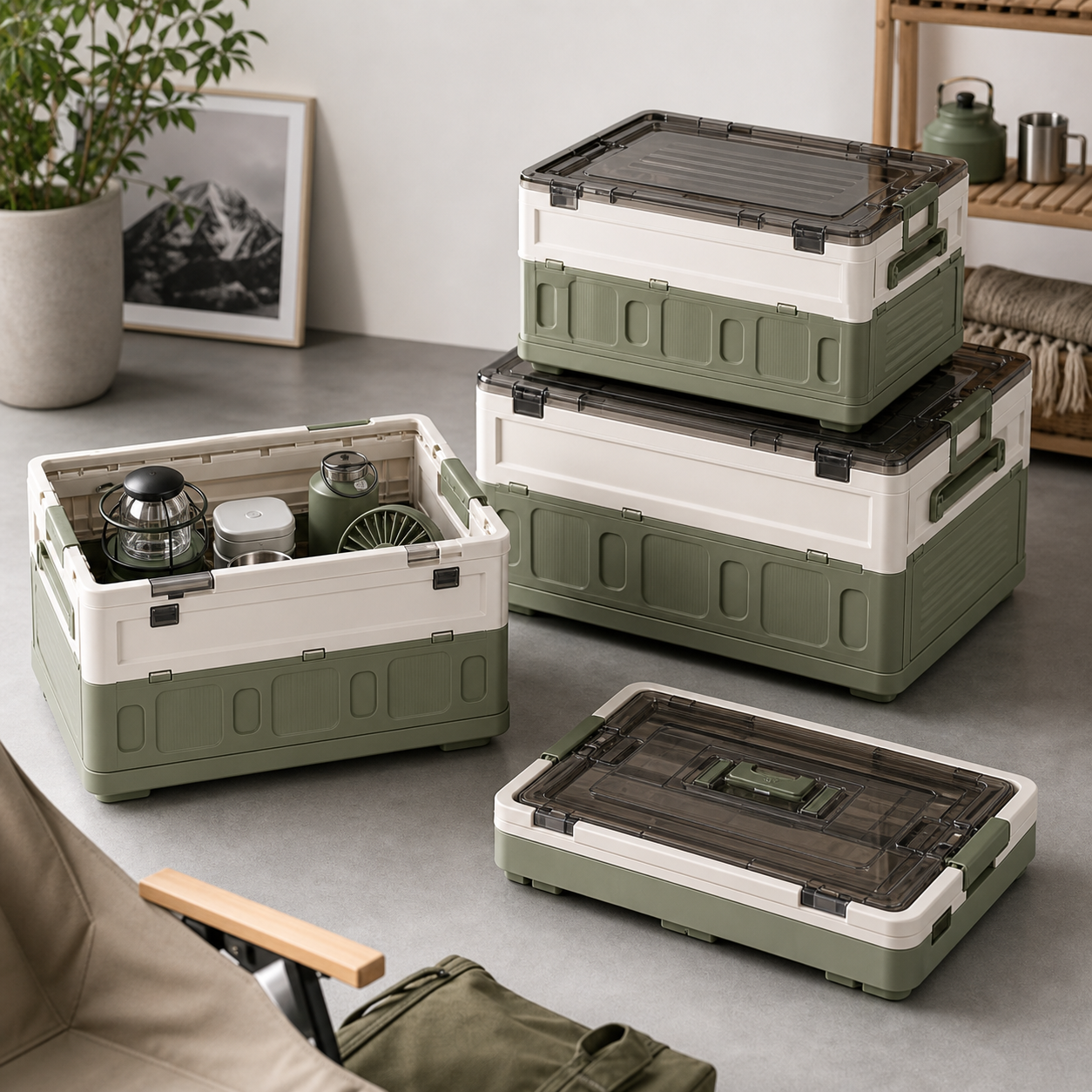
The selling feature of a fold-flat crate is a moving structure, so a static stack photo is not enough to judge it. The KudBo fold-flat storage crates are described as recycled-plastic crates with fold-flat sides, transparent lids and modular handles. A buyer should verify each point on the quoted sample, especially when component materials or hinge geometry change between orders. The return scenario is ordinary: a customer opens the box, folds the crate a few times, then finds a side panel that no longer locks cleanly.
The existing stack-load buyer guide covers supported loads. This guide isolates repeated folding, reopening and recovery after an imperfect user action. The protocol is a proposed buyer test, not a claim about completed KudBo durability results. Agree on a test and acceptance criteria before placing a volume order.
Describe the Mechanism Before Testing It
Photograph the assembled crate, its flat position, each hinge, latching point, handle and lid. Note whether hinges are molded in one piece, use separate pins or rely on flexible living-hinge areas. The repairability and failure pattern are different. A removable pin may be replaceable; a cracked integral hinge may require replacing the whole wall. Do not infer a material grade or recycled-content percentage from color or surface finish alone. Ask for the material declaration and traceability that supports the actual claim being made.
Map the intended assembly sequence. Some crates require long walls to be raised before short walls; others lock in the opposite order. If the sequence is non-obvious, a first-time customer may force a joint in the wrong direction. Try the retail instructions with someone who has not seen a demonstration. Record the point where they hesitate. A clear diagram or molded arrow can reduce preventable returns more effectively than a stronger but confusing latch.
Measure the outer dimensions in both open and flat configurations. Retailers need both for shelf allocation, carton pack-out and shipping charges. Ask whether handles project when the crate is collapsed; an apparently flat unit may still create wasted carton space. Confirm nesting behavior with the exact lid supplied, because a lid that cannot remain attached during folding changes the storage story.
Build a Meaningful Folding-Cycle Review
Choose a cycle count appropriate to expected use, then define one cycle in writing: full open, latch engagement, lid placement if relevant, latch release and return to flat. Otherwise two inspectors can report the same number while performing different work. Examine at intervals rather than only at the end. Record visible whitening at flex points, latch friction, corner gaps and the force needed to reopen. A visible stress mark is not necessarily failure, but it is a signal to compare with a retained reference sample.
Include an off-axis handling check within normal use. Customers may pull a handle before every side is seated or close a wall slightly crooked. The goal is not to abuse the crate until it breaks; it is to learn whether an ordinary recoverable mistake permanently damages a hinge. If a panel disengages safely and can be reseated, show that reset step in the instructions. If a forceful reset is required, specify what a customer should do rather than inviting injury.
Test two or three units from the same sample lot if possible. A single flawless prototype cannot describe batch variation, and a single defective sample may be unrepresentative. Keep photographs and the lot identifier. For repeat production, compare a pre-shipment sample with the retained approved sample for molding, hinge feel and latch alignment. This is more actionable than asking the factory whether the new crates are simply “the same quality.”
Separate Stackability From Fold Durability
An open crate may stack cleanly when empty yet bind after one wall twists under load. Test the combination of closed walls, lid and realistic contents. Define the load, number of tiers, surface flatness and observation period. Do not translate an unsupported laboratory maximum into a casual household promise. The product page should state conditions and cautions if stacking is a promoted use.
Check how the transparent lid seats, whether it transfers stack load to the walls and whether a slightly warped lid makes the upper crate unstable. Remove and refit it after folding cycles. A lid that becomes hard to align may generate returns even when the hinge itself survives. Clear plastic can also show transport scratches quickly; inspect its protective packing and whether the protective film is easy to remove.
Compare handles while lifting a filled crate within the agreed use limit. Are users likely to grasp both handles, or will they carry it by one? Does a handle remain comfortable when the wall flexes? If the handle is modular, identify the exact attachment and spare-part arrangement. Avoid promising heavy-load portability without a defined test and safe-use wording.
Mid-Article CTA
Get a Quote with open and collapsed dimensions, target load, lid configuration, carton count and planned folding-cycle protocol. Email info@kudbo.com to align a sample and a repeat-order reference.
Plan for Cleaning, Returns and Spare Parts
Storage crates see garages, kitchens, utility rooms and retail stockrooms. Ask whether the surface tolerates the intended cleaning method, and whether the hinge traps dirt or water. Do not make a food-contact claim because a crate is shown near food; that is a separate material and use determination. A transparent lid may require different care from the body. State the actual recommended cleaning method in the instructions.
Classify foreseeable returns: a missing lid, latch not engaged, hinge pin missing, damaged shipping corner, cracked wall or merely misunderstood assembly. Each has a different remedy. A photo-based support sheet can let customer service identify whether a panel can be reset safely. If replacement lids, pins or handles are possible, get part numbers and order quantities in writing. Calling a crate “repairable” without a viable replacement supply misleads the buyer.
For retailers with tight margins, calculate landed cost beyond the initial price. Include spare-part stocking, oversize cartons, damage allowance based on actual observed shipment data and support time. Do not invent a return-rate percentage to make the case. The point is to determine what needs measurement in the pilot order. Use a small sell-through sample to learn which failures customers actually report before expanding colors or sizes.
Material and Environmental Claim Boundaries
The FTC environmental-claims summary is a concise primary reference for recycled-content wording; it does not verify the resin in a particular crate.
If the body uses recycled plastic, request supplier records for the specific resin and the recycled-content calculation behind the advertised wording. The FTC Green Guides explain why broad environmental claims need qualification in US marketing. A recyclable symbol does not prove recycled content, and a recycled-content statement does not prove that every local collection system accepts the finished crate. Keep those claims separate.
Ask whether colorants or different resin streams affect hinge performance. A recycled-material formulation can be appropriate, but the buyer should not assume a hinge tested in one color behaves identically in every color. Agree on color-specific samples when a new pigment or resin source is introduced. Request change notifications for material and mold revisions, especially after a tooling repair. A small geometry change at a latch can cause a large customer-experience difference.
The inspection sheet should include the wall-lock sequence, dimensions, surface damage, lid fit, handle attachment and carton protection. Use a retained physical sample and agreed photographs to resolve subjective disagreements. If a supplier performs cycle testing, request the fixture, cycle definition, sample count and results; a raw “passed durability test” statement is not enough to support a retail warranty claim.
A Purchase-Order Acceptance Example
Instead of writing “strong hinge,” define a reference opening sequence and an inspection interval. Specify sample count, the number of open-close cycles chosen for the target use, the load condition when relevant and what counts as failure: fracture, latch that will not engage, unsafe sharp edge or permanent distortion beyond agreed tolerance. These numbers should be negotiated from product design and expected use, not copied from a different crate. The purchase order can reference an approved physical sample and drawing to reduce ambiguity.
The same acceptance sheet should include open and folded dimensions, lid fit, handle retention and carton protection. For recycled-content marketing, keep resin records separate from mechanical performance. A recycled-plastic crate can be robust, but the claim about material origin and the claim about hinge life require different evidence. Color changes or resin-source changes should trigger a new comparison, particularly at thin flexing sections.
Ask the supplier how it handles a batch with a localized latch defect: rework, replacement panels, full-unit replacement or credit. Define who pays freight for spares and whether the retailer can identify compatible revisions in the field. These details are less visible than a stack photo but often determine whether a multi-color crate program remains profitable after the first season.
Turn Pilot Returns Into a Design Review
Before a retail launch, classify foreseeable complaints in a form customer support can actually use. “Does not fold” may mean a real broken hinge, a wall raised in the wrong order, a lid left in place or a latch that has not fully seated. Ask customers for a photograph of the corner, not a vague quality rating. Compare it with the approved assembly sequence. This avoids treating instruction problems as material failures or, conversely, dismissing cracked plastic as user error.
For a small pilot order, keep the production lot, mold revision and color tied to each return. It is plausible for a tooling adjustment to improve one latch and create friction in another. A buyer should look for patterns by lot before changing the entire product. If returns cluster around a specific corner or color, inspect retained samples under the same open-close sequence. Do not publish a return-rate statistic from a handful of anecdotes; collect numerator, denominator and time window before calculating one.
Decide on a service remedy for each failure category. A missing lid may be solved with a replacement lid if dimensions are stable. A missing handle may need a simple spare-part kit. A cracked living hinge may require replacing the panel or entire crate. Ask the supplier for the actual spare-part inventory and shipping pack before promising repairability. A theoretically replaceable part that takes longer to obtain than a new crate is not an attractive consumer solution.
Packaging can prevent an avoidable class of returns. Check that the crate is restrained in its flat position, that a transparent lid does not rub against a textured panel and that any handle cannot puncture the carton during transport. After a pilot shipment, compare arrived products with the factory departure sample, including corner damage and lid scratches. This evidence is more useful than an unqualified “shipping-safe” claim. It tells the buyer whether to revise the carton, protective film or component nesting before scaling the program.
Frequently Asked Questions
How many times should a fold-flat crate be opened and closed in a sample review?
Choose a cycle count based on likely customer use and agreed risk tolerance, then define exactly what one cycle includes. Inspect during the sequence and compare multiple units. A published durability promise needs testing that supports the promised use, not a generic number copied from another design.
Does recycled plastic make the hinge weaker?
Not necessarily. Material formulation, geometry, molding and quality control all matter. Ask for material documentation and test the quoted configuration, including its color and hinge revision. Avoid a universal strength claim without evidence.
Can an integral hinge be replaced?
Often the whole panel or crate may need replacement, but the answer depends on construction. Determine whether the hinge is integral, pinned or modular, and secure spare-part availability before calling the design serviceable.
What causes the most preventable folding-crate returns?
Common candidates are confusing assembly, missing components, shipping damage and latches that do not seat as expected. The actual mix should be measured from a pilot order; do not claim a particular cause dominates without return records.
Should the crate be advertised as stackable when folded?
Only if the flat configuration has been checked for stable storage under defined conditions. A stack rating for opened crates does not automatically apply to flattened crates or loose lids.
Conclusion
A fold-flat crate is a mechanism as well as a container. An importer who documents the open-close sequence, repeated hinge behavior, lid and handle fit, material claims and realistic returns can set a stronger specification than one based on volume and color alone. The best pilot question is not “does it fold?” but “can ordinary customers fold, reset and keep using it reliably?”
Final CTA
Send Your Requirements to info@kudbo.com with dimensions, colors and inspection needs. Review the product catalog, the KudBo blog and related product sourcing guidance as you plan a pilot order.