Introduction
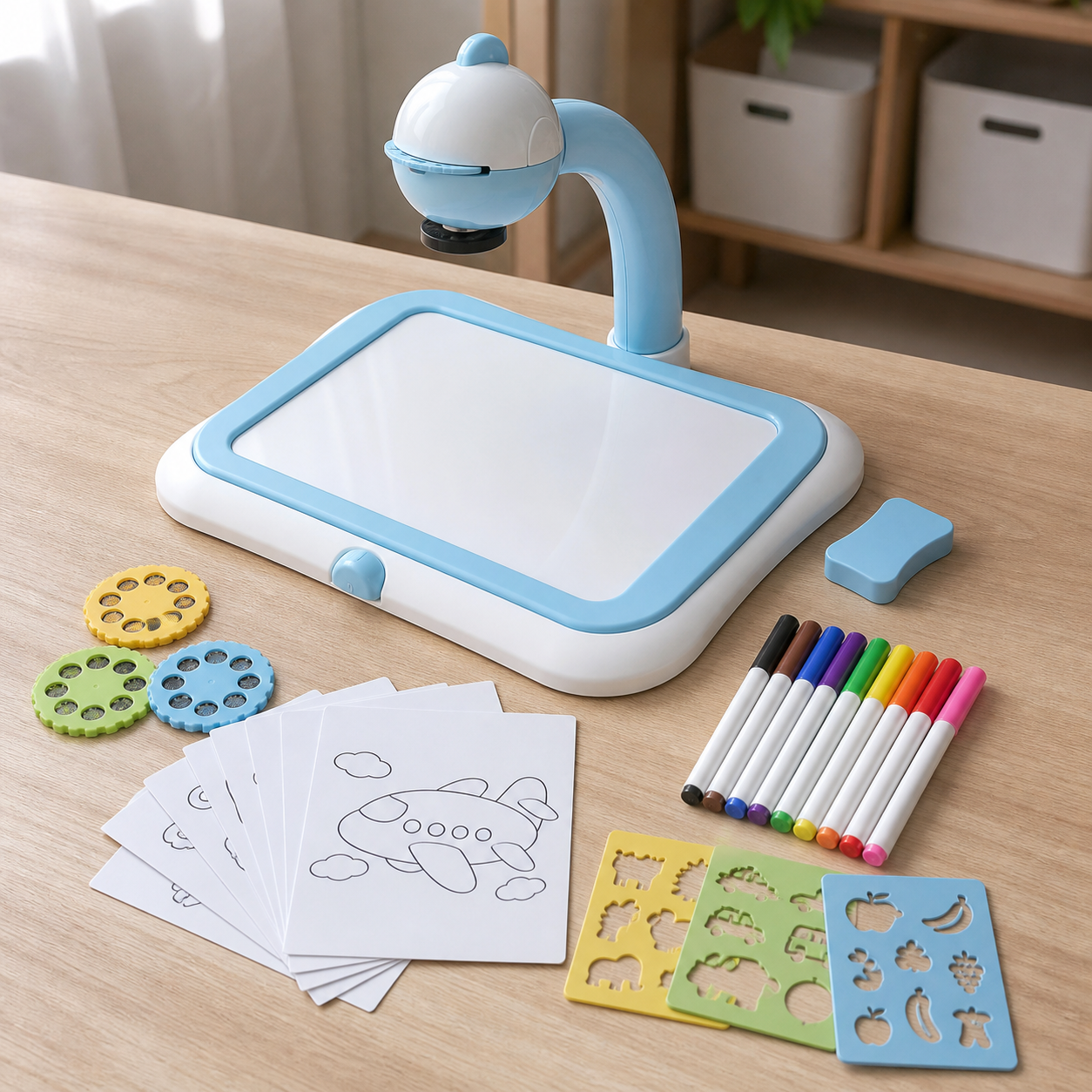
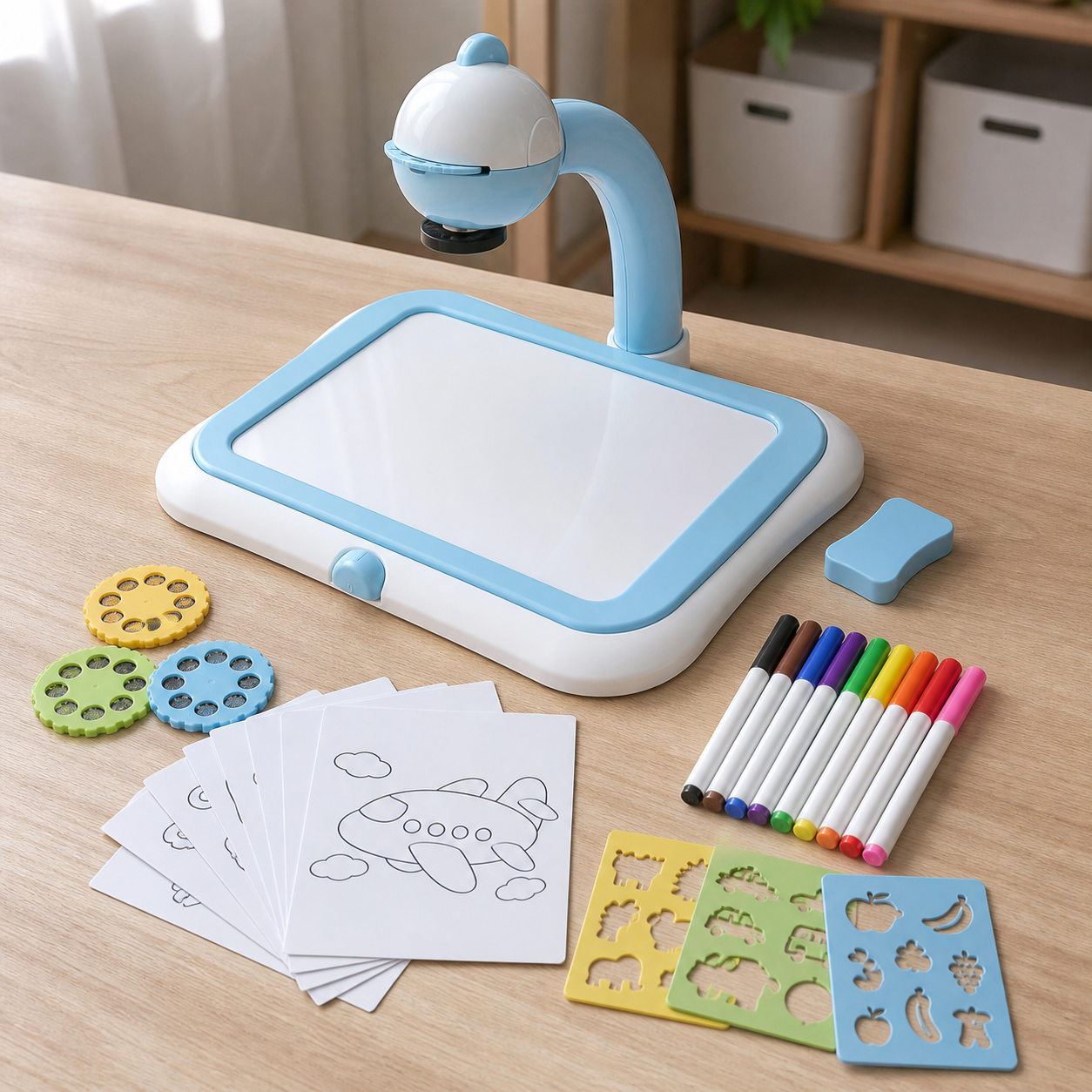
A drawing projector is a useful toy only when a child can see the outline, reach the board and repeat the activity without a complicated adult setup. Product photography often shows a bright projected shape against a dark background. Real customers draw at a kitchen table near a window or in a moderately lit bedroom. A wholesale buyer should therefore test normal lighting, not just the most dramatic presentation condition. The KudBo drawing projector tablet catalog describes a projector arm, reusable board, washable pens and stencil cards; confirm the exact quoted kit before using those details in retail copy.
This guide addresses visible outlines and a complete drawing routine. The related age and setup buyer guide discusses broader packaging decisions. The procedures below are proposed sample-review steps, not results from a completed KudBo factory trial. Treat them as questions to settle with a physical sample and the destination market's toy-safety requirements.
Start With the Child's Actual Table
Use the intended tabletop height and the child's expected seated reach. A projector arm that looks compact in a hero image can obstruct the drawing hand or put its controls behind the board. Ask a parent or teacher to assemble the unit from the retail pack using only the included instructions. Time is useful as an observation, but a single setup time is not a universal promise. Record what they touched, which parts were loose and whether they needed tools that are not included.
Check whether the board sits steadily while a child presses a pen on it. A nominally flat board may rock on an uneven table, especially when a battery cover or foot protrudes. Inspect the corners for finger comfort and the location of the power switch. If a wire is involved, route it away from the drawing area; if batteries are required, identify the exact battery type, compartment access and whether they are included. Do not infer rechargeability from a USB-shaped socket visible in a photo.
For classroom or gift channels, ask how the item is packed away between uses. The cards, pens and eraser must have a practical home; otherwise a nominally reusable toy becomes incomplete after the first week. A carry case is valuable only if the quoted SKU includes it and the assembled arm actually fits. Specify the accessory count in a bill of materials before comparing prices.
Test Visibility at More Than One Light Level
Set a reference stencil and observe the outline in three realistic conditions: indirect daylight near a window, normal room light and a dimmer evening setup. Keep the projector distance and stencil constant. Photograph the drawing surface with exposure settings noted, because automatic camera exposure can make a faint projection look brighter than it is to a person. A subjective pass/fail note is acceptable if it is clearly labeled as one observer's finding; an advertised illuminance or brightness figure requires an agreed test method.
Check edge sharpness and uniformity across the whole drawing board. Some projectors look clear in the center but soft at the corners. Ask a new user to follow both a thick simple shape and a finer pattern. If the drawing becomes impractical in daylight, the instruction card should say what environment works best without implying the child needs a completely dark room. A product listing should show at least one truthful photo of normal household use.
The projector may cast a shadow from the child's head or drawing hand. Try left- and right-handed positions. Move the board only within the intended setup; a demonstration that relies on holding the projector at a special angle is not a repeatable customer experience. If the arm adjusts, test that it stays in position after several changes and that its joint does not pinch fingers during adult setup.
Inspect the Stencil Set as a Learning Product
Count the supplied stencil cards and compare them with the carton, product page and sample. Inspect artwork for recognizable line endings, closed shapes and enough negative space for a young user to interpret it. A printed animal silhouette may be attractive but too busy to trace at the projected scale. Ask a child-facing reviewer to choose a card without coaching, then observe whether the projected outline makes sense as a drawing task.
Sequence matters. A beginner kit can start with large, forgiving outlines before introducing details and layered scenes. If the cards claim educational progression, document that progression; do not simply label miscellaneous pictures as a curriculum. Review whether the card artwork is licensed and whether localized instructions match the destination market. Avoid claims about cognitive development unless substantiated for the exact product and use.
Cards also need physical durability. Check fit in the projector slot, orientation markers and whether the printed image survives normal handling. A bent card that cannot sit flat can alter projection quality. Ask about replacement cards and whether a later production revision will retain slot compatibility. This matters for repeat orders and institutional buyers who want to replenish popular patterns without purchasing a second full unit.
Mid-Article CTA
Send Your Requirements with target age band, destination market, expected room lighting and desired stencil count. Email info@kudbo.com to request a component list and a realistic sample-review plan.
Check Cleaning, Consumables and Repeat Play
Run a complete cycle: draw, erase, choose a new card and draw again. Determine whether the claimed washable pens actually clean from the supplied surface by the recommended method. Test a fully dried mark as well as a fresh one; a favorable wet-ink wipe test alone does not describe normal use. Do not recommend a solvent unless the manufacturer approves it. Clarify whether the board coating and pen ink can be replaced independently.
Pen caps and small accessories affect safety, storage and returns. Inspect their dimensions, fit and packaging against the relevant age-grade review. The CPSC toy safety information is an official US starting point; it does not certify a particular toy. Ask for the documentation applicable to the markets where the product will be sold, including the final accessory configuration. The CPSC art-materials guidance is also relevant when evaluating pens and labeling, but do not assume a generic statement covers every ink or component.
After repeated wipe cycles, inspect scratching, haze and staining under normal light. A board may remain usable yet look unattractive in a gift product. Record whether the eraser leaves residue that the child will transfer to the cards. A teacher may prefer a surface that can be wiped with the supplied cloth instead of repeatedly requiring water; that preference should be tested rather than presumed.
Package and Production Questions for Importers
Request a signed sample checklist covering projection, arm movement, card insertion, board stability, pen count, surface wipe and power compartment. A factory can inspect those functions at shipment, but the buyer should agree on observable acceptance criteria first. For example, “projected outline is visible at the agreed test setup” is more useful than “high-quality projection.” Define the room, test card, power state and inspector position if visibility is a contractual issue.
Packaging should immobilize the projector arm without bending it. Ask for a drop or handling review appropriate to the shipping route and pack style, then inspect the arrived sample rather than accepting only pre-shipment photographs. Print a setup sequence that a caregiver can follow in the destination language. Include realistic lighting advice and a cleaning instruction. If pens are not washable from clothing or furniture, the product page should not imply otherwise because the board itself wipes clean.
For product photography, pair a complete laid-out kit with a believable in-use scene. Show the drawing area, not merely decorative colored light. Do not add an invented child result or a fictitious classroom endorsement. If actual staff appear in marketing images, identify them only with their consent and avoid presenting a staged image as documentary evidence of a specific factory inspection.
Choosing Between a Gift and Classroom Pack
A gift buyer may prioritize a tidy carry case, an attractive starter card set and short setup instructions. A classroom buyer is more concerned with fast resets, card and pen replenishment, storage labels and a wipe routine that does not interrupt the next group. The same projector can serve both channels, but the retail pack and claims may need to differ. Do not assume that adding more pens makes an institutional pack suitable; the board, light and card handling must withstand repeated supervision and cleaning.
For a wholesale quote, request two clearly identified variants if needed. One can include a compact starter selection; the other can include extra compatible cards and consumables. Ask whether the light module, card slot and board finish remain the same across variants. A separate product page should not reuse a hero image showing accessories absent from that SKU. A parts list and real in-use photograph help importers avoid mismatched expectations.
The final buyer decision is not simply “bright enough.” It is whether the kit makes a repeatable drawing activity under the lighting and supervision typical of its channel. Record the sample's arm revision, card art, pen formulation and board finish together. If one changes, reassess cleaning or visibility before repeating earlier claims.
A Sample Review With Two Everyday Rooms
One useful pilot is to set up the same tablet at a daytime kitchen table and an evening playroom. The reviewer should not change the projector, card or pen between rooms. Note window direction, ordinary overhead lighting and whether a child-sized chair leaves room to draw. A photograph should include the whole tabletop so customers can see the real working footprint. A close crop of the projected line alone can conceal an awkward arm position or a board that occupies most of the table.
In each room, ask the reviewer to choose one simple and one detailed card. Record whether the outline is visible at the center and edges and whether a first-time user can finish the drawing without moving the projector. If the room has to be darker than normal for a detailed card, document that limitation and reflect it in instructions. Do not let camera exposure settings turn a marginal image into a convincing product photo. The safest comparison uses direct observation, fixed camera settings and a note of the test conditions.
The second half of the pilot is a reset. Wipe the board using only the supplied or approved method, put the cards away and prepare the toy for another child. Count how many loose pieces remain on the table. If a pen cap rolls off or an eraser has no storage position, the retail pack needs a better part-management solution. Institutions can ask whether replacement card sets and pens will be available under the same specification. A themed card range is only useful when it remains compatible with the projector slot.
At shipment inspection, the buyer can use a simple reference card and board to check that the arm powers on, projects, adjusts and remains in place. The inspector should compare the number of pens, stencil cards and wipes with the approved bill of materials. That short check does not prove educational outcomes or long-term projector life. Keep a separate safety and materials file for the actual pen ink, small accessories and power configuration. If a supplier changes the light source or lens, repeat the room-visibility test rather than relying on a prior sample's photographs.
Frequently Asked Questions
Can a drawing projector tablet be used in daylight?
It depends on the projector output, surface, stencil and daylight level. Test the quoted sample beside a window and under ordinary room light, with fixed camera exposure and direct human observation. Describe the conditions where the outline remains useful rather than promising universal daylight performance.
How many stencil cards should a retail kit include?
There is no universal best count. Count the actual quoted pack, then judge whether the designs progress from simple to more detailed tracing. Card fit, licensed artwork and replacement availability can matter more than a high headline number.
Are washable pens safe for every surface?
No. Washability is surface- and method-dependent. Test the supplied pens on the supplied board and disclose the recommended cleaning method. Do not extend that result to clothing, upholstery or walls without separate evidence.
What should a buyer check for classroom use?
Board stability, left- and right-hand access, repeat cleaning, accessory storage, sound or light settings and replenishment of pens and cards. Also confirm age grading and the applicable safety documentation for the final market and final kit.
Can a buyer request custom stencil themes?
Usually this is a quoting question. Ask for artwork specifications, intellectual-property clearance, sample approval, minimum order quantities and a change-control process. Do not advertise a theme until its card art and packaging have been approved.
Conclusion
A drawing projector tablet should be judged as a repeatable activity, not a luminous photograph. Lighting, tracing clarity, card progression, cleaning and accessory control determine whether customers can use the kit after unboxing. A simple, documented trial under ordinary household conditions gives buyers a better basis for copy, pricing and after-sales planning than a maximum-brightness demonstration.
Final CTA
Ask for a Product Catalog and send the proposed age band, retail country and pack-out requirements to info@kudbo.com. Compare related kids learning products and buyer guides, including the product sourcing library, before fixing a purchase specification.