Introduction
The first seed kit sells the countertop garden; the second growing cycle determines whether customers keep it. A buyer should know how seeds, baskets, growing medium and nutrients are replaced, and whether the device can be cleaned and restarted without a specialist. An attractive launch bundle can become a return problem if one small consumable disappears from supply.
The KudBo countertop herb garden belongs in a kitchen and home assortment where buyers may compare it with a self-watering planter. A previous guide addresses grow-light selection. This article concentrates on refill economics and repeat-use support, not a guaranteed harvest or a biological test of a specific KudBo unit.
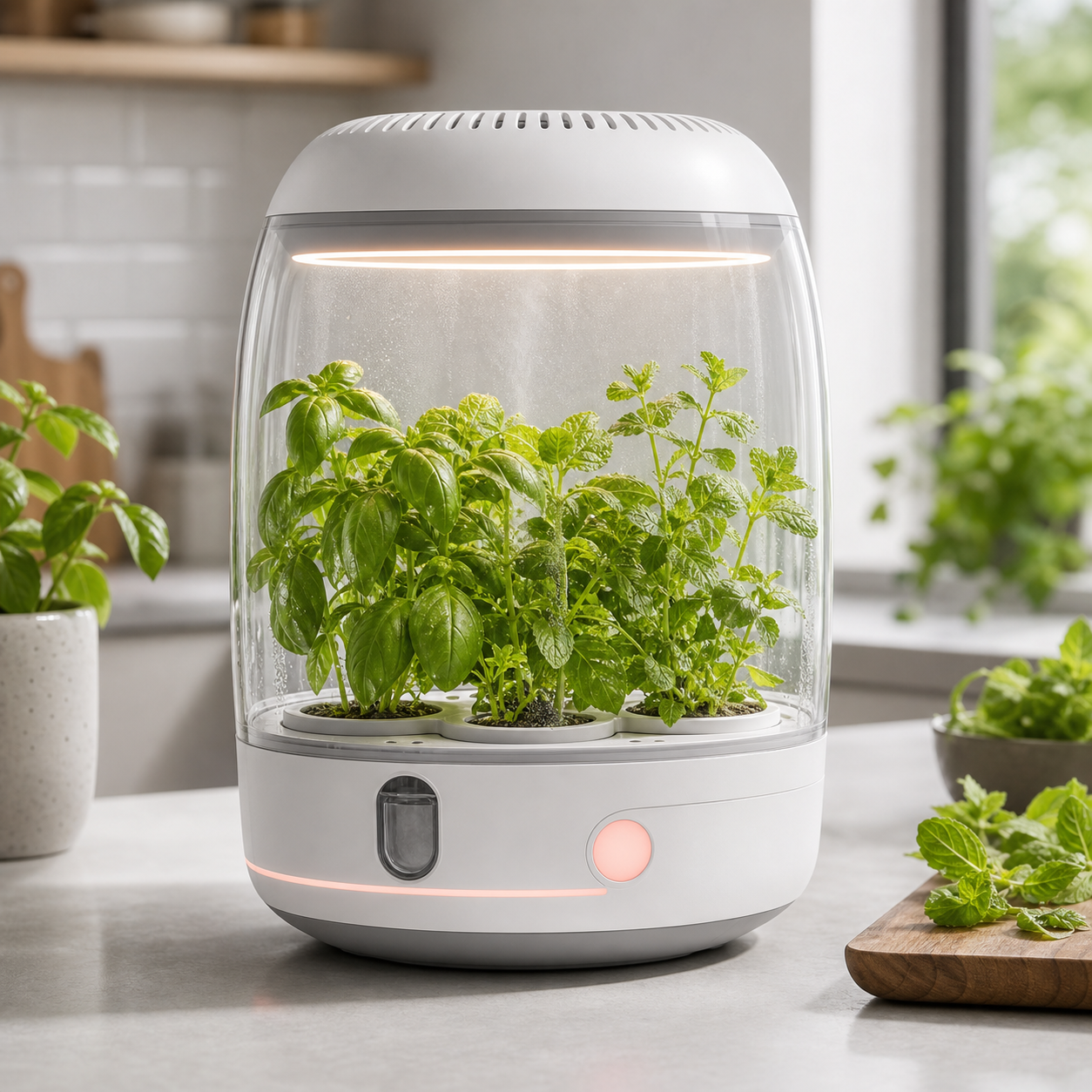
Product photos often show mature herbs under perfect light. Customers receive seeds or seedlings, an electrical device and a care routine. A good sourcing brief must describe that handover honestly, including what is in the first box and what they will need to buy later.
Map Every Consumable in the First Crop
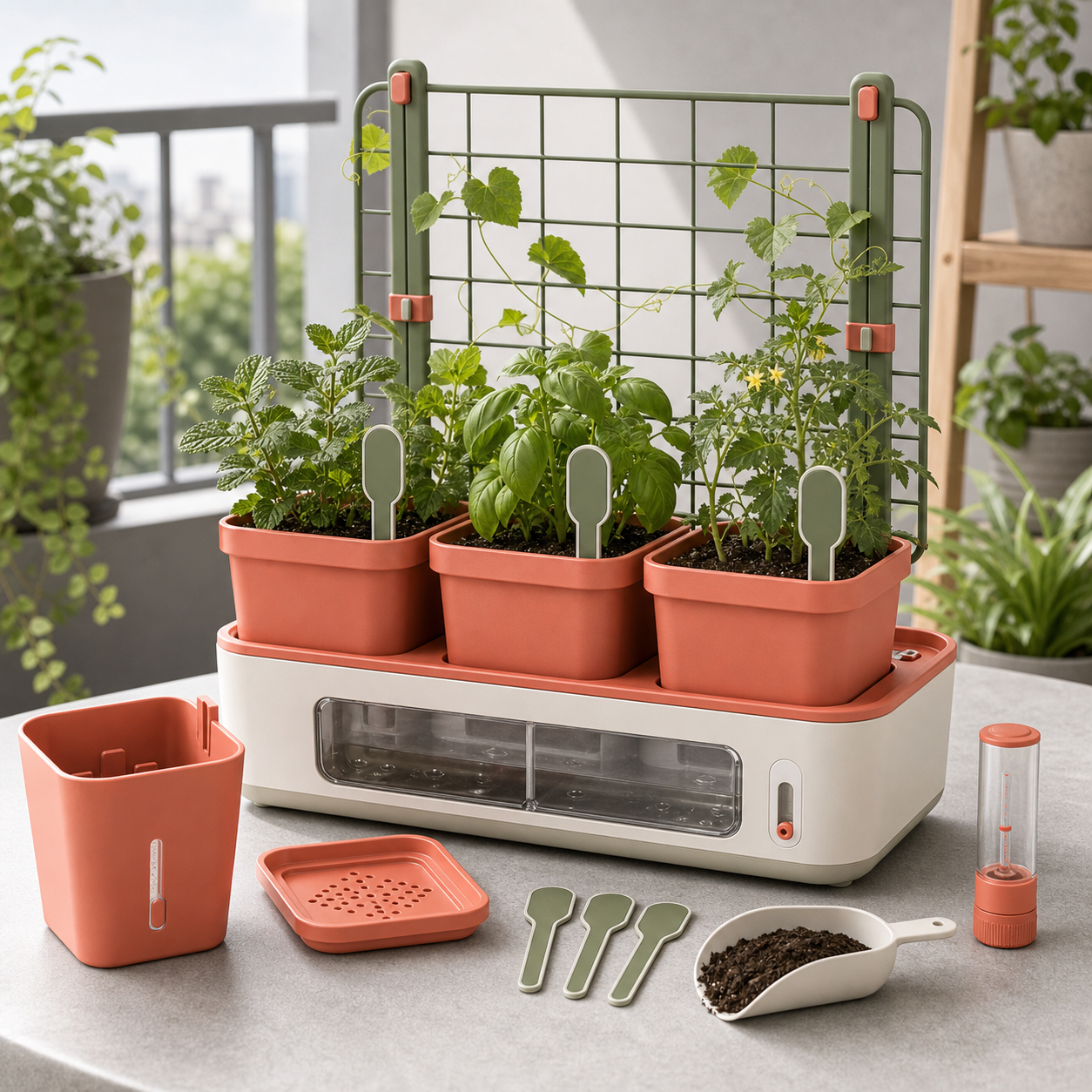
Create a bill of materials for seeds, pods, baskets, growing medium, nutrient concentrate if supplied, plant labels, water cap and any water-level indicator. For each, identify the SKU, compatible device revision, quantity per crop and storage conditions. A quote for “six pods included” is incomplete if the retail photograph shows larger plants or varieties that are not in the shipped pack.
Ask whether the system accepts generic seeds or only proprietary cartridges. A proprietary pod can simplify setup but creates a long-term supply dependency; an open basket system may offer flexibility but require more user instruction. Neither is automatically preferable. Choose according to retailer support capacity and customer expectations, then make the limitation clear before purchase.
Compare the cost of one finished garden with the cost of several replenishment cycles using documented assumptions. Include international shipping for refill packs and whether seeds or nutrient materials face import restrictions in each destination. A low device price does not help if replenishment is unavailable where the customer lives.
Separate Plant Requirements from Device Claims
Different herbs need different light, water, space and time. The Royal Horticultural Society's herb-growing guidance explains general container-growing needs; it does not certify a countertop appliance or promise a fixed harvest date. A buyer should choose realistic species for the supplied pot size and light arrangement, and avoid a product image implying that every herb performs equally well under one setting.
Ask the supplier what the lamp emits, how far it sits from the plants and whether height is adjustable as crops grow. A bright-looking LED is not enough information for a plant-growth claim. Compare actual plant development under documented conditions if the campaign will mention harvest performance. A short sample with purchased mature plants is not a grow trial.
Water handling deserves its own review. Mark the reservoir capacity, fill line, path to the roots and overflow behavior. A user should be able to refill without wetting electrical contacts or flooding a countertop. Record what happens if the reservoir is nearly empty or the unit is unplugged; do not promise automated care unless the actual system performs and signals it.
Design the Second-Cycle Reset
After one crop ends, a customer has to remove roots, clean baskets, inspect the water path and insert new growing medium. Rehearse that sequence with a used sample or a deliberately simulated residue, following the supplier's approved cleaning method. Identify surfaces the owner can reach and any tube or pump that requires a professional service method.
Do not tell consumers to disinfect the whole electrical base by immersion. Distinguish removable food-adjacent growing parts from the powered enclosure. Ask whether the supplier has approved cleaning agents and what parts must dry before reassembly. A replacement basket can be cheaper than a hard-to-clean built-in slot, but its availability should be secured before launch.
Check whether the empty unit can be stored compactly between uses. A counter appliance that needs a long dry-down and exposes loose parts may require a storage pouch or part tray. A first-use card should show not only planting but also harvest and restart. Retailers should budget for support through that complete cycle.
Validate Refill Fit and Ownership
Test refill pods from more than one production lot if possible. A minor change in basket rim, medium thickness or nutrient bottle cap can make accessories difficult to install. Assign part numbers and retain a compatibility matrix by device revision. Do not assure a customer that “any pod” will fit unless the mechanical and horticultural requirements have been assessed.
If a supplier controls seed variety, ask how substitutions will be approved. Changing from a compact herb to a larger species may alter light spacing, crop duration, packaging images and instructions. Even when a new seed is agronomically sound, the retail claim may no longer be accurate. Treat refill assortment as a controlled product line, not a throwaway add-on.
Clarify who owns artwork and the support page for replenishment. A QR code printed on a device should lead to a maintained page with the right refill SKU, not a temporary marketplace listing. Support needs to know the exact garden revision before recommending parts.
Mid-Article CTA
Send Your Requirements with market, countertop space, seed types, preferred refill model and planned quantity. Email info@kudbo.com to discuss a model-specific device and consumable supply plan. Include the languages needed for planting and cleaning instructions.
Check Packaging and Claims as One System
A hero image showing a lush crop can imply an effortless outcome. Ask what stage of growth the photograph depicts and whether the retail box clearly says seeds must grow over time. Avoid guaranteed yields, “no maintenance” promises and environmental claims about home-growing without appropriate evidence. The product can still be compelling when described as a convenient structured growing kit.
List every included consumable and quantity on the pack. Protect seeds and medium from moisture during shipment, and review any destination-specific labeling with qualified advisers. If a nutrient is included, the importer must understand its composition and market requirements. Do not treat all parts as ordinary plastic accessories.
Factory testing can confirm lamp, timer, pump if present, water-level indicator and basic assembly. Shipment inspection can compare pod count, labels and pack-out. Neither proves plant growth over weeks. Keep any actual cultivation trial separate with species, light, water and environmental conditions recorded.
Compare the Range with a Simpler Planter
A self-watering planter may have fewer consumables and less electrical support; a lit countertop garden may fit a shaded kitchen and offer a more guided experience. Compare the actual customer need. If the market values low-cost, flexible planting, the simpler design may win. If the shopper accepts refill purchases in exchange for a supported growing workflow, the powered model may be appropriate.
Do not compare only first-box price. Include replenishment, service, support and storage in a common ownership view. A differentiated product line can offer both, but the product pages should explain their different operating requirements rather than using the same lush-herb photograph for two mechanisms.
| Buyer decision | Evidence needed | Second-cycle question |
|---|---|---|
| Pod system | Fit and SKU record | Can the owner reorder locally? |
| Lamp | Model-specific output and test | Can it support intended herbs? |
| Cleaning | Approved component method | Can roots and residue be removed? |
| Retail claim | Defined growth conditions | Are photos representative? |
Test the Second Crop, Not Only the First
First-use success can depend heavily on bundled pods, fresh packaging and an attentive demonstrator. A retail buyer should also run a reset trial: remove roots, clean the reservoir, fit a replacement pod, refill water and begin another cycle. Note how long the reset takes and which pieces are discarded. A product that looks simple on day one may require a hard-to-find proprietary insert a month later.
Build a cost-per-cycle worksheet for the quoted assortment. Include pods or seeds, nutrient if required, replacement wicks or baskets, cleaning supplies and shipping of refills. Show the assumptions and do not claim a fixed harvest value; plant growth varies with light, seed quality, temperature and care. Compare with an ordinary self-watering planter only where the buyer is choosing between two distinct retail propositions, not as proof that one produces more herbs.
Make the refill route clear on the product page. List compatible part numbers and whether a customer can use ordinary seeds or must purchase a branded pod. If a light or pump needs replacement, ask for a service policy. A reliable refill and support plan often matters more to repeat retail sales than another decorative feature on the countertop unit.
Model a Refill Program with Explicit Assumptions
Build a worksheet for one household and one retailer. For the household, calculate how many pod sets they are likely to buy in a year based on the planned growing cycle, then include shipping and any nutrient or wick pack. For the retailer, list minimum order quantity, shelf life of seeds, storage conditions and the ability to replenish a discontinued color or crop. Do not turn that worksheet into a universal cost-per-harvest claim. Germination and yield vary, so publish a scenario with assumptions or keep it internal.
Ask whether an unused pod can be stored in an ordinary retail environment. If it contains seeds, identify date coding and packaging that protects the intended germination period. A visually identical plastic pod without viable seed is not a customer-ready refill. At shipment inspection, count and identify the refill packs as carefully as the electronic base. The first crop might ship perfectly while the replenishment carton contains a wrong pod revision.
For a private-label launch, decide who owns the refill customer relationship. If the retailer expects recurring sales, the SKU and barcode strategy should allow it to sell pod packs separately. If the supplier changes the basket geometry, announce the compatibility break and maintain an older part route where practical. This can determine whether the product remains a useful home-garden system after the initial gift season.
Align Plant Photography with Realistic Growth
If the seller photographs a lush herb canopy, document the plant variety, age, lighting and care behind that image. A display model grown under a professional lamp should not imply identical results on a dim kitchen counter. Buyers can still use attractive real photography, but caption it as an example of a particular growing setup. The Royal Horticultural Society's container herb guidance is a practical external reference for crop needs; it does not certify a specific electronic garden.
For a retailer, a refill product page should explain which seeds are included, what the customer supplies and whether nutrients are optional or essential. A “grow anything” headline may create support problems if the reservoir, light or pod size is suitable only for certain plants. Decide the supported crop list before printing starter cards. If a new seed variety is added later, document its own trial rather than assuming it behaves like basil.
Keep digital mockups distinct from the actual kit. The unboxing image should show precisely the initial pod count and any fill accessories. Trust at first use makes customers more likely to purchase the next refill.
Frequently Asked Questions
Can any seed pod fit a countertop herb garden?
No such assumption is safe. Basket geometry, medium, water contact and plant spacing vary. Request a compatibility list for the exact device and test refill lots. If generic seeds can be used, tell customers what growing medium and preparation are required.
Does a grow light guarantee a harvest?
No. Plant species, seed quality, light exposure, water, nutrients, temperature and user care all matter. A buyer should test the intended combination under stated conditions before publishing performance claims. A photo of a mature purchased plant is not a cultivation result.
What is included in a typical refill cost?
The cost model may include seeds, medium, baskets, nutrients, freight and support. The actual mix depends on the product. Quote each included and optional item rather than using a single ambiguous “pod price.” Forecast availability for the planned sales period.
Should the electrical base be washed between crops?
Follow the actual manufacturer's instructions. Removable growing parts and the powered base usually have different care limits. Do not immerse an electrical enclosure or suggest chemical treatment without model-specific approval. Make the reset sequence clear before retail launch.
Can a factory test confirm plant growth?
A routine factory check can verify assembly, lamp and pump operation under a defined procedure. Plant growth requires a separate longer observation with recorded species and conditions. Keep the claims tied to the evidence actually collected.
Conclusion
A countertop garden is a recurring-use program, not just a one-time appliance. Approve the refill ecosystem, realistic plant scope and restart process alongside the initial hardware. Customers are more likely to understand the offer when the second growing cycle is visible from the first box.
Final CTA
For related sourcing questions, browse all buyer guides or the Product Sourcing collection.
Explore the current KudBo product catalog when comparing this guide with available SKUs.
Contact KudBo or email info@kudbo.com with your market, quantity and refill expectations. KudBo can help coordinate a sample and a controlled device-plus-consumables brief for your buying team.