Introduction
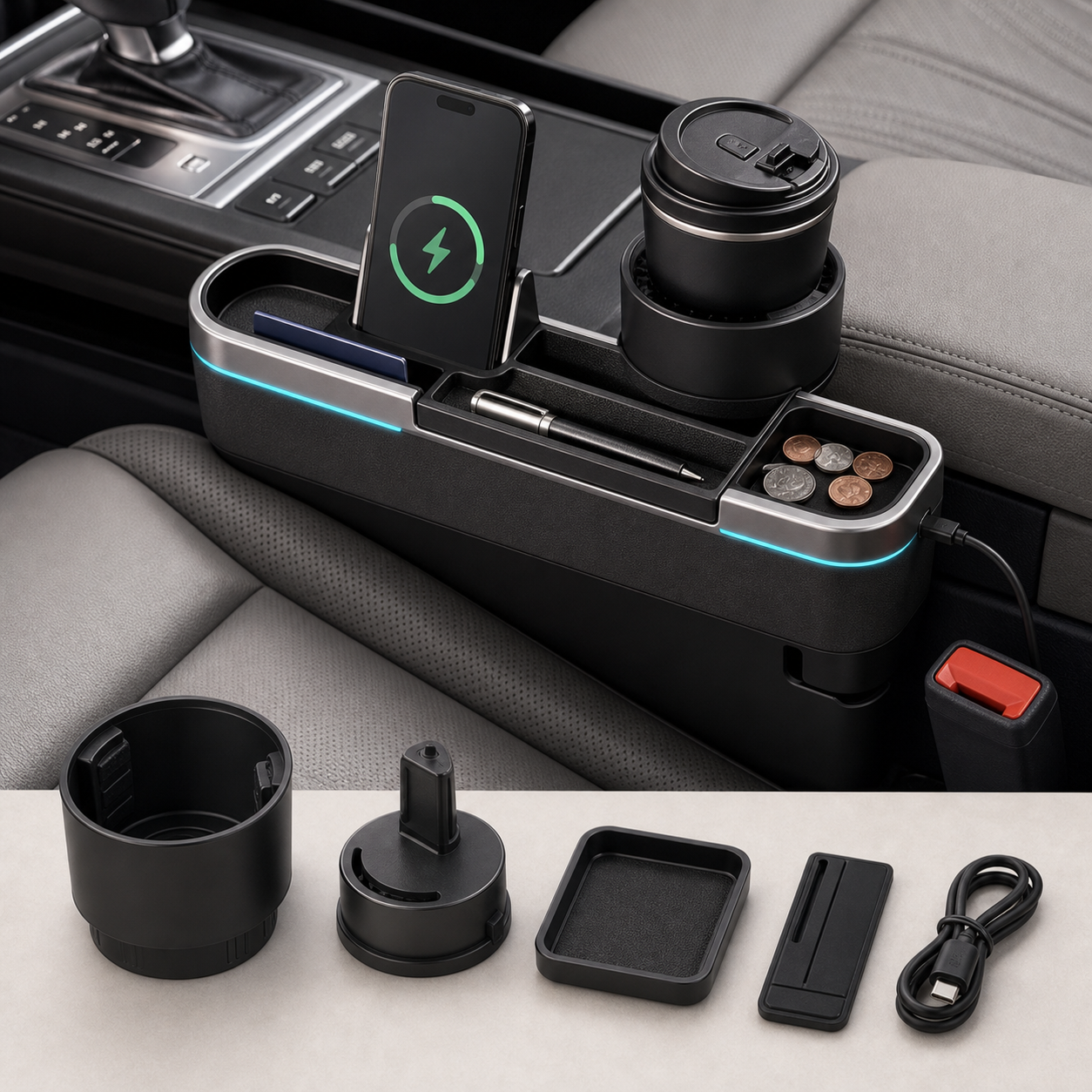
A seat-gap organizer is a moving-fit problem, because the seat itself moves. The KudBo car seat gap organizer is described as offering charging, storage and ambient lighting. Buyers should confirm which features belong to the quoted SKU and test it in target vehicle interiors. A product may fit perfectly in one seat position and bind a rail, buckle or cable when the driver adjusts the seat.
The fit-compatibility guide and fit-and-charging guide cover broader issues. This article focuses on seat travel and emergency access. The proposed checks are a buyer's sample protocol, not a vehicle-safety certification or a report of completed KudBo trials.
Define the Vehicle Sample Set
Choose vehicles that reflect the retailer's actual market, including different seat-to-console gaps and buckle positions. Record year, model and seat configuration for internal review. Do not claim every vehicle in a class fits because one test car does. Examine the gap with seat at its most forward and rearward positions and at a typical driving position. If the seat can change height or recline, include those motions.
Install the organizer exactly as instructed, then move the seat through the supported range while parked. Watch for rubbing against trim, buckles and seat controls. The organizer should not interfere with locking the seat position. Check whether it stays in place when the door is closed, a passenger enters or a small object is removed from storage. A loose product can create noise or fall into a footwell.
Measure usable storage with common items rather than filling the organizer to its geometric maximum. If it holds a device, does the occupant need to look down for long to retrieve it? NHTSA's distracted-driving resource explains why interactions during driving are risky. Product copy should encourage setup and retrieval while parked, not show a driver searching compartments in motion.
Keep Safety-Critical Areas Clear
Check seat belt buckles, seat controls, parking brake, gear selector and any emergency exit path. Do not route a charging cable across a seat rail or under a pedal. If a side airbag could deploy near the product, obtain vehicle-specific guidance and avoid that placement. The NHTSA air-bag information is broad safety context, not approval for an aftermarket organizer.
Do not give blanket statements about “airbag safe.” Vehicle interiors and deployment zones vary, and a product that is safe in one location may not be in another. The instructions should tell consumers to consult the vehicle manual and stop installation if a safety component is obstructed. Retail photos must reflect supported placements; cropping out the buckle to make the accessory look cleaner is not helpful.
If ambient lighting is included, inspect glare and brightness at night while the car is stationary. A subtle LED can be useful for locating items, but a bright source near the driver's eye line may distract. Confirm whether the light can be switched off. If charging is included, identify the electrical source and cable, then check heat and connector fit under the supplier's supported load.

Mid-Article CTA
Send Your Requirements with target vehicle models, seat-gap dimensions, charging expectations and market. Email info@kudbo.com for a variant-specific sample plan.
Review Installation and Removal
Have a first-time user install the product without a demonstration. If a gap filler, spacer or adjustable support is needed, verify it is included. Observe whether the customer is likely to force the organizer near a cable or seat belt anchor. A successful fit should not require a hidden modification to the vehicle. Record how the unit is removed and whether it leaves marks on leather, fabric or plastic trims.
Test seat movement after the product has carried realistic contents for several days in a controlled review. Contents can alter the shape and center of gravity. A container that felt snug when empty may bow outward after loading. Check seams, clips and any hinge or lid while opening the door. Define cleaning guidance for spilled drinks or crumbs; the organizer's electrical elements, if present, may need separate care.
At shipment inspection, compare dimensions, trim-contact surfaces, cable routing accessories, light and charging components, and printed vehicle-fit limitations with the approved sample. Keep a vehicle matrix with “tested fit,” “not tested” and “known incompatible” categories. This is more credible than a universal fit label and easier for customer support to use when answering returns.
When Not to Sell the Fit
A fit matrix is valuable partly because it identifies exclusions. If the product presses a belt buckle, touches a moving seat rail, blocks a control or requires a cable to cross a footwell, that vehicle configuration should be marked unsuitable. A retailer should not suggest a workaround that changes a safety component or asks the driver to ignore the interference. Removing an incompatible model from the public fit list is a responsible commercial decision, even if it narrows the immediate audience.
For vehicles with marginal clearance, confirm whether any included spacer or flexible filler is approved for that exact configuration. If the accessory shifts under a normal load, a shopper may not notice until a turn or braking event. A stationary test cannot prove crash safety, so avoid such claims. The website can show how the accessory sits when parked and how it is removed, but it should not depict a driver interacting with storage while the car moves.
An after-sales fit form should request vehicle model, year, seat side and a safe parked photograph of the installed area. That gives support enough context without asking for personal travel patterns. Group these reports by lot and shell revision. A small dimensional change in production can create a new incompatibility even if the previous model year list was accurate. Update the matrix when evidence changes.
Build a Vehicle-Fit Record Customers Can Use
An importer's internal fit record should be more detailed than a public “compatible with most cars” badge. For each test vehicle, record model year, seat configuration, console height, gap range as the seat moves, buckle location and any nearby electrical or safety feature. Photograph the product both empty and with a normal load. Note installation method and whether optional spacers were used. If a spacer is necessary, it must be included or clearly sold separately; a hidden workshop modification cannot support a retail fit claim.
Classify each vehicle result as “fits with full seat motion,” “fits only under stated limits,” “not suitable” or “not tested.” A product page can publish a simplified guide without exposing every internal measurement, but it should not convert untested vehicles into compatible ones. If a customer asks about a model that is not in the matrix, provide a measurement checklist and an honest uncertainty statement. This is more useful than a guarantee that becomes a return dispute.
During a controlled parked-vehicle trial, have a reviewer enter, adjust the seat, fasten and release the belt, access the parking brake and remove a stored item. Repeat on passenger and driver sides only if both are advertised. A design may work on one side but bring a cable into a footwell on the other. Record any interference immediately and stop that configuration. The trial must not include distracted operation while driving; suitability for a moving car is not established by a few stationary maneuvers.
Loading, Cleaning and Revisions
Put representative contents in the organizer, then move the seat again while parked. A full pocket can bulge into the buckle or push the unit toward a rail. If a phone stand is included, check screen visibility and whether it invites a driver to look down. If charging is offered, note the exact power input and cable route at each seat setting. Ambient lighting should have a clear off state and should not wash across the driver's eyes at night.
The buyer should define how to remove the organizer for cleaning. Crumbs and spills collect in narrow gaps; an accessory that can only be removed by tugging on a charging cable is poor service design. Check trim-contact pads after several install-remove cycles for marks or residue. Different leather, fabric and plastic finishes react differently, so avoid a universal “scratch-free” claim without representative testing and an appropriate method.
At shipment inspection, verify dimensions, spacers, charging components, light controls and printed compatibility wording against the approved sample. If a factory changes the outer shell or foam filler, update the fit matrix before the new batch goes live. Track customer returns by vehicle model and reason. A cluster of fit complaints in one model can justify a clear exclusion, while a cluster of charging complaints may point to a separate electrical issue. Data by failure type is more valuable than a single aggregate return rate.
A Vehicle-Specific Product Page
The installation instructions should include a final parked-vehicle check after any seat adjustment: verify the belt buckle remains accessible, the seat locks normally, and any cable stays clear of rails and controls. This is especially important when more than one driver uses the same vehicle and changes the seat position frequently. A fit that was acceptable for one driver may not remain acceptable for another. The retailer should advise removal when the required clearance cannot be maintained, not encourage the user to push the organizer deeper into a safety-critical gap.
The page should lead with a photograph showing the organizer beside the seat buckle and center-console controls, not a crop that conceals them. Provide dimensions and a simple fit guide. If a buyer has tested particular vehicles, state the model and year range carefully and explain that trims can differ. A “not tested” label is honest and allows the retailer to collect more information rather than guessing. An explicit exclusion for a known conflict is a service to shoppers.
Show the storage compartment both empty and with a modest real load. Overfilled photos can hide how the accessory presses into seat controls. If charging or lighting is included, show where the cable enters and exits. If those functions belong only to a premium variant, keep the base variant's images separate. A customer should know which features arrive in the box and which require an external power source or separate phone cable.
For after-sales support, prepare a safe parked-installation checklist. Ask customers to stop if the organizer interferes with a belt buckle, rail, control or airbag area. Do not advise modification of vehicle safety parts. If it does not fit, the appropriate outcome may be return or another product, not a forced installation. Capture model and fit issue to improve future guidance.
Wholesale buyers can use these field observations to refine size variants. A smaller shell may solve a narrow-console fit while sacrificing capacity. That trade-off should be tested with normal contents and complete seat motion, then described clearly in the catalog. Compatibility data is a maintained asset, not a one-time marketing slogan.
Frequently Asked Questions
Will a seat-gap organizer fit every car?
No. Gap width, console height, buckle position and seat motion vary. Test representative vehicles and publish only supported fit statements.
Can the seat still move after installation?
It should be checked across the full intended adjustment range while parked, with the organizer loaded and any cable connected. Stop using it if it binds a rail or control.
Is it safe near a side airbag?
Do not assume so. Follow vehicle-specific guidance and avoid deployment zones. General airbag information does not certify an aftermarket accessory.
Can users charge a phone from the organizer?
Only if the quoted version includes an electrical function. Confirm connector, input source, cable routing and supported power; a cable channel alone is not a charger.
How should fit be represented online?
Use an explicit tested vehicle matrix or dimensional guidance, clear limitations and honest photos with safety-critical areas visible.
Conclusion
Seat-gap storage is worthwhile only when it remains clear of moving and safety-critical parts. A representative parked-vehicle fit review, cable plan and realistic load test should precede broad catalog claims. Clear compatibility guidance can prevent avoidable returns and unsafe placement.
Final CTA
Contact KudBo at info@kudbo.com with target vehicles and kit needs. Compare KudBo products, buyer articles and the product sourcing collection before placing a pilot order.