Introduction
A car emergency kit is only as useful as its condition when the driver needs it, which may be long after purchase. Batteries lose charge, medicines or first-aid contents may have dates, water containers can be damaged by heat, and a seasonal clothing item may no longer fit the trip. A buyer should plan inspection and replenishment as part of the retail offer rather than selling a sealed bag with an impressive photo.
The KudBo car emergency kit can be built for different destinations, vehicles and channels. A previous guide addresses component completeness and packaging. This article concentrates on what changes after the first inventory check: storage, seasonal relevance and a way for the owner to refresh the kit. It is not a guarantee of survival or a substitute for roadside assistance, vehicle maintenance or official advice.
The NHTSA's summer driving guidance recommends preparing a roadside kit and lists example contents. It does not approve a specific private-label assortment. The seller must choose and verify items appropriate to the intended market, season and vehicle, then describe the actual pack accurately.
Define the Kit's Job and Boundaries
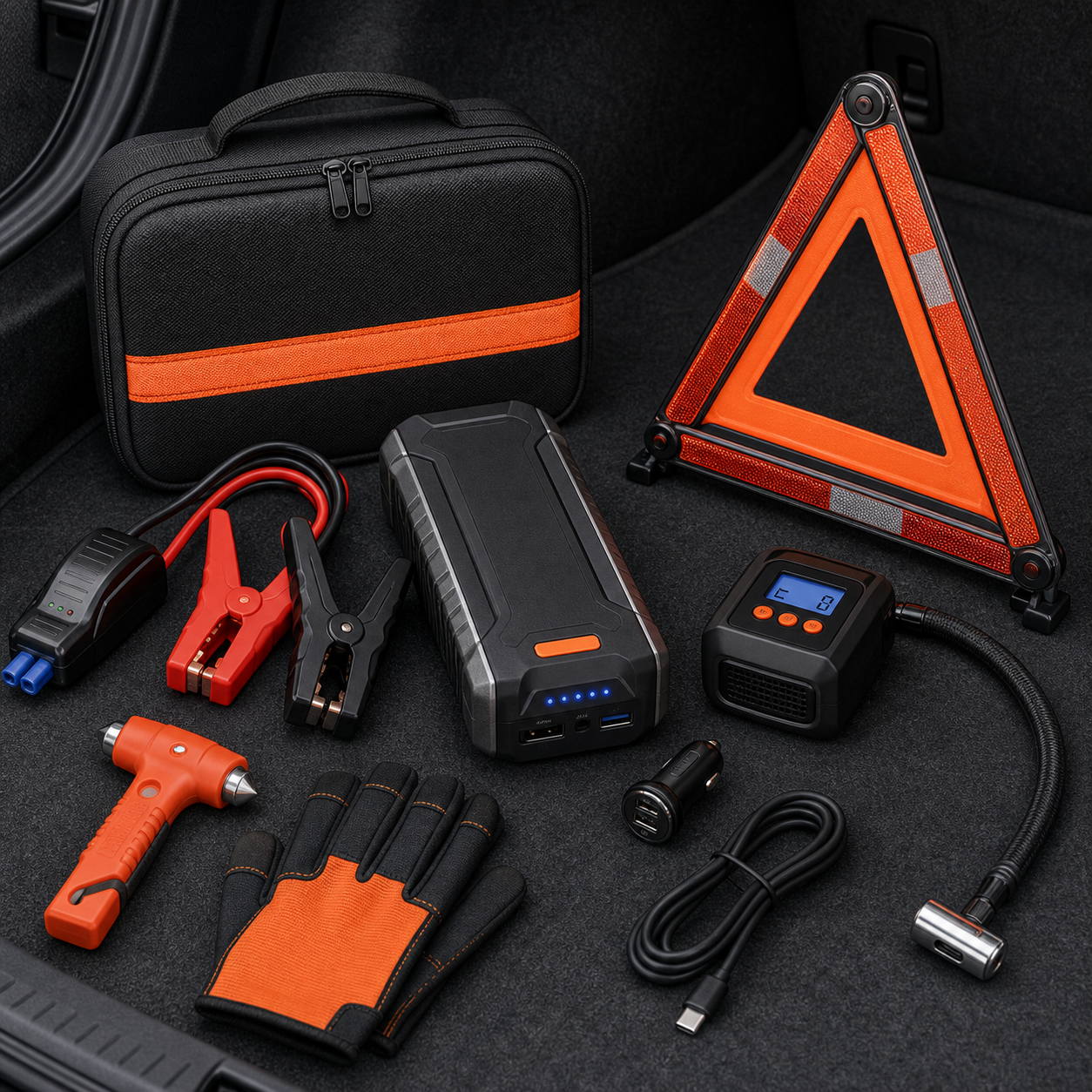
Is the kit for visibility while awaiting help, minor roadside tasks, first-aid supplies or a multi-purpose family trip? Those are different scopes. A reflective item and flashlight may serve a visibility brief; jumper cables, jacks or tools introduce additional use instructions and vehicle compatibility questions. Do not put a product in the bag simply because a competitor photo shows it.
Write an item-by-item bill of materials with quantity, exact model, supplier, revision, storage conditions and any replacement date. Identify regulated, first-aid or electrical items for specialist review. A general “18-piece kit” count can obscure whether five pieces are single-use wipes. A customer should see what the package contains and what it does not provide.
Distinguish an emergency kit from emergency training. The product can help a driver prepare but cannot teach a safe roadside decision. The instructions should direct users to seek help when conditions are unsafe and to follow local road and vehicle guidance. Avoid depicting a person using tools beside moving traffic as an ordinary use case.
Build a Seasonal and Climate Matrix
A summer kit may prioritize drinking water, shade planning and heat-aware storage; a winter kit may include warm layers or cold-weather traction considerations. The correct items depend on geography and vehicle. Rather than inventing one universal pack, list the target market, season and likely storage temperature. Ask whether components tolerate a parked vehicle's actual conditions.
NHTSA emphasizes preparing a vehicle and carrying supplies for the trip. It is sensible for the product card to prompt owners to review weather, route and vehicle-specific needs before departure. A kit marketed in multiple regions can have a base pack plus clearly optional additions. Do not imply that every climate module is included in a single quoted SKU.
For a fleet or corporate-gift program, decide who refreshes the items. If the recipient receives a closed kit with no inventory card, the operator may not know when to replace a flashlight cell or expired supply. An annual or pre-trip review reminder is a planning suggestion, not a product claim about component shelf life.
Inspect Dates Without Inventing a Universal Expiry
Not every kit component expires in the same way. A first-aid item may have a labelled date; a flashlight may have a service recommendation; a fabric glove may have no date but can still be damaged. Read each item's actual marking and supplier documentation. Record the earliest relevant date for the packed kit where useful, but do not print an overall expiration date as if every item shares one.
At factory pack-out, verify date-coded items are within an agreed remaining-life window for the destination and distribution timeline. Document the method and buyer approval. Shipment inspection should sample actual component dates and compare them with the signed bill of materials. A photo of the correct component type is insufficient if the shipment contains an older dated lot.
If a component is substituted, review dimensions, use instructions, market suitability and dates. Similar-looking flashlights may use different battery types; similar first-aid pouches may contain different contents. Every approved substitution should update the inventory card, item photographs and support file before the kit ships.
Test Power Components After Storage
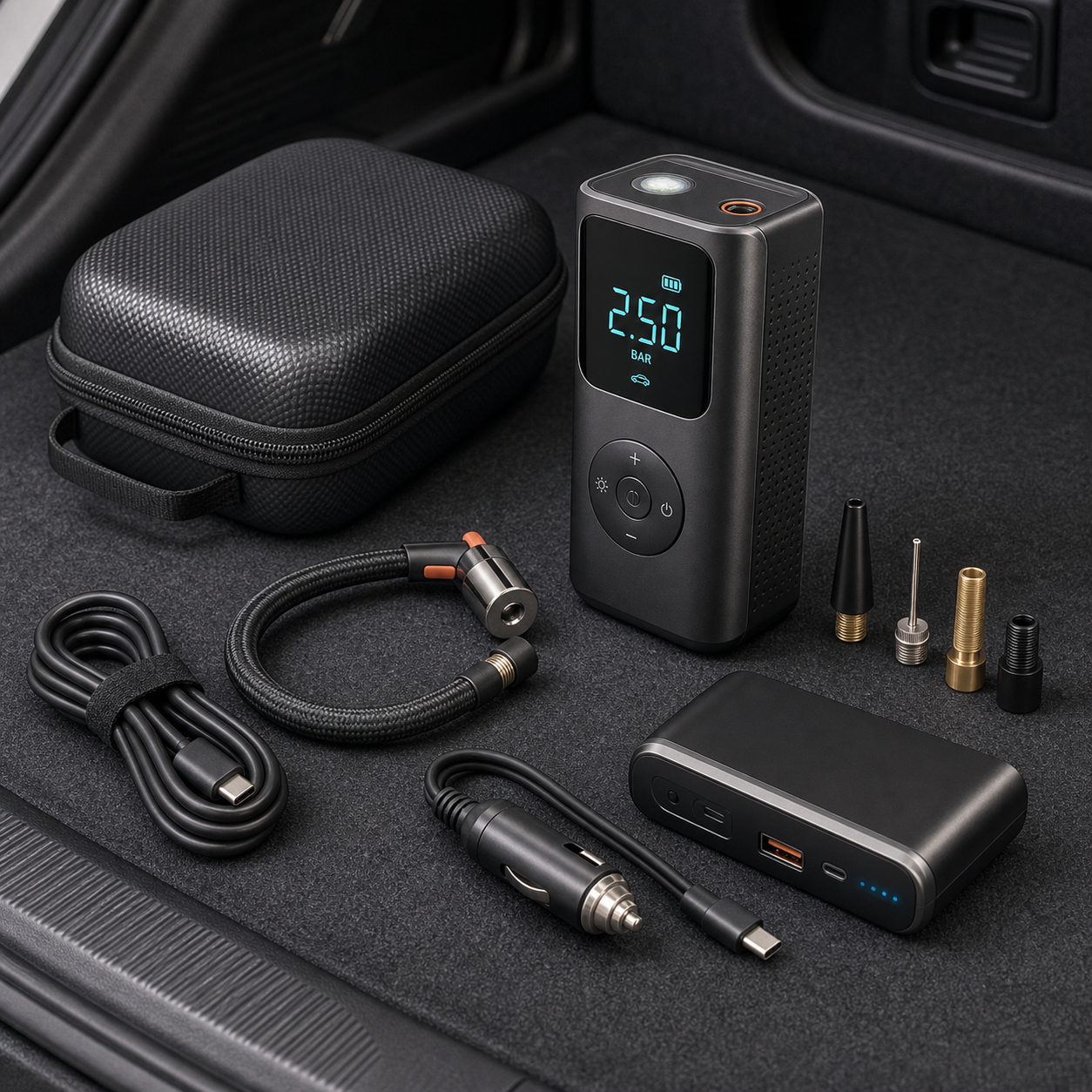
If a flashlight or rechargeable tool is included, define a storage and wake-up check. Does the kit isolate a battery to prevent accidental activation? Is the charger or replacement cell included, and does the owner understand how to check it before a trip? A fully charged engineering sample does not show what a customer will experience months after receiving a retail pack.
For lithium-powered additions, ask the logistics partner to review transport and packaging requirements for the exact battery arrangement. Avoid assuming that a power bank, tire inflator and flashlight share the same rules. If the kit is intended as a gift for airline travelers, passenger carriage is a different question from ocean or air cargo shipment and must be addressed separately.
Record a defined routine function check at the factory. The result should state which accessory was checked, how, and the acceptance threshold. A quick flash of a light does not establish a long battery life. A retailer may prefer a simpler product with accessible replacement cells if the support plan is clear.
Mid-Article CTA
Send Your Requirements with the destination country, vehicle type, season, quantities and desired item list. Email info@kudbo.com for a model-specific pack-out and date-control discussion. Indicate whether the kit is for retail, fleet issue or gifting.
Make the Inventory Card Useful to the Owner
Print an item list that matches the actual kit, with a simple check box for periodic review and space for replacing date-sensitive components. Explain how to locate each item in the bag; in poor light a pile of loose parts is less useful than a consistent layout. If the kit includes a reflective item, keep it accessible without emptying the whole pack.
The card should avoid giving hazardous roadside instructions outside the product's competence. Tell drivers to follow official guidance, assess surroundings and call appropriate assistance. If a tool needs detailed instructions, include the manufacturer's approved manual rather than rewriting a risky procedure in a tiny graphic.
Ask a new user to unpack, identify each item and repack it using only the printed material. Note missing descriptions or parts that do not fit the labeled pockets. A pack-out that succeeds only when a trained worker folds everything in a special order will create retail frustration.
Plan Replenishment and Returns
Decide whether the retailer will sell refill modules, direct customers to equivalent approved components or replace the whole kit when a part is missing. A broad promise of “lifetime kit readiness” is not meaningful without a replenishment route. Quote spare item availability by revision and keep any substitution controlled.
Check the carrying bag itself: closure, handle, compartment labels and vehicle-storage fit. A kit that shifts around the trunk may damage parts or be hard to find. Do not claim a bag fits every vehicle; test the intended storage scenarios with representative dimensions and disclose limitations.
After shipment, complaints about missing or expired parts should be traceable to production lot and supplier batch. Keep the carton code, pack-out record and component lot where relevant. This protects both buyer and customer: the response can address the affected units instead of guessing across the entire program.
| Review area | Purchase control | Owner-facing step |
|---|---|---|
| Contents | Exact bill of materials | Check inventory before trips |
| Dates | Remaining-life rule for dated items | Replace when marked date arrives |
| Power | Storage isolation and function check | Test flashlight or tool |
| Climate | Market and season module | Add locally appropriate items |
Build a Calendar the Owner Can Follow
At purchase, the owner should receive a component list with dates and a small space to record the last inspection. Schedule a review before the local winter and summer seasons and after a kit has been used. The exact cadence depends on component instructions, climate and vehicle use. A blanket “replace the entire kit every year” wastes usable items; a blanket “keep it forever” misses batteries, consumables and changing family needs.
Treat power items separately. A jump starter, flashlight or inflator may have its own storage and charging instructions. Test the recommended check process using the unit packed in the kit, then print only the steps the owner can safely perform. A shipping inspector can confirm presence and basic power-on under a defined method; it cannot guarantee a device will work after years in a hot trunk. Packaging should make that limitation visible.
For fleet customers, consider a serialized refill record rather than a single bulk label. Each vehicle's kit can have a different use history. Define how missing components are reported and whether replacement packs can be purchased without buying an entire case. A professional buyer will value an honest maintenance path over an inflated “all situations covered” claim.
Define the Kit's Limits in Plain Language
An emergency kit supports preparation; it does not make every roadside situation safe to handle personally. The instruction should identify when a driver should stay with the vehicle, move to a safer location or call professional help, subject to local advice and conditions. Do not suggest that an included tool can repair every tire or jump-start every vehicle. Each powered component needs its own compatibility and safe-use guidance.
The buyer should also decide whether the kit is a sealed retail item or a configurable fleet pack. A sealed pack needs clear content and replacement information. A fleet pack benefits from a checklist that a supervisor can update after use. In either case, ask for lot identification on components with limited shelf life. The final inspection can then flag an unexpectedly old item before a carton reaches a warehouse.
Private-label artwork should leave room for a realistic seasonal note. A winter photo with gloves or traction aids may imply those parts are included even if the pack contains only an inflator and light. Show actual contents or mark props. Precise presentation is a better conversion tool than an exaggerated “complete survival kit” headline.
Test Inventory Clarity with a Simulated Refill
Open a production-intent kit and remove one ordinary component, such as a flashlight or reflective item. Ask someone who has not seen the original pack to use the inventory card to identify what is missing and where a replacement would go. If the card is vague, update it before the first bulk order. A photo can help, but a text list should still identify model or size where compatibility matters.
Keep refill parts by purpose. A universal replacement “emergency accessory” is not enough for a powered inflator nozzle or a specific jump-starter cable. If the kit contains consumables, the retailer should know whether customers can buy one refill without discarding a good case. For fleet buyers, ask whether a kit can be sealed and marked after inspection so a driver notices a missing item before a trip.
Shipment inspection should sample complete packed kits, not only empty cases. Check each component against the approved bill of materials, date codes where applicable and language of instructions. A neat case exterior does not prove that the right power cable, adapter or seasonal insert is inside.
The Ready.gov emergency-kit guidance is a general preparedness reference, not a bill of materials for a vehicle-specific product. Use it to prompt a household discussion about local hazards and personal needs, then make the actual car-kit contents explicit on the retail box.
Frequently Asked Questions
Does an emergency kit have one expiry date?
Usually its contents have different aging and replacement rules. Some items are date-marked, others need condition checks. Review each component, record any relevant minimum remaining life and tell the owner how to refresh the kit. Avoid a single universal date that hides item-level differences.
Is a car kit the same for summer and winter?
No. Destination climate, vehicle and trip length change the useful contents. A base pack can be supplemented with clearly identified seasonal items. The quotation and product page should distinguish included components from suggestions the driver must provide separately.
Can one factory photo prove every set is complete?
No. A photo of a reference kit helps inspection, but sampled production units must be compared against a controlled item list and relevant date marks. Record lot details and substitutions. A checklist is more reliable than simply counting visible objects in a styled image.
Should a retailer include a tire inflator by default?
Only if the product brief, vehicle compatibility, power arrangement and target price support it. A tire inflator introduces separate instructions and service requirements. Do not picture one inside the kit if it is not in the quoted SKU.
Does the kit replace professional roadside help?
No. A kit provides selected supplies for defined situations. Road conditions, traffic, weather and vehicle faults may require emergency or professional assistance. Keep retail copy and first-use instructions within that scope.
Conclusion
A car emergency kit should leave the factory with a precise inventory and reach the customer with a plan for inspection and renewal. Date control, power readiness, climate fit and honest instructions are the real value after the first unboxing.
Final CTA
For related sourcing questions, browse all buyer guides or the Product Sourcing collection.
Explore the current KudBo product catalog when comparing this guide with available SKUs.
Contact KudBo or email info@kudbo.com with market, quantity and proposed components. KudBo can help prepare a controlled kit bill of materials and seasonal handover brief for your channel.