Introduction
An AI meeting recorder is ready for enterprise use only when recording permission, account ownership, access, retention and deletion are defined alongside transcript quality. A convenient capture button does not establish that the organization can lawfully record every meeting or control all copies of the resulting data.
Procurement teams should therefore evaluate a small, controlled workflow before a broad rollout. The product may be useful for a supported note-taking task while still being unsuitable for confidential meetings, restricted devices or a required language. These boundaries should be resolved before staff begin recording real customer discussions.
This AI meeting recorder enterprise onboarding guide supports review of an AI meeting note button. It proposes a pilot, not completed KudBo enterprise projects or measured transcription accuracy. The exact model’s capabilities and service terms need confirmation. Privacy, employment and recording requirements vary; obtain appropriate legal and security review for the actual deployment.
Define the Business Recording Permission Process
Identify which meetings may be recorded, who approves recording and how participants receive the relevant information. Do not assume that device ownership or a visible button provides permission. Internal policy and applicable requirements should be reviewed before the pilot involves real people or sensitive material.
Use a clearly authorized staged session with fictional content for initial evaluation. Record the permitted purpose and avoid unnecessary personal data. A demonstration does not need customer names, confidential contracts or actual staff discussions to reveal setup and transcript-workflow issues.
The ICO’s data-protection principles provide a relevant framework where applicable. They are not blanket approval to record and do not resolve every jurisdiction’s rules. The organization must determine the appropriate basis, notices and responsibilities for its situation.
Establish AI Note Device Account Ownership
Ask whether the device links to a personal account, an organizational account or another service arrangement. Identify who controls access if the employee leaves or the hardware changes hands. A device owned by the company can still generate records in an account the company cannot administer.
Review administrator capabilities, authentication, device reset and transfer. Do not infer enterprise controls from a professional-looking app interface. Request actual documentation and evaluate the functions relevant to the buyer. If a required control is absent, keep it unresolved rather than assuming a future update will provide it.
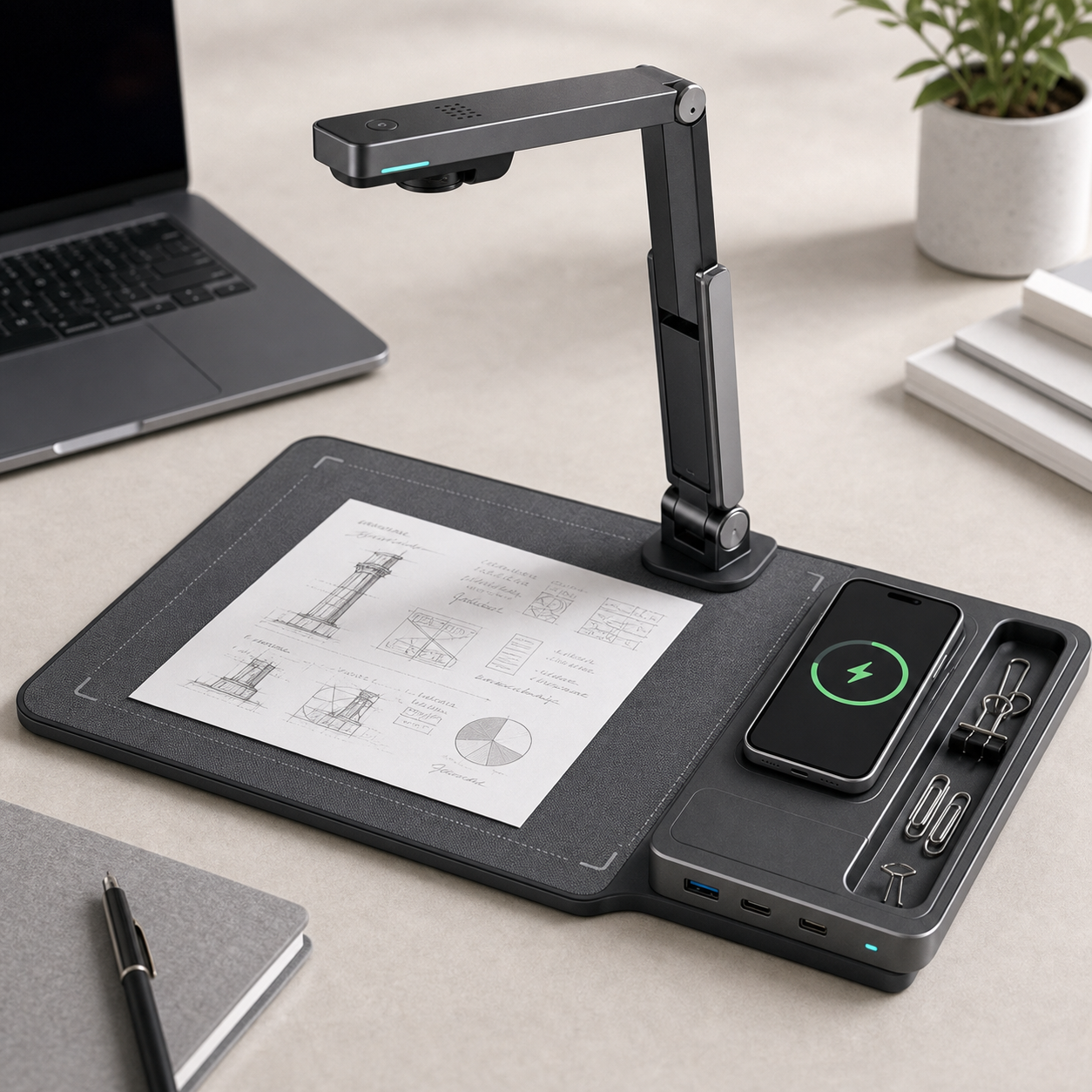
For a related desk note scanner mat, data capture and transfer may follow a different path. Similar note-taking labels do not establish the same account, cloud or retention behavior. Each device should have its own documented workflow.
Map the Data Before Testing Accuracy
Identify where audio is captured, where it is stored, where transcription occurs and where summaries or exports are sent. Local recording and remote processing are different stages. Ask which service providers are involved and what the current terms state for the exact product and plan.
Do not claim local-only processing unless the evidence covers the entire workflow. A device storing an initial file locally may later upload it. Likewise, a transcript export can create additional copies outside the app. The data map should include administrator access and relevant downstream systems.
Use fictional files to evaluate sharing, export and deletion. Do not expose real customer information merely to make the trial feel authentic. The purpose is to establish the supported process and identify gaps before sensitive use, not to demonstrate that the organization already has a compliant deployment.
Plan a Recorder Language Acceptance Test
Select representative language conditions for the business: supported language, speaking style, terminology and meeting arrangement. Ask which languages the supplier actually supports and what limitations apply. Do not infer equal performance across all languages from one impressive English demonstration.
Create an authorized reference script or staged conversation with fictional names and terms. Define the outcomes that matter: usable notes, correct action attribution or accurate capture of specified details. A transcript can be readable while still making an important number or name wrong.
Keep errors visible. Distinguish omitted content, wrong words, speaker confusion and summary interpretation. Do not invent an accuracy percentage without an agreed reference, scoring method and sufficient scope. A small pilot can guide a purchase, but it is not a universal benchmark for every meeting and acoustic environment.
Treat the Summary as a Separate Output
An AI summary can add interpretation beyond the transcript. Review whether it preserves qualifications, identifies uncertainty and avoids creating decisions that were not made. A grammatically polished paragraph is not proof of correctness. Important outputs should remain subject to appropriate human review.
For an enterprise pilot, define how staff check the original source before using a summary in a customer communication or formal record. Do not claim that automation eliminates verification. The product’s supported note-taking role can be useful without promising error-free decision records.
If the service changes models or processing behavior, ask how the change is communicated. A result from one software version may not establish identical output later. Keep pilot date, device revision and relevant service information in the record.
Build an Enterprise Acceptance Matrix
| Area | Questions to answer | Approval boundary |
|---|---|---|
| Permission | Which sessions and participants are authorized? | Device ownership is not recording permission |
| Account | Who administers access and transfer? | Personal and enterprise control differ |
| Data path | Where do audio and derived files go? | Initial local storage is not local-only processing |
| Language | What reference task was assessed? | One trial is not universal accuracy |
| Retention | Which files and copies are covered? | App settings may not control exports |
| Deletion | What can be verified and documented? | A disappearing screen entry is not every-system proof |
Use observed, documented, unresolved and outside scope labels. A simple passed badge can hide an unresolved legal or account-control question. The pilot should produce a decision record, not an impression that every issue is solved because the capture button works.
Mid-Article CTA
Send Your Requirements with your language, account-control, deployment and quantity brief. Email info@kudbo.com to discuss a model-specific documentation and sample request before a controlled pilot.
Define the Meeting Transcript Retention Workflow
Set the purpose and retention approach through the organization’s appropriate review. Identify audio, transcript, summary, shared link and exported copy separately. Deleting one item may not remove the others. Do not assume a device setting controls every downstream system.
ICO storage-limitation guidance explains the relevant principle where applicable. It does not prescribe one universal retention period for every business meeting. The organization should justify and implement its own appropriate schedule with specialist advice.
Ask what the service can configure and what requires administrative action elsewhere. Record limitations rather than promising automatic compliance. Backup handling, legal holds and exported files may require separate policies and evidence. Do not invent provider behavior that the current terms do not establish.
Perform Meeting Recorder Deletion Verification
Use a fictional test file and an approved process. Observe what happens to the audio, transcript, summary, links and relevant account entries after the supported deletion action. Record what the user interface shows and what documentation says about other copies. Those are different evidence levels.
A file disappearing from an app does not prove immediate erasure from every service or backup. Request the provider’s actual deletion scope and timing where available. If the buyer requires stronger assurance than the service provides, keep the requirement unresolved or select another system.
Test ownership transfer separately. A returned or reassigned device should not expose a former user’s records to the next user. Follow the documented reset and account process, and have appropriate reviewers assess the result. Do not improvise deletion by formatting an unknown device or bypassing controls.
Review Physical and Operational Setup
Identify how recording starts, stops and indicates its state. A user should understand whether the device is recording without relying on an ambiguous light. Check the manual, power arrangement and supported connection to the host or app. Do not infer standalone operation from a compact form factor.
Observe a staged task using the complete retail unit. Record setup effort, connection interruptions and recovery within the approved instructions. Keep the pilot independent of real meetings until relevant controls are reviewed. A recording test should not silently capture nearby people or confidential documents.
If charging, storage or accessories are required, list them in the quotation. A lifestyle image may hide a phone, account or cable dependency. Full-product images and a clear setup diagram are more useful for enterprise procurement than a minimal scene suggesting the button operates without supporting infrastructure.
Compare Total Deployment Cost
Include hardware, relevant service plan, processing limits, account administration and support effort. A unit price does not describe the complete ongoing cost if transcription depends on a subscription or usage allowance. Request current terms for the proposed quantity and market.
Do not promise perpetual access, unlimited transcription or future language support without a contractual basis. Service availability and features can change. The buyer should understand what happens if a plan ends, the account is closed or the product is no longer supported.
Compare the complete supported deployment rather than several similar-looking buttons. One system may offer the required controls while another targets personal note taking. Neither is universally superior; the right choice depends on the organization’s permission, data and support requirements.
Preserve the Approved Configuration Through Changes
Require notification or an appropriate review process for hardware, firmware, app, processing service and account-control changes. A familiar device shell does not establish an unchanged data path or summary behavior. Keep a dated pilot record so the organization can assess material changes.
Factory testing can verify assembly and defined capture functions, while shipment inspection can confirm identifiers, contents and agreed screening. Neither establishes legal permission, enterprise privacy compliance or universal transcript accuracy. Those require separate review and evidence.
The KudBo product catalog supports office-product selection. Final approval should rely on the exact model, service terms and enterprise acceptance matrix. Keep unresolved requirements explicit rather than turning an attractive demonstration into a broad deployment guarantee.
An Example Onboarding Decision
Imagine a hypothetical business whose pilot produces useful English notes but stores them only in personal accounts without the required administrator control. Transcript quality does not resolve that ownership mismatch. The buyer can request another configuration, change the approved scope or choose a different system.
This is not a KudBo enterprise case or measured accuracy result. It illustrates why onboarding is a combined permission, account and data decision. The organization should settle those boundaries before staff record actual customer meetings or rely on automated summaries as formal records.
Record the Pilot Exit Decision
Separate useful observations from unresolved requirements. Successful capture does not settle an account-administration gap. A polished summary should not overshadow a permission or control question.
Record the permitted scope if deployment proceeds. Appropriate review may limit use to authorized low-sensitivity sessions. Staff need the boundary before recording real participants.
Name owners for administration, access, retention, deletion and service changes. A feature does not implement policy. Identify provider controls and tasks the organization performs elsewhere.
Keep a consistent staged reference for renewed language and summary evaluation, subject to approved retention. Repetition does not prove universal accuracy. It informs the supported scope and verification needs. This decision makes purchasing traceable without presenting a demonstration as an enterprise-compliance certificate.
Keep the Approval Evidence Retrievable
Record the model, revision, method, conditions, observations and reviewer in the purchase file. A later reader should distinguish a supplier statement, a buyer observation and an unresolved requirement. Do not describe an illustrative photograph as a completed factory test or a real customer project. If a revised sample is proposed, identify what changed and review the affected requirement before carrying the earlier conclusion forward. This record should support the decision, not create certainty that the evaluation never established. Keep the final claim within the observed or appropriately documented scope, and make remaining limitations visible to the person approving artwork and the order.
Related Buyer Resources
Continue with USB-C Desk Hub Compatibility and Power Budgets for a complementary purchasing question. Compare the full product catalog, or browse the KudBo sourcing blog or the product sourcing topic collection for additional buyer guides. These resources provide decision context; each product still needs its own model-specific approval.
Frequently Asked Questions
Does owning the recorder permit recording every meeting?
No. Recording permission depends on the actual situation, organizational policy and applicable requirements. Obtain appropriate legal and security review. Use authorized fictional sessions for initial evaluation and do not assume that a visible device or an employee’s account establishes permission for every participant or purpose.
Does local storage mean no data leave the device?
Not necessarily. The workflow may upload audio for transcription or create remote summaries and exports. Map each stage and obtain current documentation for the exact product and plan. Do not claim local-only processing based solely on where the initial recording is stored.
How should language performance be assessed?
Use a defined authorized reference task representing the supported language and business needs. Record omissions, incorrect terms, speaker attribution and summary interpretation. Avoid invented accuracy percentages or generalizing one pilot to every meeting. Important outputs should remain subject to appropriate human verification.
Does deleting an app entry erase every copy?
Do not assume so. Audio, transcripts, summaries, links, exports and provider backups can have different handling. Record observed interface behavior separately from documented deletion scope. Ask for the actual provider process and keep requirements unresolved where suitable evidence is unavailable.
What should an enterprise approval include?
Include recording permission, account ownership, data paths, language acceptance, retention, deletion, service terms and operational support. Identify unresolved requirements and the exact configuration assessed. A working capture button or readable transcript does not establish readiness for every confidential meeting or managed business environment.
Conclusion
AI meeting recorder enterprise onboarding should establish permission, ownership and data handling before broad use. Pair a controlled language trial with explicit retention and deletion review. A useful, bounded note-taking workflow is more credible than promises of universal accuracy or automatic compliance.
Final CTA
Contact Us or email info@kudbo.com with your destination, quantity and deployment requirements. KudBo can discuss available office options and documentation requests. Confirm model-specific capabilities, service terms and appropriate legal and security review before approving production or use.